
Socratic Ethics and Platonic Democracy
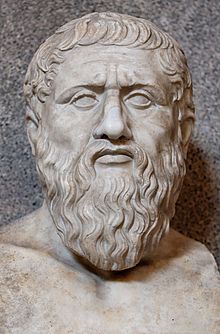
Plato
Lecture 10 of Western Heritage: Socrates on Ethics and Plato on Democracy.
Lecture 9: Socrates, Part II
 Continuing with Socrates, focusing on the purpose and deeper meaning (here’s hoping!) of THE CRITO.
Western Heritage, Lecture 9.
Quick and Dirty Guide to Socrates, Plato, and Aristotle
Key concepts of Socrates, Plato, and Aristotle (very hard to separate the three, one from another)

Socrates (469-399b.c.); Plato (ca. 427-ca. 347b.c.); and Aristotle (385-322 b.c.)
- Teacher-student-student relationship
- Came at the very end of their civilization—but tied to the earliest philosophers (Thales, Heraclitus, etc.—that is, in a long continuity of thinkers)
- Three of the finest minds to exist in ANY civilization; gives us much to ponder in terms of culture, history, etc.
- Shaped much of western political, philosophical, scientific, and the theological thought up to the Enlightenment. . . and still through today. (e.g. Pope Benedict XVI is deeply aware and influenced by these thinkers)
- Order is the key to everything
Socrates: Order of the Soul and Order of the Polis
Plato: Order of the Soul, Order of the Republic, and Order of the Universe
Aristotle: Order of the Soul, Order of Nature, and Order of the Universe
Writing Tips for College First Years
My guide to those first college papers.
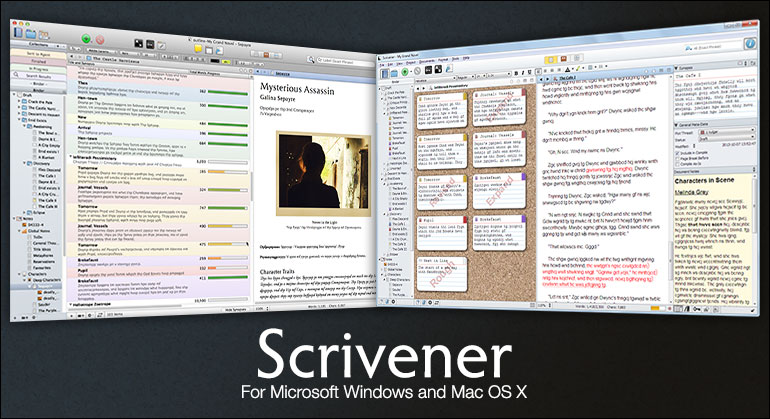
Arguably the greatest writing technology since the invention of the book.
Five essential resources
- William Strunk, Jr., and E. B. White, The Elements of Style, any edition.
- Dictionary (almost any; I find the American Heritage the best)
- Thesaurus (again, almost any; I use Roget’s II)
- Kate Turabian, A Manual for Writers (for research papers)
- Scrivener; Word; or Pages
Western Heritage Lecture 8: Introducing Socrates
 I needed to devote the first 22 or so minutes of class to “how to write a liberal arts essay,” so the actual lecture on Socrates is very short. My apologies. You might want to skip ahead 20 or so minutes into the lecture.
Also, a major caveat. During the lecture, I claimed that Socrates is regarded by some Eastern Orthodox as a saint. I WAS WRONG! It turns out that that several philosophers and humanists in the Western tradition have thought he was a saint, but no actual church body has ever declared such a thing. So, my apologies for the confusion regarding this.
Regardless, here’s hoping you enjoy!
Gleaves Whitney on Stephen Tonsor
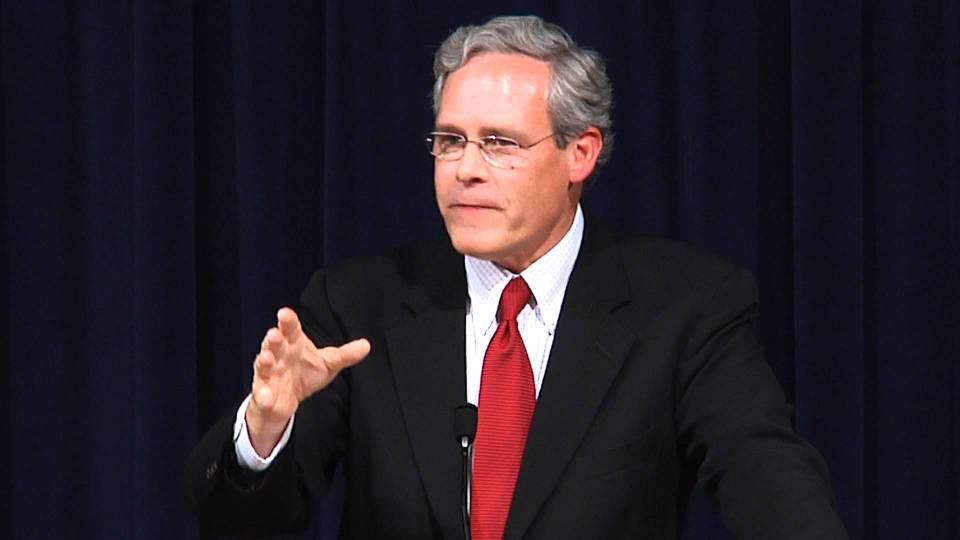
Gleaves Whitney
If you’re not had a chance yet, please make sure you check out Gleaves Whitney’s series of essays, reminiscences, and vignettes regarding his graduate school advisor, Stephen Tonsor.
Though more or less forgotten now (as so many of the greats of the last century have been), Tonsor once stood rather high within conservative thought.
Whitney’s relationship with his mentor was not always calm, but it was certainly always sharp. He is now on a long and fascinating journey exploring exactly what that relationship meant and what his advisor signified to him and to the republic.
Don’t miss this excellent series Whitney is writing. There’s nothing he does that is not critically important, but, even by his always exacting standards, Whitney is producing some thing innovative, artistic, and moving.
Here’s the first piece: http://gleaveswhitney.blogspot.com/2016/08/to-hone-one-mind-against-gritty-stone_31.html
Irving Babbitt, ON BEING CREATIVE (full)
 Babbitt’s last work before he passed away, ON BEING CREATIVE. A brilliant final look at humanism.
Irving Babbitt, THE NEW LAOKOON (full book)
 Irving Babbitt’s second published book, THE NEW LAOKOON: AN ESSAY ON THE CONFUSION OF THE ARTS (Boston, MA: Riverside Press, 1910).
This is a gorgeous book on the meaning of art within the humanist mindset and discipline. Enjoy.
Lecture 7: The Origins of Greek Philosophy

Heraclitus, the greatest of the Pre-Socratics.
Here’s one of my favorite topics–whether I do justice to it or not is another question–the origins of Greek philosophy. Fire, air, water, soil, cycles, repetition, the One, the Many . . .
My Series on the First Principles of Edmund Burke
 The Imaginative Conservative has graciously allowed me to explore the writings of Edmund Burke in a long series, going back to the first principles of conservatism.
“After Burke defined and defended his “love of a manly, moral, regulated liberty” in Reflections on the Revolution in France, he turned to other matters, some of which demand exacting attention. He warned against the manifestation of flattery as unbecoming to a people or a king, and he further noted that when men act “in bodies,” they generally serve power rather than liberty. The average Englishman, Burke continued, who believes in his neighborhood, his garden, and his hearth, wants to see the good in the equivalent person in France, but, because of radically different circumstances, history, and cultural mores, he cannot see it. For the French have not only done something the English cannot understand, but, truly, something the Western world cannot understand. The English desire to see the good in others has created a confusion that might grow into something with which the people of the West might use to “wage war with Heaven itself.””
Here is part II, Burke and the duties of each generation.
Western Heritage Lecture 6: The Birth of Western Civilization

Leonidas of Sparta (taken from wikipedia)
Leonidas and 300 Spartans birth western civilization through their sacrifice. Complete with not one but TWO tornado sirens during the lecture.
Western Heritage Lecture 5: No God Kings
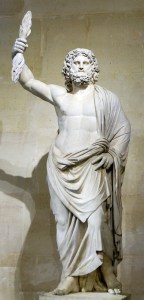 In my fifth lecture for the Western Heritage core course, I moved the class from the ancient Hebrews to the ancient Greeks, considering how each people(s) despised the notion of a God-King.
In particular, I considered the roles of Samuel, Saul, Nathan, and David.
I also talked about the corruption of power; the Mediterranean tolerance regarding religions; and the assimilation of cultures.
Here’s hoping you enjoy!
 Stormfields