
The Bearable Lightness of the Middle Ages (Full Lecture)
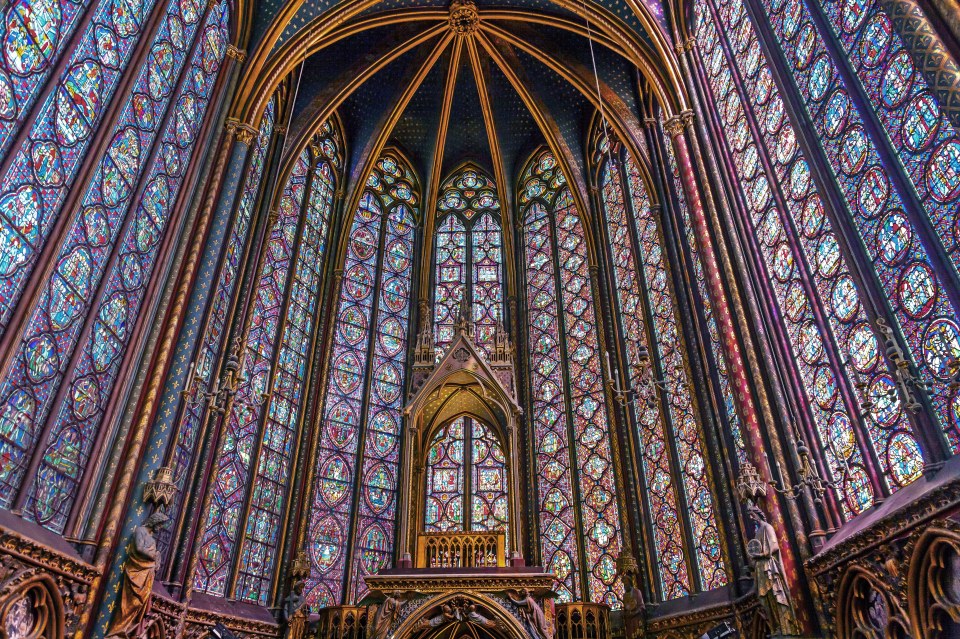
Photo courtesy of Architectural Digest
From crazy atheists to equally crazy fundamentalists, many have proclaimed the Medieval period as “dark and superstitious.” They are either ignorant or evil (or, maybe both). This lecture, viewed through the lens of Romano Guardini’s thought on unity, considers the role of that most medieval of documents, the Magna Carta. And, finds it. . . good. Very, very good.
The Distinctiveness of Medieval Culture (Full Lecture)

What makes the Medieval unlike the classical or modern worlds.
Intro to the Medieval World (Full Lecture)

The remains of Lindesfarne.
Still booking through western civilization–but on schedule, amazingly enough. Here is the first lecture on the Medieval period. Or, perhaps more accurately, why you should never call the Middle Ages, “dark.” Here’s hoping you agree.
BookTV at Hillsdale: Russell Kirk
I had a great time on BookTV (or, as my kids call it: Reading Rainbow for Adults). This was recorded at Hillsdale College, September 5, 2016. The makeup person even trimmed my insanely academic and mad-scientist like eyebrows. I kind of miss those whooly things.
Vote, Or Demos Will Kill You
So, I’m in favor of voting as well, but I can’t believe a group would advocate such tapioca conformity and bullying. The mob will destroy you if you don’t join the mob! Something out of a Shirley Jackson horror story. Disgusting.
Intro to Latin Patristics (Full Lecture)

A great nexus, St. Augustine
Best Political Ad of the Season
A real man. God bless the Geralds of the world! And, kudos to his hilarious, deadpan wife!
Updated Batman: Legacies of the DC Animated Universe
 Some of you know that I’ve been a huge Batman fan since about 1971 (at the tender age of 3). I was expecially taken with the Bruce Timm, Paul Dini (and many others) version, produced for television between 1992 and 2006.
Now, a few talented and dedicated guys–Ted Kendrick and James Strecker–have decided to continue the story Timm and team started well over twenty years ago. Pretty impressive effort.
Check it out here:
And, here’s the video explaining their project.
My only concern is that I can’t find where to subscribe! Regardless, I’m in.
Martyrdom and the Early Church (Full Lecture)

St. Perpetua
Some Favorite BXVI Quotes
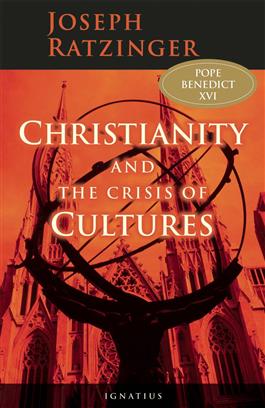 Joseph Cardinal Ratzinger, Christianity and the Crisis of Culture (San Francisco, California: Ignatius Press, 2005).
“Accordingly, the refusal to refer to God in the Constitution is not the expression of a tolerance that wishes to protect the non-theistic religions and the dignity of atheists and agnostics; rather, it is the expression of a consciousness that would like to see God eradicated once and for all from the public life of humanity and shut up in the subjective sphere of cultural residues from the past. In this way, relativism, which is the starting point of this whole process, becomes a dogmatism that believes itself in possession of the definitive knowledge of human reason, with the right to consider everything else merely as a stage in human history that is basically obsolete and deserves to be relativized. In reality, this means that we have need of roots if we are to survive and that we must not lose sight of God if we do not want human dignity to disappear” (44-45)
“This means that both parties must reflect on their own selves and be ready to accept correction. Christianity must always remember that it is the religion of the Logos. Christianity is faith in the Creator Spiritus, from whom comes everything that is real. Precisely this ought to give Christianity its philosophical power today, since the problem is whether the world comes from an irrational source, so that reason would be nothing but a ‘by-product’ (perhaps even a harmful by-product) of the development of the world, or whether the world comes from reason, so that its criterion and its goal is reason. The Christian faith opts for this second thesis and has good arguments to back it up, even from a purely philosophical point of view, despite the fact that so many people today consider the first thesis the only ‘rational’ and modern view. A reason that has its origin in the irrational and is itself ultimately irrational does not offer a solution to our problems. Only that creative reason which has manifested itself as love in he crucified God can truly show us what life is.” (49)
“We need men whose intellect is enlightened by the light of God, so that their intellect can speak to the intellect of others and their hearts can open the hearts of others. It is only by means of men who have been touched by God that God can return to be with mankind.” (52)
“The way I look at the other is decisive for my own humanity” (69).
“This is why morality, which beings with this look directed to the other, is the custodian of the truth and the dignity of man: man needs morality in order to be himself and not lose his dignity in the world of things.” (70)
“In reality, morality is always embedded in a wider religious context in which it ‘breathes’ and finds its proper environment. Outside this environment, morality cannot breathe; it weakens and then dies.” (70)
“We too succeed in looking at others in a manner that respects their personal dignity if we experience how God looks at us in love.” (71)
“Christianity is the remembrance of the look of love that the Lord directs to man, and that look preserves the fullness of his truth and the ultimate guarantee of his dignity” (71).
“For Paul, the moral decadence of society is nothing more than the logical consequence and the faithful reflection of this radical perversion. When man prefers his own egoism, his pride, and his convenience to the demands made on him by the truth, the only possible outcome is an upside-down existence. Adoration is due to God alone, but what is adored is no longer God; images, outward appearances, and current opinion have dominion over man. This general alteration extends to every sphere of life. That which is against nature becomes the norm; the man who lives against he truth also lives against nature. His creativity is no longer at the service of the good: he devotes his genius to ever more refined forms of evil. The bonds between man and woman, and between parents and children, are dissolved, so that the very sources from which life springs are blocked up. It is no longer life that reigns, but death. A civilization of death is formed (Rom 1:21-32). The description of decadence that Paul sketches here astonishes us modern readers by its contemporary relevance.” (95)
“The knowledge of God has always existed. And everywhere in the history of religions, in various forms, we encounter the significant conflict between the knowledge of the one God and the attraction of other powers that are considered more dangerous or nearer at hand and, therefore, more important for man than the God who is distant mysterious. All of history bears the traces of this strange dilemma between the non-violent, tranquil demands made by the truth, on the one hand, and the pressure brought to make profits and the need to have a good relationship with the powers that determine daily life by their interventions, on the other hand. Again and again, we see the victory of profit over truth, although the signs of the truth and of its own power never disappear completely. Indeed, they continue to live, often in surprising forms, in the very heart of a jungle full of poisonous plants.” (98)
 Stormfields