
Cycles of Republics
At midnight, August 24, 410, Alaric and his Gothic warriors entered the gates of Rome and sacked the city, pillaging, raping, and murdering for nearly three solid days. Far from considering himself as a ruthless invader of Rome, Alaric viewed himself as a loyal Roman citizen as he entered the Eternal City. He and his men desired formal recognition as legitimate Roman armed forces through titles and pensions.[1] Though the empire had been crumbling for years due to cultural, political, and economic decadence, the event stunned and shattered the western world. And, whatever Alaric’s intentions on August 24th, his army degenerated quickly into a ravaging mob.[2] “When the brightest light on the whole earth was extinguished, when the Roman empire was deprived of its head and when, to speak more correctly, the whole world perished in one city,” wrote St. Jerome, expressing the common sentiment, “I was dumb with silence, I held my peace, even from good, and my sorrow was stirred.”[3] Such an event had seemed inconceivable to those living under the declining protection of the Roman empire. And, yet, it had happened. The great symbol of the vast Roman empire, though no longer the capitol, had fallen to invasion. True, many Christians and their Basilicas were spared, but the city had fallen nonetheless.[4] The ruin continued, St. Jerome lamented.
For twenty years and more Roman blood has been flowing ceaselessly over the broad countries between Constantinople and the Julian Alps where the Goths, the Huns and the Vandals spread ruin and death… How many Roman nobles have been their prey! How many matrons and maidens have fallen victim to their lust! Bishops live in prison, priests and clerics fall by the sword, churches are plundered, Christ’s altars are turned into feeding-troughs, the remains of the martyrs are thrown out of their coffins. On every side sorrow, on every side lamentation, everywhere the image of death.[5]
Though also reeling from the onslaught of the Barbarians, St. Augustine stood firm in his opposition to the pagans and their challenge that Rome fell because it ignored the old gods. Gracefully, he turned the evil of destruction of the barbarians into the creative good of the Church. His defense came in the form of one of the greatest works of Christianity, The City of God (413-426). It would be difficult to exaggerate the importance of this work, as it became the theological, social, cultural, and political handbook, along with scripture, for the middle ages.[6] Through the writing of the City of God, he also importantly came to realize that though Rome may have fallen, Christianity stood strong. “Though he was a loyal Roman and a scholar who realized the value of Greek thought, he regarded these things as temporary and accidental,” Christopher Dawson explained. “He lived not by the light of Athens and Alexandria, but by a new light that had suddenly dawned on the world from the East only a few centuries earlier.”[7] Rome represented the City of Man, in its paganism, decadence, and torture of Christians; Jerusalem represented the City of God.[8] For St. Augustine, one could not readily separate the two cities, the City of God and the City of Man, in any strict dualism or profound opposition. “In truth,” St. Augustine wrote, “these two cities are entangled together in this world, and intermixed until the last judgment effect their separation.”[9] The world experienced two types of time: the cyclical time of the City of Man, and the purposeful time of the City of God, a group of pilgrims making their way through this time, but not of this time.
As with St. Augustine, the Christian Humanists of the twentieth-century looked out over a ruined world: a world on one side controlled by ideologues, and, consequently, a world of the Gulag, the Holocaust camps, the killing fields, and total war; on the other: a world of the pleasures of the flesh, Ad-Men, and the democratic conditioners to be found, especially, in bureaucracies and institutions of education. Both east and west had become dogmatically materialist, though in radically different fashions. In almost all ways, the devastation of Kirk’s and Dawson’s twentieth-century world was far greater than that of St. Augustine’s fifth-century world. At least barbarian man believed in something greater than himself. One could confront him as a man, a man who knew who he was and what he believed, however false that belief might be. But, modern man accepted only ideologies, the false and substitute religions of modernity.
Fifteen centuries after St. Augustine, the barbarians were at the gates.
Notes
[1] Warren Thomas Smith, Augustine: His Life and Thought (Atlanta, Georgia: John Knox Press, 1980), 145.
[2] J.B. Bury, The Invasion of Europe by the Barbarians (New York: W.W. Norton, 1967), 96.
[3]St. Jerome quoted in Daniel Boorstin, The Creators, 59
[4] Smith, Augustine, 145-47.
[5] Quoted in Dawson, Enquiries into Religion and Culture, 221.
[6] Dawson, Religion and the Rise of Western Culture, 68; and Dawson, Enquiries into Religion and Culture, 199.
[7] Dawson, “The Hour of Darkness,” The Tablet (December 2 1939), 625.
[8] Dawson, “The Hour of Darkness,” 625.
[9]St. Augustine, The City of God, Book 1, Section 35.

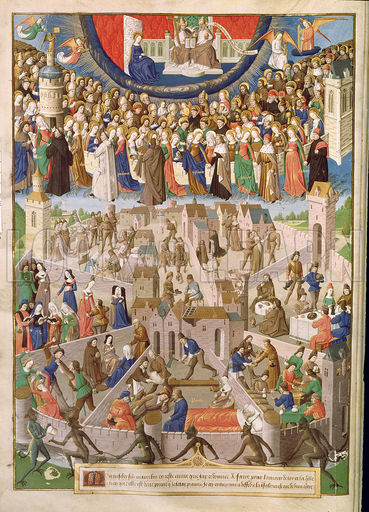 “Nature makes nothing in vain,” Aristotle, the great Pagan philosopher of ancient Athens, understood. Aquinas concluded Aristotle’s argument fourteen centuries later with “only Grace perfects nature.” Following St. Paul’s letters in the New Testament, St. Augustine, eight centuries before Aquinas and seven centuries after Aristotle, wrote: “All natures, then, inasmuch as they are, and have therefore a rank and species of their own, and a kind of internal harmony, are certainly good. And when they are in the places assigned to them by the order of their nature, they preserve such being as they have received.”[1] Nothing could sum up the argument of the Christian Humanists better than the arguments of these three men, one pagan and two Christians: Aristotle, St. Augustine, and St. Aquinas. Everything has its place, its role, its purpose, singular to it, known and understood only fully by the Divine Author, who placed each person and thing in His story, what a monk at the Anglo-Saxon monastery at Lindesfarne called “God’s Spell,” or the Gospel, in 950. The story in which we as human persons participate began with Creation, reached its middle and highest point with the Incarnation, the Death, and the Resurrection of Christ Jesus, and will end with the Apocalypse. The end will come when it comes. Even Jesus claimed not to know His Father’s mind and desires on the subject. Each of us, then, as members of the story, has our role. Some roles are greater, some are lesser, but each has an intrinsic importance. We may neglect our role, we may pervert our gifts, or we may freely give up our free will, through Grace, and submit to God’s Will. St. Augustine challenged his readers:
 In this world, the possibility of exploitation will become most violent when men not only deny God but attempt to dominate nature. C.S. Lewis explored the possibilities of men dominating nature during World War in both realistic and fictional media. “The final stage is come when Man by eugenics, by pre-natal conditioning, and by an education and propaganda based on a perfect applied psychology, has obtained full control over himself,” Lewis explained in The Abolition of Man.

 Though neither a radical nor a Christian—nor, for that matter, even a romantic in the vein of Blake who feared the “dark Satanic mills” of Industrial England—Mark Twain identified the late-nineteenth century fear of the machine run amok perfectly in his last novel, the tragically whimsical A Connecticut Yankee in King Arthur’s Court. One of the first to use time travel as a plot device, the story revolves around Hank Morgan, an engineer devoid of any poetry or sentiment. As his German last name indicates, he is the man of “tomorrow.” A practical man schooled in the servile rather than the liberal arts, Morgan can create almost any type of mechanism: “guns, revolvers, cannon, boilers, engines, all sorts of labor-saving machinery.” A materialist, he “could make anything a body wanted—anything in the world, it didn’t make a difference what; and if there wasn’t any quick new-fangled way to make a thing, [he] could invent one.” He was also, Hank assures the reader, “full of fight.” And, a conflict employing crowbars with one of his employees, a man named Hercules, results in severe blow to Morgan’s head, knocking him unconscious.
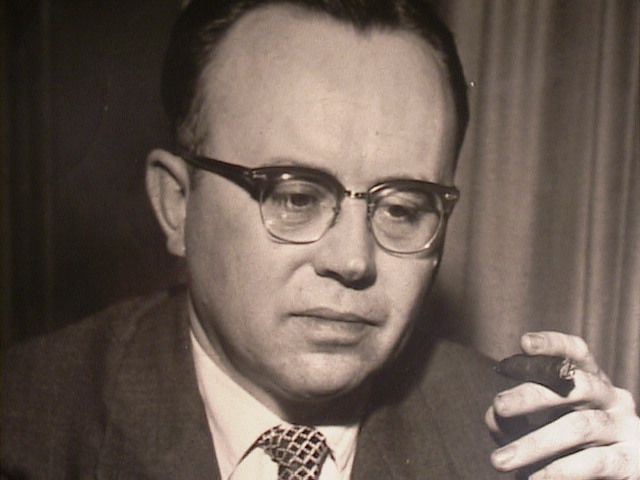


 I’m not at all sure why so many of my social media friends are offended or upset about graduation protests this year. I did everything I could (including adding a line or two to the main protest speech) when Father Miscamble organized an alternative commencement when Barack Obama spoke at Notre Dame.
 Stormfields