Stormfields

A Few Nice Nisbet Quotes

Nisbet LF

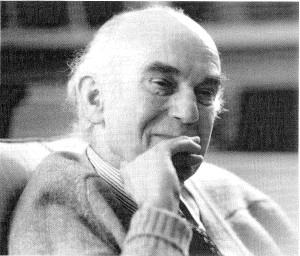
Robert Nisbet (1913-1996)

“Traditionalist we may choose to label Burke, but the fact is, few minds of stature have ever given more brilliant witness to rights, liberties and equities in the affairs of government”

“Insight into the nature of the totalitarian mind, complete with its passion for centralization and uniformity, for rationalist extirpation of tradition and prejudgment, and for an absolute moralism that would extend when necessary to terror was not so easily com by in the late 18th Century, and we owe Burke much for this first insight.”

–Robert Nisbet, “Burke’s Guide to Revolution,” Wall Street Journal (June 5, 1972), 12.


“Patriotism is indispensable to the American nation.  Nothing, however, corrupts and damages patriotism like war that is without relation to clear and compelling national interest.”

–Robert Nisbet, “War, Crisis, and Intellectuals,” Wall Street Journal (January 25, 1971), p. 10.

Ralph Hauenstein, RIP

Colonel-Ralph-HauensteinWhat a man.  I only had the privilege of meeting him a few times, but I thoroughly enjoyed his company.  And, he treated one of the men I respect most–Gleaves Whitney–with all due support and respect.  Thank you, Mr. Hauenstein.  A true western man.

http://www.mlive.com/news/grand-rapids/index.ssf/2016/01/businessman_philanthropist_ral.html

Three Thoughts about Charles Carroll of Carrollton

ccc

ISI Books, 2010.

I was just asked by a group in France to describe three aspects of Charles Carroll of Carrollton’s thought and life.  Nice.  I’ve not given a lot of thought re: him for several years.  Kind of like visiting an old friend.

For what they’re worth, here are my three thoughts.

1.  Born a bastard (only because of anti-religious laws) to a wealthy Roman Catholic couple in Maryland, Charles Carroll and his cousin, John Carroll (later the first archbishop in the United States) , left Maryland for education at St. Omer while still young boys.  Charles, however, stayed in Europe for nearly two decades, before returning to the American colonies in 1765.  Because of Maryland law, Roman Catholics could not educate their children or raise their children in the Catholic Church.  To do so risked confiscation of the children by Protestants.  Additionally, Roman Catholics could not serve in politics or law (even as witnesses in crimes), but they could rather tenuously hold property.  Upon returning to Maryland in 1765, the now highly educated Charles began to involve himself in various clubs and societies in Maryland, eventually revealing his profound philosophical side in the famous 1773 debates regarding taxation and religious authority.  Charles emerged from these debates a republican patriot and hero.  As Maryland moved toward independence from Britain, 1774-1776, Charles emerged as its champion and the anti-Catholic laws faded quickly in revolution.
 
2.  Because of the insistence of his father and the education the Jesuits provided him at St. Omer, Charles was fiercely humane and liberal in his education.  He knew, for example, Cicero as well as he know Montesquieu, and he deeply admired both.  That is, he saw his current life not as a break from the past, but as an extension of it.  When he signed the American Declaration of Independence, he believed he was doing so as a representative of the liberally educated from Socrates to the present.  While Charles was extreme in this belief, he was not unique.  Most of American founding fathers had received an intense liberal education in Greek and Latin.
 
3.  Throughout his life, Charles remained a republican, but he was certainly not a democrat.  That is, he believed that the best free society worked when its members willingly gave of themselves to the common good.  When they began to focus only on their own advancement or rights, society decayed quickly.  As much as Charles liked Thomas Jefferson personally, he feared that Jefferson was simply too radical to lead the United States, and he feared that Jefferson’s passions would lead to the undoing of American liberty and republicanism.  Because Carroll lived to the age of 95, he had the privilege of being the last of the signers of the Declaration of Independence to pass away.  In the early 1830s, he even met the greatest of all analysts of American society, Alexis de Tocqueville, and served as one of the French writer’s main informants.  The two men had almost identical views of American democracy.  It was beautiful, but it was also quite fragile.
To order AMERICAN CICERO: http://isibooks.org/american-cicero.html

Ralph McInerny on Catholic Liberal Education

A wonderful quote for that twentieth-century gentleman of academia, Professor Ralph McInerny.

41MWKV0ZNHL._SX300_BO1,204,203,200_

Otto Bird reminds of us of a better time, when it was understood that the faith should animate imagination and mind as well as the corporal works of mercy. Indeed, what is peculiar to the Catholic university is precisely that in its halls intellectual and imaginative pursuits are seen in terms of the great journey mankind is on toward salvation. It is curiously true that the fact that this life is a mere prelude to the true life men are meant for hereafter, far from devaluing the things of this world, enhances them and casts over them a light they could not have otherwise.… Faith in Hope and Love do not make one disdainful of this world but rather, by seeing it as the stage on which one’s eternal condition will be settled, give it far profound or significance than it could have if ‘our little lives were rounded in a sleep.’

–Ralph McInerny, “Preface,” in Otto Bird, Seeking a Center: My Life as a Great Bookie (San Francisco: Ignatius Press, 1991), 10.

Syllabus: Founding of the American Republic

Syllabus, History 301; Founding of the American Republic, 1753-1806

Spring Semester, 2016; T/Th 9:30-10:45

Location: Lane 331

Assignments posted at: www.bradbirzer.com


Professor: Brad Birzer: brad.birzer@hillsdale.edu

Delp 403


Scope of the Course

This course is a part of the U.S. surveys for upper-level students.  We’ll go straight through the chronology of the time, from the French and Indian War (the North American theater of the Great War for Empire) to the Lewis and Clark Expedition.  That is, we’ll move from ca. 1753 to ca. 1806.  Along the way, we’ll look at the Founding Fathers (and Mothers) of the period, especially exploring their own understandings of the world, intellectually, culturally, and religiously.  Please note, this course will focus mostly on the ideas that animated the founding.  It will not give much time to the nuts and bolts of names and dates.  For an essential outline of such things, I’ve assigned Gordon Wood’s small but good overview, The American Revolution: A History.  Since it is a course about ideas, I will have you read mostly primary sources (listed below and all available online, generally from the Online Library of Liberty).


In many ways, the founding era is a time period without equal in all of modern history, as a dedicated group of citizens attempted to create and sustain the first republic on any large scale since the collapse of the Roman republic with the assassination of Senator Marcus T. Cicero (43B.C.).  They did so with an astounding amount of bravado and audacity, though certainly not without error and, at times, gut-wrenching compromise.


Readings

The founding generation—one of the single most literate generations in the history of the world—wrote much and, usually, for public consumption.  Indeed, they considered the writing out, the debating of, and the transmission of ideas, a crucial component of their own cherished republicanism and Protestantism.  Thus, I assign primarily primary documents in this class.  Thanks to the beauty and decentralization of the web, every source you’ll read is available online.  Please see semester dates (below) for actual assignments.  Unless otherwise stated, all readings are available at http://oll.libertyfund.org/.  N.B.: the readings may or may not correspond perfectly to the lectures of the week.  That is, you might very well be reading the Constitution, even though I’ve only reached 1779 in course lectures.


Grades

  • Essay/Paper, 20%
  • Quizzes and In-class Assignments, 20%
  • Midterm Examination, 30%
  • Final Examination, 30%


Essay/Paper.  Over the semester, I would like you to digest the primary readings as much as possible.  Your quizzes as well as your examinations will challenge your knowledge and understanding of them.  For your major paper, therefore, you should choose at least three of the primary readings assigned.  With these primary documents, find a coherent theme.  The theme is of your choosing.  It could and can be anything from the rhetorical strategy employed to, for example, the ideas of Natural Law or Natural Rights.  In 9-10 pages (12-point font, one-inch margins, double spaced), explore the chosen theme.  You should not have to do research beyond the chosen documents, but you should give considerable time to the essence of your thesis.  Play with it, explore it, and let it linger for a while, intellectually.


I encourage you to study in groups throughout the semester.  I tend to talk quickly and cover a lot of material in a semester, and I firmly believe that you should use any ethical means possible to learn a subject.  Feel free to trade notes, idea, etc. with one another.  Obviously, during each examination, you’ll be tested individually.  But, leading up to each exam, feel free to work with as many other students as you’d like.


Course schedule

  1. January 20-22

Readings: Cato Letters, Letters 84, 94, 106, 114-115

Readings: Adams, Dissertation on the Canon and Feudal Law


  1. January 25-29

Readings: Mercy Otis Warren, History of the Rise, vol. 1, chapters 1-4


  1. February 1-5

Readings: Stephen Hopkins, The Rights of the Colonies Examined, 1764

Readings: Richard Bland, An Inquiry into the Rights of the British Colonies, 1766


  1. February 8-12

Readings: Demophilus: The Genuine Principles of Ancient Saxon Constitution; and Addison

Readings: Cato: A Tragedy.


  1. February 15-19

Readings: J. Adams, Instructions of the Town of Braintree to their Representative, 1765


  1. February 22-26

Readings: Letters from a Pennsylvania Farmer, 1-3, 12

PWeekend Meetings: Saturday, February 27


  1. February 29-March 4

Readings: Continental Congress, Appeal to the Inhabitants of Quebec, 1774

Readings: Samuel West, On the Right to Rebel


  1. March 7-11

Readings: CX Letters (handout; emailed to you)

Readings: Declaration of Independence

Readings: Novanglus, Letters 1-4

Midterm: Thursday, March 10


  1. March 14-18

Readings: Hamilton, Continentalist Letters 1-3

Readings: Washington, Speech to the Officers of the Army, March 15, 1783

Spring Break, March 19-28


  1. March 29-March 1

Readings: Northwest Ordinance of 1787

Readings: Federalist Papers 1, 10, 37-39, 45-51


  1. April 4-8

Readings: Anti-Federalist Papers, Brutus (handout; emailed to you)

Readings: Anti-Federalist Papers, Old Whig (handout; emailed to you)

Readings: U.S. Constitution


  1. April 11-15

Readings: Bill of Rights


  1. April 18-22

Readings:  Washington, First Inaugural Address

Readings: Washington, Farewell Address


  1. April 25-29

Readings: Thomas Jefferson, Inaugural Address

Papers due (my office): Friday, April 29, 5pm.


  1. May 2-3

Lewis and Clark Toasts (handout; emailed to you)