
Vital Dates for American Slavery
For my Founding of the American Republic students:
1619: Africans sold in Virginia: Forced “indentured servants”
1669: First institutionalized slave code (Carolinas)*
1669-1761: Chattel slavery
1761-1793: Radical #s of manumissions
1793: Eli Whitney’s cotton gin
1793-1863: Chattel slavery radical #s increase
1863: Emancipation Proclamation
1863: 54th and 55th Mass. Regiments
1865: 13th Amendment
*107. “Since charity obliges us to wish well to the souls of all men, and religion ought to alter nothing in any man’s civil estate or right, it shall be lawful for slaves, as well as others, to enter themselves, and be of what church or profession any of them shall think best, and, therefore, be as fully members as any freeman. But yet no slave shall hereby be exempted from that civil dominion his master hath over him, but be in all things in the same state and condition he was in before.”
110. “Every freeman of Carolina shall have absolute power and authority over his negro slaves, of what opinion or religion soever.”
Hunter Baker for Congress, 2016

Witty, intelligent, conservative, and he wears a bow tie. What more do you want?
I’m extremely proud of my close friend and ally, Hunter Baker. He’s just announced he’s running for Congress. I’ve known Hunter for many years, and I can state with not the slightest amount of hesitation: he’s a man of the highest intellect, integrity, and humor.
If elected, he will be as great as the best person in the House, Representative Justin Amash. I will certainly do everything I can to support Hunter. Please help in any way you can and see fit.
http://www.theamericanconservative.com/dreher/hunter-baker-missionary-religious-liberty/
C. Bradley Thompson on the American Revolution

An indispensable book on an indispensable republican.
I am thrilled to see that Professor Brad Thompson has commented on my American Revolution/Crises Timeline. Though I’ve never had the pleasure of meeting him in person, I’ve known of Brad since my undergraduate days. As early as my junior year at Notre Dame, one of my professors–Bruce Smith; then a graduate student–praised Brad to the skies. He almost had a mythical presence in my life.
Since, folks I respect beyond measure–such as Michelle Le and Roger Ream–have continued to praise Brad to the skies.
Thirty years after Bruce first told me about Brad, he is, simply put, one of the greatest living scholars of the American Founding and of American history.
He’s written expertly and beautifully on Alexander Hamilton, John Adams, and abolitionism.
His book on neo-conservativism (co-authored with Yaron Brook) is one of my favorite books of the last decade. In other words, you need to know him!!!!
Here’s a link to his books at amazon: http://www.amazon.com/s/ref=nb_sb_noss_2?url=search-alias%3Daps&field-keywords=bradley+thompson
Anyway, there’s no way in the world that I’ll chance having his thoughts buried in the comments. So, here they are–for all to enjoy! Thank you so much, Brad. What an honor!
Comment 1:
Hi Brad:
Great timeline on the imperial crisis.
Most people today have forgotten the second half of the Americans’ opposition to the Sugar and Stamp Acts. Yes, there was the development of the “no taxation without representation” principle that resulted from the Stamp Act. John Adams, however, considered the “most grievous innovation” of the Sugar and Stamp acts to be the extension of the power of the vice-admiralty courts in America, which he thought violated the basic tenets of Magna Charta. In his “Instructions of the Town of Braintree to their Representative” he wrote: “We cannot help asserting, therefore, that this part of the act will make an essential change in the constitution of juries, and it is directly repugnant to the Great Charter itself; for, by that charter, ‘no amerciament shall be assessed, but by the oath of honest and lawful men of the vicinage;’ and, ‘no freeman shall be taken, or imprisoned, or disseized of his freehold, or liberties of free customs, nor passed upon, nor condemned, but by lawful judgment of his peers, or by the law of the land.’”
And, comment 2:
Let me also suggest that American Patriots considered the Massachusetts Government Act to be the worst of the Intolerable Acts.
The Massachusetts Government Act altered the Massachusetts charter in several respects: (a) it changed the Mass. Council to a body appointed by the Crown rather than by the colonial legislature, with each councillor continuing in office at the King’s pleasure; (b) The Mass. Governor was now given complete power to appoint and dismiss all executive and inferior judicial officers, including justices of the peace and sheriffs; (c) Superior court judges were to be nominated by the Governor for appointment by the King; (d) Juries would now be chosen by the sheriff instead of democratically by the people of the towns; (e) Finally, town meetings were barred without the consent of the Governor, except for annual election meetings.
It was the last blow for self-government in Massachusetts.
Why I Support Ted Cruz

The Cruz Family.
When I met Cruz in person for the first time nearly a decade ago, I was quite taken with him. At the time, he was running for the position of Attorney General of Texas. I found him personable, sharp as one could possibly imagine, and a man of incredible integrity. Immediately following our meeting, I wrote a piece about him for the History News Network believing that within a decade or so, he would be ready for the presidency.
I had the chance to meet Ted Cruz, Republican candidate for the Attorney General of Texas, this past Wednesday morning. Cruz was M.C.ing the annual breakfast of Winston Elliott’s FREE ENTERPRISE INSTITUTE. I’m not one to be impressed by many politicians, but I was thoroughly impressed with Cruz. Articulate, smart, principled, and a believer in liberty. Happy to know there are guys like him out there. Gives me great hope for the future. And, I assume that he’ll move into national politics as well at some point.
As this point, March 2016, I won’t in any way pretend to 1) know or care much about modern politics; 2) know or think much about politics as a form of study; and 3) offer anything more than the opinion of one relatively well-read citizen of the American republic.
But, I also know that if I say nothing now, I’ll be angry with myself later. Not that I expect to persuade any of you of anything. Indeed, if you read this blog (and, thank you!), and if I only had one chance to convince you of anything in this world, it would be to pick up and read something like Willa Cather!
These caveats stated, I will be supporting Ted Cruz until the bitter end of this election. I don’t agree with everything he says, but I do believe in his belief in them, and I believe in his integrity. Where he would be conservative, I would be libertarian. Where Cruz would be evangelical, I would be Catholic or humanist. Where Cruz would be restrictive on the movement of peoples, I would be incredibly open. In an ideal world, I’d be much more in the Rand Paul camp, but Paul is currently without a camp. So, while Cruz has always been my second choice, he’s also always been, at least to me, a very strong second choice, if for no other reason than his honesty and frankness.
A few other things have persuaded me to speak up as well at this point.
- First, I think of the Republican candidates left in the field, Cruz has the best chance of defeating the Democratic candidate (here’s hoping it’s Sanders—another man of ideas and, from what I know, integrity).
- Second, he’s really the only viable pro-life candidate left in the running.
- Third, my all-time favorite Congressman, Justin Amash, has endorsed him.
- Fourth, my all-time favorite lover of wisdom and the great books, Winston Elliott, supports him.
- Fifth, my all-time favorite wife (well, only wife!) supports him.
- Sixth, Cruz is incredibly funny. Watch his bedtime stories with Hillary or his Hillary/Office Space ad. Holy schnikees, does this guy make me laugh!
- Seventh, as a lawyer in Texas, he went after the sex abusers and other freaks of nature.
These are good enough reasons for me.
Biography and the Art of Being Human
A thought experiment: try to recreate everything you’ve done since you started reading this article. Every thought, every distraction, every movement, every feeling. Have you wanted some coffee? Have you thought about closing this page? Have you scratched that itch on the side of your head? Have you wondered if you should call the kids today? Have you thought about what you’ll do for lunch? Now, take each of these things we can barely construct in the shortest moments of our lives—the impulses, the questions, the longings, the satisfactions—and multiply that by the minutes of the day, the days of the year, and the years of our lives. Then, multiply this again by seven billion distinct persons walking this world in any 24-hour period. Where to start? The possibilities, the decisions, the desires, and the frustrations are unaccountable and uncountable. No graph, no data set, and no equation can incorporate all of the complexities and nuances of a single human person, let alone seven billion of them.
My latest at The American Conservative. Too read it all, please go here–
http://www.theamericanconservative.com/articles/biography-and-the-art-of-being-human/
My All-Time Favorite Comedies

My stomach hurts after watching this movie. I laugh that much.
A few days ago, I listed–rather spontaneously–my favorite movies of all time. I don’t usually include any form of comedy in a list of great movies, as I think they’re something altogether different as an art form.
Still, here are my favorite comedies/dark comedies, and stupid movies.
In alphabetical order. Frankly, my choices almost certainly reveal my age.
A Short in the Dark
Bowfinger
Brazil
Doctor Strangelove
Ferris Buehller’s Day Off
Galaxy Quest
Ghostbuster
Grosse Pointe Blank
Mean Girls
Never Been Kissed
Old School
Search for the Holy Grail
Sixteen Candles
Spinal Tap
Tommy Boy
The Wedding Singer
Pope Benedict XVI on C.S. Lewis
 Source: “Cardinal Ratzinger in Cambridge,” BRIEFING 88, vol. 18, no. 3 (5 February 1988); reprinted in the CANADIAN CSL JOURNAL no. 63 (Summer 1988), 4-5.
“Long before the outbreak of terrorism and the invasion of drugs, the English author and philosopher, C.S. Lewis, called attention to the grievous danger of the abolition of man which lies in the collapse of the foundations of morality. He thus gave stress to humankind’s justification upon which the continuance of man as man depends. Lewis shows the continuance of the this justification with a glance at all the great civilisations. He refers not only to the moral heritage of the Greeks and its particular articulation by Plato, Aristotle, and the Stoa. These intended to lead man to an awareness of reason in his being and from that to insist upon the cultivation of ‘his kinship of being with reason.’ Lewis also recalls the ideas of the Rta [sic] in early Hinduism which asserts the harmony of the cosmic order, the moral virtues and the temple rituals. He underscores in a special way the Chinese doctrine of the Tao: ‘It is Nature, it is the Way, the Road. It is the Way in which the universe goes on. . . It is also the Way in which every man should tread in imitation of that cosmic and supercosmic progression, conforming all activities to that great exemplar. Modern mankind has been persuaded that human moral values are radically opposed one to another in the same way that religions are. In both cases the simple conclusion is drawn that all of these are human inventions whose absurdity we can finally detect and replace with reasonable knowledge. This diagnosis, though, is extremely superficial. It hooks on to a series of details which are set up in random fashion, one next to the other, and so it arrives at the banality of its superior insight. The reality is that the fundamental institution concerning the moral character of being itself and the necessity for harmony between human existence and the message of nature is common to all the great civilisations; and thus the great moral imperatives are also a possession held in common. C S Lewis expressed this emphatically when he said: ‘This thing which I have called for convenience the Tao, and which others may call Natural Law, or Traditional Morality or the First principle of Practical Reason, or the First Platitudes, is not one among a series of possible systems of value. It is the sole source of all value judgements. If it is rejected, all value is rejected. If any value is retained, it is retained. The effort to refute it and to raise a new system of value in its place is self-contradictory.’ Morality has been eroded and man as human being has worn away with it. It is no longer prudent to ask why one should hold fast to this kind of survival. Once more I would like to have C S Lewis put in a word. He saw this process already in 1943 and described it with keen accuracy. He discerns in it the old compact with the Magician: ‘ . . . give up our soul, get power in return. But once our souls, that is, our selves, have been given up, the power thus conferred will not belong to us . . . It is in Man’s power to treat himself as a mere “natural object” . . . The real objection is that if man chooses to treat himself as raw material to be manipulated, as he fondly imagined, by himself, but by mere appetite, that is, mere Nature, in the person of his dehumanized Conditioners.’ Lewis raised this warning during the second World War because he saw how, with the destruction of morality, the very capacity to defend his nation against onslaught of barbarism was imperiled. He was objective enough, though, to add the following: “I am not here thinking solely, perhaps not even chiefly, or those who are our public enemies at the moment. The process which, if not checked, will abolish man, goes on apace among Communists and Democrats, no less than among Fascists.” This seems to me to be a common of great import. Lewis refers as well to the law of Israel, which unites cosmos and history and intends above all to be the expression of the truth about man as much as the truth about the world. An appreciation of the great civilisations discloses differences in detail; but starker by far than these differences is the great common strain which reveals itself as early evidence of the human business of living: the teaching of objective values which are manifest in the being of the world; the belief that there are attitudes which are true in accord with the message of the All and therefore good and that there are other attitudes as well which are contrary to being and thus are wrong for good and for all.”
The Best of John Dickinson, Pennsylvania Farmer
[Unless otherwise noted, all quotes come from Forrest McDonald, ed., EMPIRE AND NATION (Indianapolis, IN: Liberty Fund, 1999). As always, all honor to Liberty Fund]
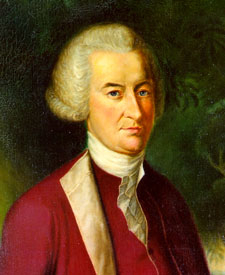
John Dickinson, perhaps the greatest founder next to Washington.
In response to the Townshend Acts, Dickinson published his Letters from a Pennsylvania Farmer.
As one great historian has written of these: “Their impact and their circulation were unapproached by any publication of the revolutionary period except Thomas Paine’s Common Sense (Indeed, because they were a crucial step toward transforming the mass circulation pamphlet into the soberest forum for debating public issues, they helped make Common Sense possible). They were quickly reprinted in newspapers all over the colonies, and published in pamphlet form in Philadelphia (three editions), Boston (two editions), New York, Williamsburg, London, Paris, and Dublin. Immediately, everyone took Dickinson’s argument into account: Americans in assemblies town meetings, and mass meetings adopted revolutions of thanks; British ministers wrung their hands; all the British press commented, and a portion of it applauded; Irish malcontents read avidly; even the dilettantes of the Paris salons discussed the Pennsylvania Farmer.” [Forrest McDonald, “Introduction,” Empire and Nation, xiii]
21 of the 27 newspapers in America printed and reprinted these in 1768 [Knollenberg, Growth, 47]
Rachel Gough: Adventuring Together

There’s something about being together in the wild. It’s a different kind of togetherness than going to the movies or even gathering around the dinner table. To quote the wisdom of John Muir once again, “Everybody needs beauty as well as bread, places to play in and pray in, where nature may heal and give strength to body and soul.” And while solitude is precious, I would argue that nothing forges bonds as well as adventuring together.
My great friend, Rachel Womelsduff Gough, has once again written a gorgeous essay: http://kindredmag.com/2016/03/02/adventuring-together/
Enjoy!
Talking with Guitarist Steve Hackett

Steve Hackett.
Yesterday, I had the great blessing of talking with a man who has been a hero of mine since 1978, Steve Hackett. Famous for his work with Genesis, GTR, and others, Hackett is an incredibly well-spoken gentleman.
I thoroughly enjoyed my conversation with him.
If you’re interested, check out my piece over at progarchy.com, https://progarchy.com/2016/02/29/26-minutes-with-steve-hackett/
Defending the Republic: Texas

Only one thing could make this painting better: Travis holding a bottle of Shiner Bock.
From one of the greatest men of the last two centuries, William Barrett Travis. Liberally-educated patriot and republican.
____
Commandancy of the The Alamo
Bejar, Feby. 24th. 1836
To the People of Texas & All Americans in the World—
Fellow Citizens & compatriots—
I am besieged, by a thousand or more of the Mexicans under Santa Anna — I have sustained a continual Bombardment & cannonade for 24 hours & have not lost a man — The enemy has demanded a surrender at discretion, otherwise, the garrison are to be put to the sword, if the fort is taken — I have answered the demand with a cannon shot, & our flag still waves proudly from the walls — I shall never surrender or retreat. Then, I call on you in the name of Liberty, of patriotism & everything dear to the American character, to come to our aid, with all dispatch — The enemy is receiving reinforcements daily & will no doubt increase to three or four thousand in four or five days. If this call is neglected, I am determined to sustain myself as long as possible & die like a soldier who never forgets what is due to his own honor & that of his country — Victory or Death.
William Barrett Travis.
Lt. Col. comdt.
P. S. The Lord is on our side — When the enemy appeared in sight we had not three bushels of corn — We have since found in deserted houses 80 or 90 bushels and got into the walls 20 or 30 head of Beeves.
My Note to Ted Cruz, Facebook, 2009
Bradley Joseph Francis Birzer to Ted Cruz
“Ted, it was excellent meeting you yesterday morning. I was deeply impressed by you. I look forward to seeing you as Attorney General. With you in such a position, Texas will continue to lead the way in defending and advancing the best of western civilization.”
 Stormfields