The Historical Foundations of Protestantism (FULL LECTURE)
Western Heritage Lecture–what historical events “allowed” Protestantism to arise as it did.
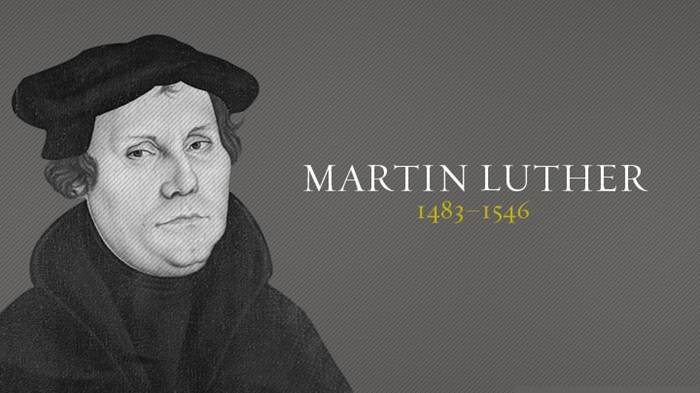
Image borrowed from Christianity Today
A Reading from Martian Chronicles
 One of my favorite scenes from Ray Bradbury’s magisterial MARTIAN CHRONICLES.
BLACK FRIDAY: Huge Liberty Classroom Savings!!!

Liberty Classroom.
 If you purchase the “Master” membership–good for a lifetime–through the link provided, I’ll happily throw in a signed hardback copy of my award-winning biography, RUSSELL KIRK: AMERICAN CONSERVATIVE (including postage and handling).
Two Voices, G.K. Chesterton (A reading)

1904
One of my all-time favorite passages from G.K. Chesterton. “Two Voices” from THE NAPOLEON OF NOTTING HILL (1904). This one from Chapter III of the Dover edition (1991).
Machiavelli vs. Socrates (Full Lecture)

Machiavelli (left); Socrates (right). In more ways than one.
A rather in-depth look at how Machiavelli inverted the western Socratic project. Please note two things: 1) I’m terribly biased in this lecture; and 2) I tell a beautiful (at least to me) but personal story of my grandfather and mother.
So, a look at Chapter 18 of THE PRINCE, Act III of MANDRAGOLA, and THE CRITO.
I find Machiavelli truly diabolic.
Support Your Local Comic Book Store TODAY!

A worthy cause. No other medium in modern western civilization comes even near comic books when it comes to the need to explore and promote the classical virtues.
Petrarch (Full Lecture)
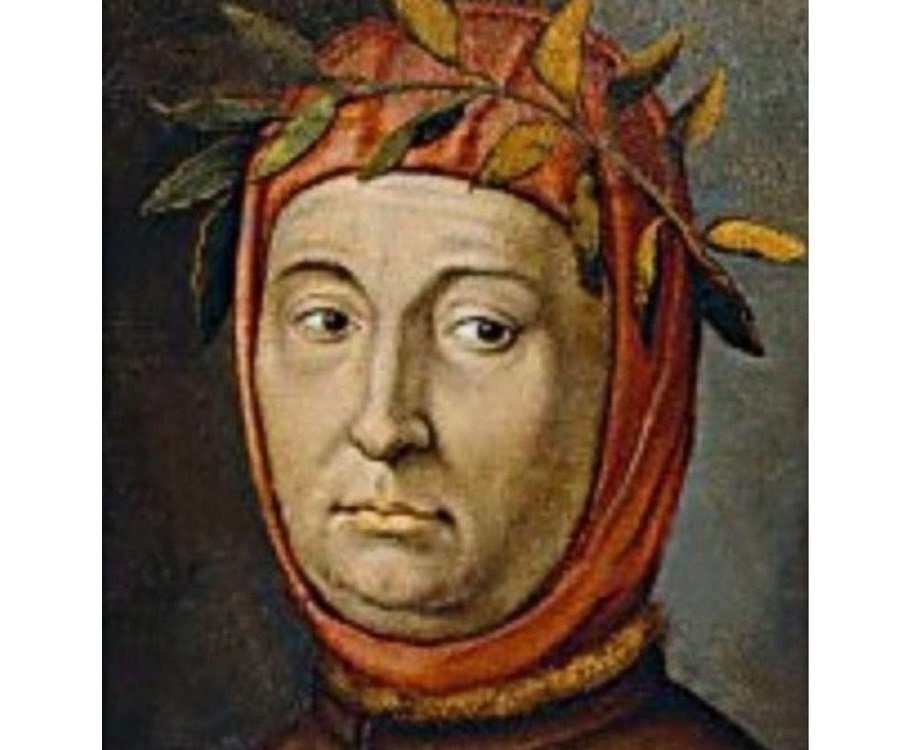
Petrarch. Clearly not vain.
An attempt to looks at three iconic figures in the Renaissance: Petrarch; Pico; and Machiavelli. This lecture mostly considers Petrarch, the ultimate Renaissance Christian Humanist.
Republican Cycles: Birth, Corruption, Death, Rebirth?
In nearly every class I teach–whether it’s about western civilization, the American founding, or Christian Humanism–I talk about the natural (supposedly) cycles of life, the seasons, and republics. If you’re interested, here are my favorite quotes and art supporting the view.
In Miletus, ca. 500BC
Can we escape the cycles of the seasons, of man, of life?
Polybius (200-117BC)
No clearer proof of the truth of what I say could be obtained than by a careful observation of the natural origin, genesis, and decadence of these several forms of government. For it is only by seeing distinctly how each of them is produced that a distinct view can also be obtained of its growth, zenith, and decadence, and the time, circumstance, and place in which each of these may be expected to recur.
End of the Medieval World (Full Lecture)
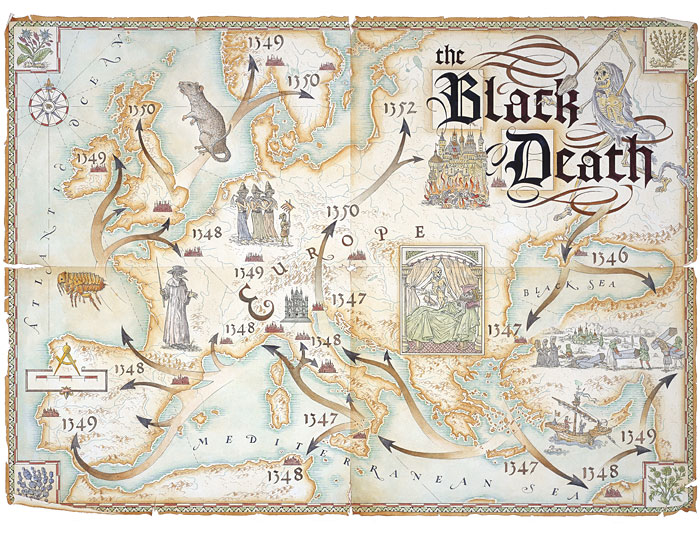
The end, my only friend, the end.
Full Lecture
The End of Christendom, 1350-1492
- The Plague, killing anywhere from 33-50% of Europe. In terms of population, Europe not recover until mid-seventeenth century. Especially hit the good clergy, as they were first to rush in to help. This added greatly to the corruption of the Renaissance Western Church.
- The resurgence of barbarianism, especially nationalism. Christendom celebrates the universal, nationalism, the particular. First and second nations–both out of Iberia, home to the centralized Visigoths.
- “Christianity rejoices at the mixture of races,” Lord Acton wrote in his famed 1862 essay “Nationalism.” Paganism, however, “identifies itself with their differences, because truth is universal, errors various and particular.”
- “Indeed, modern nationalism has tended to idealize the native cultures of the Western barbarians, and to see the Germans, the Celts, the Slavs and the rest as young peoples full of creative powers who were bringing new life to an exhausted and decadent civilization”–Christopher Dawson
As a subset of this: the “Gunpowder Revolution”
- Man becoming, again, the measure of all things. Attempts at apotheosis; development of modern humanism (quite different from Christian Humanism).
Campanella: “O my art, grandchild to the primal Wisdom, give something of his fair image which is called Man.
A second God, the First’s own miracle, he commands the depths; he mounts to heaven without wings and counts its motions and measures and its natures.
The wind and the sea he has mastered and the earthly globe with pooped ship he encircles, conquers and beholds, barters and makes his prey.
He sets laws like a God. In his craft, he has given to silent parchment and to paper and power of speech and to distinguish time he gives tongue to brass.”
Campanella planned a whole new government: “It was a totalitarian communist theocracy governed by a priest king–the Metaphysician–elected by universal suffrage, and three magistrates representing the three divine hypostases–Power, Wisdom, and Love–who deal respectively with war, science and education, and economics and eugenics. Neither property, marriage nor the family were admitted and the magistrates work according to aptitude, honours are given according to merit and food according to need and constitution.”
The Advent of Modernity. Modernity proves very difficult to define, but it does, usually, include the following five elements.
- Secularism; the separation of the cult from the culture; man as the measure of all things
- Artificial (man made) as opposed to natural; hence critics of modernity often identify it as a poor substitute for reality
- Personal relations/loyalty replaced with mechanized bureaucracy and abstract nation-state
- Focus on the particular rather than the universal
- Ironically, considering the above point, it results in conformity and uniformity
The Future of the Anglo-American Alliance?
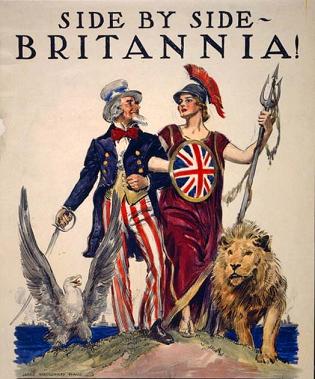
Time to divorce?
For as long as I can remember, I’ve been an avid Anglophile. I love the history of England, the English language and the English writers and poets, the Common Law and, well, almost everything else English (and Celtic). As such, this last week has taken a terrible toll on my own love for that people.
From the BBC, the major English newspapers, and, perhaps most blatantly, across the various organs of social media, the British have lambasted us. Not just once and not merely constructively, but a million times and with intense bitterness. I’ve even deleted my Facebook account as I simply can take no more of the anger spewing from my British “friends.”
Damned if we do, damned if we don’t. I’d be the last person on earth to defend American military actions abroad over the last 25 years, but the British reaction to us is just vile. If we intervene, we’re warmongers. If we pull back, we’re destabilizers.
I have strong reservations about President Trump as well, but I do hope that the next four years will give us Americans time to pause and reconsider our role in the world, with NATO, and with every other strategic alliance. It might very well be time to return all European defense back to Europe.
Certainly, our American Founders envisioned us avoiding ALL entangling alliances.
Regardless, we live in interesting times.
Concert Review: Anderson, Rabin & Wakeman (ARW) Saturday, November 12, 2016 at the Majestic Theater, San Antonio, Texas. — Progarchy — Progarchy
With the first step into the Majestic Theater in San Antonio one crosses the threshold into a magical space, like entering a ride at a theme park. The original 1920’s tiled floors direct your paces into the main theater with beautifully sculpted dark wood line the walls, railings, ceilings, and staircases. Ornate chandelier’s illuminate the […] […]
 Stormfields