
Interview with Paul Elmer More, 1943
Source: J. Duncan Spaeth, “Conservations with Paul Elmer More,” SEWANEE REVIEW 51 (Autumn 1943): 532-545.
Thomas Merton, “Time and Liturgy,” 1956
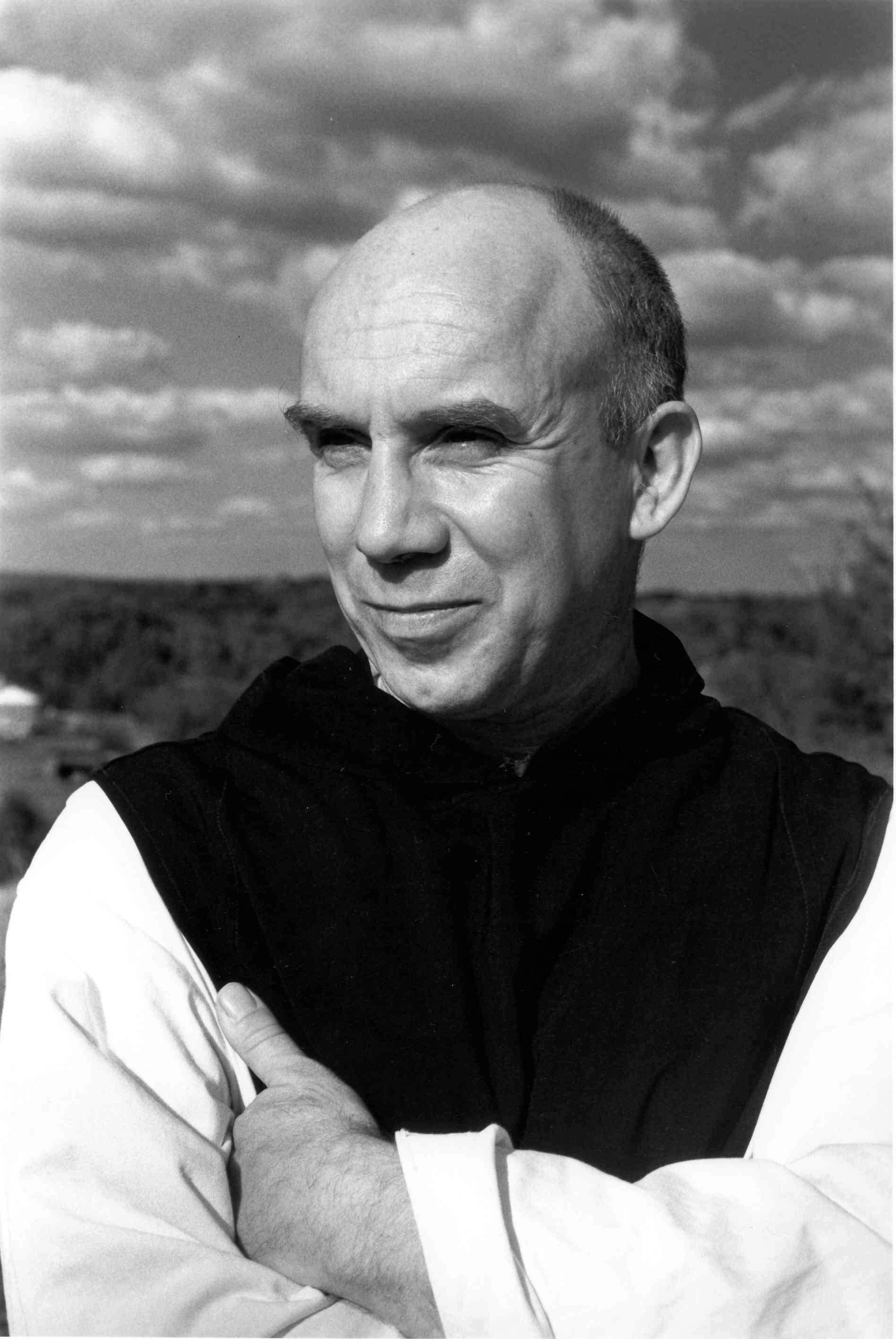
Brother Thomas Merton
I always find it strange that Catholics possess mixed feelings about Thomas Merton. For me, he was an absolute genius. Brilliant and a man of almost impeccable integrity. Of all of his writings, this–Time and Liturgy–is one of my favorites.
Source: Thomas Merton, “Time and Liturgy,” WORSHIP 31 (December 1956): 2-10.
Happy New Year: A Feast of Christopher Dawson Material
Dawson, “New Decline and Fall,” COMMONWEAL 15 (1932), 370-372.
Dawson, “The Significance of Bolshevism,” ENGLISH REVIEW (September 1932): 239-250.
Dawson, review of MEIN KAMPF, THE TABLET (March 25, 1939), 373-374.
Dawson, “The New Community,” THE TABLET (1939). Multiple piece article.
Dawson, “The Papacy and the New Order,” 421 (April 1942): 109-115.
cd parties politics peace 1945
Dawson, “Parties, Politics, and Peace,” THE CATHOLIC MIND (June 1945): 370-372.
Dawson, review of Niebuhr, THE DUBLIN REVIEW 224 (1952): 64-68.
Dawson, Christianity and Sex (full book)
In the late 1920s, T.S. Eliot asked Christopher Dawson to write a small book on the meaning of family in the western and Christian tradition. The two would come to collaborate frequently, but this was the first thing that brought them together. A great little book. Enjoy.
And, by popular request–the missing pages. My apologies, but I don’t have the original 1930 version. I took these from Dawson’s 1933 book, ENQUIRIES INTO RELIGION AND CULTURE (New York: Sheed and Ward).
Paul Elmer More, PAGES FROM AN OXFORD DIARY (full book)
Certainly one of the most powerful books I’ve ever read. More finished it only days before his own death.
Nicholas Berdyaev, “Christianity and Anti-Semitism,” 1948
 Alexandr Solzhenitsyn regarded Berdyaev as possibly the greatest anti-communist thinker to come out of Revolutionary Russia.
Here, translated, is a piece he wrote on anti-Semitism. Fascinating.
Gabriel Marcel, “The Concept of Spiritual Heritage,” 1953
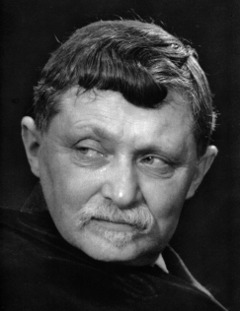 Not well known in the U.S., Marcel was one of the foremost Christian Humanists of 20th-century Europe. This article, in particular, influenced Russell Kirk. So much so that Kirk hoped to co-author a book with Marcel.
Source: Gabriel Marcel, “The Concept of Spiritual Heritage,” CONFLUENCE 2 (September 1953): 3-15.
An Open Letter to Etienne Gilson, 1950
Source: Waldemar Gurian, “Europe and the United Sates: An Open Letter to Etienne Gilson,” COMMONWEAL 53 (December 15, 1950), 250-251.
Peter Wust, “The Necessity of Metaphysics,” 1934
Source: Peter Wust, “The Necessity of Metaphysics,” COLOSSEUM 1 (June 1934): 14-18.
Seven Original Articles on the New Humanism
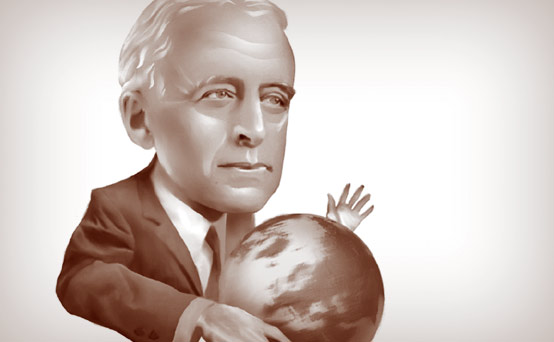
Image of Irving Babbitt by Michael Hogue, borrowed from THE AMERICAN CONSERVATIVE.
Seven articles in pdf format. Enjoy!
Source: T.S. Eliot, ESSAYS ANCIENT AND MODERN (Faber and Faber, 1936).
Source: Austin Warren, “The ‘New Humanism’ Twenty Years After,” MODERN AGE 3 (Winter 1958-1959): 81-86.
Source: G.R. Elliott, “Irving Babbitt as I Knew Him,” AMERICAN REVIEW 8 (1936-1937): 36-60.
Source: W.F. Giese, “Irving Babbitt, Undergraduate,” THE AMERICAN REVIEW 6 (1935-1936): 65-94.
Source: G.R. Elliott, “The Religious Dissension of Babbitt and More,” AMERICAN REVIEW 9 (1937): 252-265.
babbitt and more religious dissension
Source: C. Hartley Grattan, ed, THE CRITIQUE OF HUMANISM: A SYMPOSIUM (New York: Brewer and Warren, 1930), 39-60.
Source: G.R. Elliott, “More’s Christology,” AMERICAN REVIEW 9 (1937): 35-46.
Correspondence of Paul Elmer More and Stuart Sherman
Source: Jacob Zeitlin, ed., “Stuart P. Sherman and Paul Elmer More,” THE BOOKMAN (September 1929): 43-53.
“Disraeli and Conservatism” by Paul Elmer More, 1915
Many regard this as Paul Elmer More’s most important essay. Certainly, it is the article that inspired the “moral imagination” of Irving Babbitt, T.S. Eliot, Russell Kirk, and Winston Elliott.
Source: Paul Elmer More, Aristocracy and Justice (Boston, 1915).

