
Please support THE IMAGINATIVE CONSERVATIVE
The Imaginative Conservative is about to start its seventh year of existence. I’m extremely proud of what we’ve been able to accomplish in just a mere six years. Every time I go to a conference (whether ISI or IHS or Liberty Fund), I have folks tell me how much they admire Winston Elliott III, the founder, and Stephen M. Klugewicz, editor.
When Winston and I founded TIC in 2010, we never really imagined it would grow as quickly as it did. Now, there’s a whole non-dogmatic school of thought that centers around the site, its editors, and its writers.
We believe in discussion, not sound bytes, and we absolutely reject any form of ideology: left, right, above, below, next to.
I think I can also state without a lot of ego and bravado that it is one of the one or two best sites anywhere on the Internet in terms of writing and style.
As we approach not only the sixth birthday of TIC but also the Fourth of July, please consider donating to our cause. It is, after all, the cause of Socrates, Cicero, and Washington. It is the cause of the Good, the True, and the Beautiful.
To support TIC, please go here: http://www.theimaginativeconservative.org/2013/12/help-us-the-imaginative-conservative.html
Our Hero: Socrates in the Underworld — The Imaginative Conservative

Today’s offering in our Timeless Essay series affords readers the opportunity to join Peter Augustine Lawler as he reflects on how Socrates models The post Our Hero: Socrates in the Underworld appeared first on The Imaginative Conservative.
via Our Hero: Socrates in the Underworld — The Imaginative Conservative
Mythology and Western Civilization: 17 Lectures
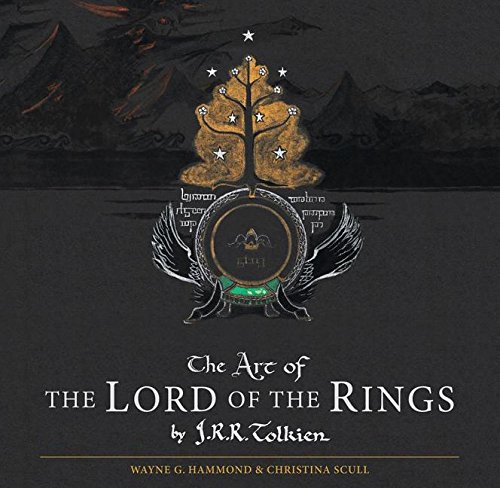
Tolkien, the artist at his best.
A glorious thanks to my great friend, Tom Woods, a man of intense and abiding virtue. I’ve just completed my second set of courses for his Liberty Classroom.
Why Mythology Matters
The Ideal Friend of the Honest Historian — The Imaginative Conservative

Don’t let us utter too much evil of party writers, for we owe them much. If not honest, they are helpful, as The post The Ideal Friend of the Honest Historian appeared first on The Imaginative Conservative.
via The Ideal Friend of the Honest Historian — The Imaginative Conservative
T.S. Eliot on Good and Evil

T.S.E.
The world turns and the world changes,
But one thing does not change.
In all of my years, one thing does not change,
However you disguise it, this thing does not change:
The perpetual struggle of Good and Evil.
Forgetful, you neglect your shrines and churches;
The men you are in these times deride
What has been done of good, you find explanations
To satisfy the rational and enlightened mind.
Second, you neglect and belittle the desert.
The desert is not remote in southern tropics
The desert is not only around the corner,
The desert is squeezed in the tube-train next to you,
The desert is in the heart of your brother.
The good man is the builder, if he build what is good.
I will show you the things that are not being done,
And some of the things that were long ago done,
That you may take heart, Make perfect your will.
Let me show you the work of the humble. Listen.
–T.S. Eliot, Choruses from THE ROCK.
The Last of the Romans: Charles Carroll of Carrollton — The Imaginative Conservative

The last of the American signers of the Declaration of Independence to pass from this world, Charles Carroll of Carroll was also The post The Last of the Romans: Charles Carroll of Carrollton appeared first on The Imaginative Conservative.
via The Last of the Romans: Charles Carroll of Carrollton — The Imaginative Conservative
Meditation on a glacier — elizabeth hamilton

Over the past few weeks, since returning from a long-anticipated trip to Iceland, many of my friends and family have asked how it was and what was my favorite part. To which I usually reply by sharing the story of the glacier. Funny enough, when I think about the most enjoyable parts of the trip, my encounter with the glacier […]
JPII: Incarnation Inspires Genius
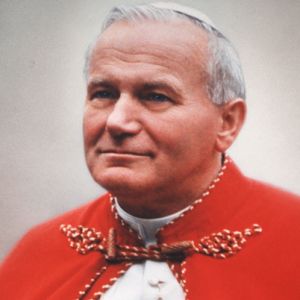 I’m not sure exactly why I needed to look this up today, but the horrific events in Florida this week made me think of JPII’s extremely Catholic teaching that every individual matters. The following, which Pope John Paul II delivered in late 1996, is possibly the greatest explanation of Christian Humanism I’ve ever encountered. Gleaves Whitney first introduced this piece to me when we met in the late 1990s. While I’ve never never been worthy of what this piece argues, I can state with utter sincerity that every course I’ve taught and every book I’ve written has always had this piece at the back of my mind.
I’m taking this from the EWTN website.
John Barron and I discuss Russell Kirk: C-Span Book TV
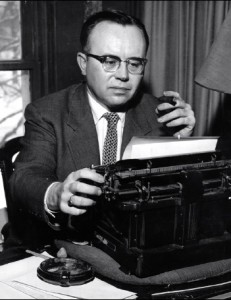 Yesterday, I had the grand privilege of speaking with John Barron (Chicago Tribune) about Russell Kirk on live tv, C-Span’s Book TV.
It was wonderful, and John, not surprisingly, was a brilliant gentleman. In fact, everyone at the Printer’s Row festival was simply fantastic.
I was truly honored to speak with John for 45 minutes. A thanks (a huge thanks!) to all involved.
Enjoy!
http://www.c-span.org/video/?410275-2/bradley-birzer-discusses-russell-kirk
Kirk/Me on CSPAN BOOK TV: Sunday, June 12
 Tomorrow morning, for the first time in my life, I will be on live TV, interviewed from 10:00-10:45AM CST. John Barron of the Chicago Tribune will be interviewing me re: Russell Kirk at the Printer’s Row Literary Fair.
Needless to write, I’m thrilled. So, please tune in and send me some good thoughts and prayers!
CSPAN2/Book TV.
http://www.c-span.org/video/?410275-2/bradley-birzer-discusses-russell-kirk
C.S. Lewis Breaks Down During Sermon
 Today, as many of you probably know, is the 75th anniversary of C.S. Lewis’s delivering his most famous sermon, “The Weight of Glory.” Though the following is NOT about that sermon, it is quite revealing and quite moving.
Ascetic Mr C.S. Lewis, Magdalen’s English Literature tutor and author of ‘The Screwtape Letters,” is becoming ever more of a power in Oxford. Though a layman he often occupies one or other of the pulpits in the University. An elderly Oxford don remarked to me the other day that there has been no preacher with Mr. Lewis’s influence since Newman. He more than fills the University church of St. Mary’s. Preaching on a recent Sunday morning in Mansfield College to a congregation in which there were many senior members of the University, including the Warden of All Souls, he made a deep impression. In the middle of the sermon, Mr. Lewis, under stress of emotion, stopped, saying, ‘I’m sorry,’ and left the pulpit. Dr. Micklem, the Principal and Chaplain went to his assistance. After a hymn had been sung, Mr. Lewis returned and finished his sermon, which was about the Ascension, on a deeply moving note. It was, I am assured, an extraordinary experience for his hearers. There is much speculation in the University about his future. Many think that his deep spiritual powers may put him at the head of a new Oxford Movement. At one time, Mr. Lewis, as he has confessed, was an atheist.
–“Oxford’s Modern Newman,” LONDON DAILY TELEGRAPH (June 2, 1944).
What Lincoln’s Election Meant to South Carolina — The Imaginative Conservative

The finest of gentlemen founded South Carolina, informants assured the famous London Times correspondent, William Howard Russell, upon his arrival in Charleston The post What Lincoln’s Election Meant to South Carolina appeared first on The Imaginative Conservative.
via What Lincoln’s Election Meant to South Carolina — The Imaginative Conservative
 Stormfields