Stormfields

Celtic Convictions: The Lovely Metal of Leah McHenry

bradbirzer's avatarProgarchy

Leah, KINGS AND QUEENS (Innerwound Recordings, 2015).

Track listing: Arcadia; Save the World; Angel Fell; Enter the Highlands; In the Palm of Your Hand; Alpha et Omega; Heart of Poison; Hourglass; Palace of Dreams; This Present Darkness; The Crown; Remnant; There is No Farewell; Siuil a Run

Birzer rating: 9.55/10 

Lovely Leah. Lovely Leah.

***

Leah McHenry is a diamond, but not in the rough. Indeed, her talents are perfectly shaped and polished, ready to appear alone or in a company of other gems. Whatever the setting, though, Leah will be the brightest in the room.

I’m not sure I could honestly call this piece a review in any journalistic or Brian Watson-sense of the term “review.” I count Leah among my friends, however much distances across North America might separate us, and I’m proud to include anything she does as progarchist. At a personal level, she and I share the same views on political…

View original post 843 more words

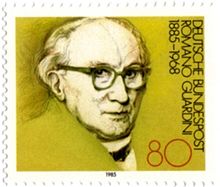
Selections from Romano Guardini’s LETTERS FROM LAKE COMO

220px-Romano_Guardini_stamp“In truth, nature beings to relate to us only when we begin to indwell in it, when culture begins in it.  Culture then develops and, bit by bit, nature is refashioned.  We create our own world, shaped by thoughts and controlled not merely by natural urges but by ends that we set to serve ourselves as intellectual and spiritual beings, an environment that is related to us and brought into being by us.” (10)

“All intellectual and spiritual activity presupposes a kind of asceticism, of break up of nature, of dissolving and dematerializing it.  Only then can we do our human work.” (11)

“In this new sphere things are no longer directly detected, seen, grasped, formed, or enjoyed; rather, they are mediated by signs and substitutes.” (20)

“The one sinks into a things and its context.  The aim is to penetrate, to move within, to live with.  The other unpacks, tears apart, arranges in compartments, takes over and rules.” (43)

“The other form of knowledge and its mastery is very different.  It began to emerge already during the Renaissance but has really come into its own very recently.  This knowledge does not inspect, it analyzes.  It does not construct a picture of the world, but a formula.  Its desire is to achieve power so as to bring force to bear on things, a law that can be formulated rationally.  Here we have the basis and character of its dominion: compulsion, arbitrary compulsion devoid of all respect.” (44)

“We see the same phenomenon in politics.  Here statistics provides the basis.  A host of bureaucrats makes use of statistics and governs by this means.  Newspapers, put in the service of goal-directed slogans, mold public opinion; so do posters and films.  Similarly, the monstrous organization of economic life works rationally and arbitrarily like a machine.  It both serves politics and controls it.  It has a profound impact on cultural life by means of the radio, the control of the press, theater, music, and travel.” (47)

“a technique of controlling living people is developing.” (47)

“At all events, the anxious question arises: What will become of life if it is delivered up to the power of this dominion?  Living events go their own ways, ways of development, sensitive, deep-rooted ways.  They have their own profound sureness.  They are infinitely tender but also inconceivably strong and invincibly powerful so long as they remain in their own essential courses.  But these courses are now heading for the dark.  The creativity is now unconscious.  Things seem to be following no rule, to be taking place simply at will.  What will happen when these events become subject to the harsh consciousness of rational formulas, the power of technical compulsion?  A system of machines is engulfing life.  It defends itself.  It seeks free air and a secure basis.  Can life retain its living character in this system?” (49)

“Rankings formed.  Individual vocations had their own value and dignity, but did not prevent recognition of higher and lower vocations.  Similarly, final equality before God did not prevent the formation of classes on a scale and intellectual ranking.  Life was strongly grasped, and vocational work was done.  But that did not involve any confusion on the everyday with the sublime, of the profane and the sacred.” (55)

“Tradition was in time what air and water and soil are in space.  We thus have two things.  On the one hand, a developed humanity has slowly achieved clearly evolved forms and has developed powers of seeing, owning, living, thinking, ruling, and creating.  On the other hand, we have appropriately formed work, mature and full creation-not a numerical but an intensive fullness.  Life pulses through it down to the last member.  The multiplicity of life finds expression in a thousand details.  Every gate, lattice, and staircase, every proverb, custom, office, and tradition has been vitally formed and produced.  So flexible is the creative work!  It divides into different types, classes, human ranks, and seasons of the year.  And all of it, material, work, content, is authentic.  But the masses have changed all this.” (57)

“Unlimited production means that every art of force and cunning must be used to produce unlimited consumption!” (59)

“Everywhere we find hybridization.  All rankings are lost. We all think we are justified in whatever we do.  We are no longer tied to the essence of content or the historical or social dignity of form.” (59)

“How vulgar life has become in every sphere, even in religion.” (59)

“But here everything is made showy and trashy-and the more hopelessly so, the greater the technical perfection.  So it is with everything. . . . They bring them all into the trashy sphere, that is, within reach of the masses.” (61)

“Take religious drama, the ordinary mysteries.  Just a few more of them, a few more years of legends and religious lyrics, and our life of faith will no longer be healthy.  What is the Christmas event when it is reduced to sweet nothings in a hundred nativity plays?” (61)

“People did, of course, use tools and aids in great numbers and with great delicacy.  But these were only supports, extending the range of activity of natural human organs, making possible more acute and accurate seeing and hearing, working, understanding, and controlling.  The means were always integrated into the interplay of the human unit, and a limit was always set to make possible direct and living execution.” (66)

“Individual forces such as steam, electricity, and chemical energy have been taken out of their natural context.  We know their rational laws, and on the basis of this knowledge we can unleash their power.” (71)

“Our age is different from what has come before it.  It is not different merely as the Renaissance is compared to the Middle Ages.  The difference goes incomparably deeper.  It often seems to me that the period from 1830 to 1870 is the watershed.  All things before that, however different,  belong together.  They rest on a similar basic attitude, share the same human standard, are integrated into nature and its proportions.  What has come since seems to be governed by a different basic attitude, by the desire to set goals independently of organic connections and on the basis of rationally emerging forces that are mechanically put in the service of this desire and its goals.” (75)

“It is destructive because it is not under human control.  It is a surging ahead of unleashed forces that have not yet been mastered, raw material that has not yet been put together, given a living and spiritual form, and related to humanity.” (79)

“Our age is not just an external path that we treat; it is ourselves.  Our age is our own blood, our own soul.” (81)

“God is at work.  History is going forward in the depths, and we must be ready to play our part, trusting in what God is doing and in the forces that he has made to stir within us.” (96)

Source: Romano Guardini, LETTERS FROM LAKE COMO (Grand Rapids, MI: Eerdman’s, 1994).

Selections from Albert Jay Nock’s THEORY OF EDUCATION

nock“I trust, however, that you will allow me to regard it also as the impersonal welcome offered by citizens of the great republic of letters to another citizens whose only credentials and recommendations are those with which his citizenship provides him.” (1)

“Our business here, I take it, is to consult about matters which seriously affect the welfare of our republic, and I may assume therefore that we are prepared to approach it in no provincial or parochial spirit, but in a truly republican frame of mind, intent only upon the interest to which our first allegiance is due, the interest of the republic of letters.” (1-2)

“If Socrates had come before the Athenians with some fine new piece of machinery like a protective tariff, workmen’s compensation, old age pensions, collective ownership of the means of production, or whatnot; if he had told them that what they must do to be saved was simply to install his piece of machinery forth with, and set it going; no doubt he would have interested a number of people, perhaps enough to put him in office as the standard-bearer of enlightened and progressive liberalism. When he came before them, however, with nothing to say but Know thyself, they found his discourse unsatisfactory, and became inpatient with him.” (Pages 2–3)

“Yes you may not be at all an educated person, but only an instructed person.” (Page 7)

“The word sends us back to a phrase of Plato. The person of intelligence is the one who always tends to ‘see things as they are,’ the one who never permits his view of them to be directed by convention, by the hope of advantage, or by an irrational and arbitrary authoritarianism. He allows the current of his consciousness to flow in perfect freedom over any object that may be presented to it, uncontrolled by prejudice, prepossession or formula; and thus we may say that there are certain integrities at the root of intelligence which give it somewhat the aspect of a moral as well as an intellectual attribute.” (Pages 8–9)

“Too much attention has been paid to the languages, literature and history of classical antiquity, which were all a far less than helpful value to the youth of 20th century America. The thing now was to introduce the sciences, living languages and the useful arts, to make instruction vocational, to open all manner of opportunities for vocational study, and to introduce youth into her institutions for pretty strictly vocational purposes. All this was done; the process amounted to a revolution, carried out with extraordinary thoroughness and in an astonishingly short time. Hardly any debris of the order remains except, curiously, the insignia of certain proficiencies; these now survive as mere vestiges. You will as well aware as I, for example, of what a bachelor’s degree in liberal arts now represents. Some new insignia have been devised, and one or two borrowed from the systems of other countries, like the degree of doctor of philosophy, which fulfills the humble but possibly necessary function of a factory–inspection label, some say a trade–union label; perhaps it is both. Aside from these insignia, however, nothing is left; our system underwent a revolutionary renovation. Exponents of the new order have had their way unhindered, and have been able to command it almost inconceivable amount of money and enthusiasm in support of their plans and policies. Yet after three decades of this, our system gives no better satisfaction, apparently, than it did before. At no time during this period has it given satisfaction; hence the period has been one of incessant tinkering, the likes of which probably has never been seen anywhere in the world. Method after method, device after device, readjustment after readjustment, have been tried, scrapped, revised and modified, and then tried again. One might say that the field of our pedagogy during these last three decades has been the drill ground of empiricism; large areas of that, indeed, seem to have been, and still seem to be, the hunting–ground of quackery. One cannot too much wonder at the high hopefulness attending this unconscionable revel of experimentation. Yes, yes, we kept saying, let us but just installed this one new method in the secondary schools, with this one new set of curricular changes in the undergraduate college, with this one brand-new scheme for broadening the scope of university instruction, and in a year or so it will prove itself to be the very thing we have all along been needing; and this, that or the other batch of pedagogical problems will be laid to eternal rest. Such, I think, is a fair summary of our thirty years’ experience.” (Pages 12–13)

“At the 55th anniversary of the founding of Johns Hopkins University, Mr. Lang said that the type of education offered in our new million-dollar high schools is about 1/20 as valuable as the kind given in the traditional little red schoolhouse of a generation ago.” (19)

“I have mentioned the fact that our system has been subjected to incessant tinkering throughout the post revolutionary period. We may now observe that all this tinkering has been purely mechanical and external; it is been applied exclusively to the structure and mechanics of the system.… I do not recall the names of more than one or two of them, they are so many have come and gone in such quick succession.” (21)

“Its interpretation frequently betrays a fast ignorance of what the humane life really is, and of the discipline whereby alone one may make progress towards this life.” (26)

“The first idea was that the quality; the second, that of democracy; and the third idea was that the one great assurance of good public order and honest government lay in a literate citizenry.” (27)

“Our system is based upon the assumption, popularly regarded as a illicit in the doctrine of equality, that everybody is a educable.” (30-31)

“You know its chosen machinery was that of a republic, as affording the best power or purchase for the free expression of this right. As a matter of logic, when everybody votes, you have a democracy; the registration of democratic judgment is a mere matter of counting ballots. Thus the confusion of terms set it; a republic in which everybody voted was accepted as a democracy and was so styled, as it still is. This confusion persists, and the evidence of it is on every other page of many, I think the great majority, serious writers. In fact, we may say that the terms republican and democratic have come to be regarded as synonymous.… Republicanism does not, therefore, of itself even imply democracy.” (34–35)

“Meanwhile, on the top of this, which we may call an academic error, grew the popular error which accepted as democratic a whatever was merely indiscriminate.” (37)

“There is no such thing as democratic manners; manners are either bad or good.” (38)

“The popular idea of democracy is animated by a very strong resentment of superiority.  It resents the thought of an elite.” (38)

“The whole institutional life organized under the popular idea of democracy, then, must reflect this resentment. It must aim at no ideals above those of the average man; that is to say, it must regulate itself by the lowest common denominator of intelligence, taste and character in the society which it represents.” (39)

“Any expectations put upon the saving grace of literacy are illusory.” (44)

“After the three R’s, or rather for a time in company with them, his staples were Latin, Greek and mathematics.” (50)

“The literatures of Greece and Rome comprise the longest and fullest continuous record available to us, of what the human mind has been busy about in practically every department of spiritual and social activity; every department, I think, except one—music. This record covers 2,500 consecutive years of the human mind’s operations in poetry, drama, law, agriculture, philosophy, architecture, natural history, philology, rhetoric, astronomy, politics, medicine, theology, geography, everything. Hence the mind that has attentively canvassed this record is not only a disciplined mind but an experienced mind; a mind that instinctively views any contemporary phenomenon from the vantage-point of an immensely long perspective attained through this profound and weighty experience of the human spirit’s operations. If I may paraphrase the words of Emerson, this discipline brings us into the feeling of immense longevity, and maintains us in it. You may perceive at once, I think, how different would be the view of contemporary men and things, how different the appraisal of them, the scale of values employed in their measurement, on the part of one who has undergone this discipline and on the part of one who has not. These studies, then, in a word, were regarded as formative because they are maturing, because they powerfully inculcate the views of life and the demands on life that are appropriate to maturity and that are indeed the specific marks, the outward and visible signs, of the inward and spiritual grace of maturity. And now we are in a position to observe that the establishment of these views and the direction of these demands is what is traditionally meant, and what we citizens of the republic of letters now mean, by the word education; and the constant aim at inculcation of these views and demands is what we know under the name of the Great Tradition of our republic.” (52–53)

“The aim at an inculcation of these views and demands is the Great Tradition of a truly civilized society.” (54)

“The reason it did not work was that this process postulated an educable person, and everybody is not educable.  From it, we discovered that relatively very few are educable, very few indeed. There became evident an irreconcilable disagreement between our equalitarian theory and the fact of experience. Our theory assumes that all persons are educable; our practical application of it simply showed that the Creator, in His wisdom and in His lovingkindness, had for some unsearchable reason not quite seen His way to fall in with our theory, for He had not made all persons educable.” (55)

“anybody can be trained.  Practically any kind of mentality is capable of making some kind of response to some kind of training; and here was the salvation o four system’s theory.  If all hands would simply agree to call training education, to regard a trained person as an educated person and a training school as an educational institution, we need not trouble ourselves about our theory; it was safe.  Since everybody is trainable, the equalitarian side of our theory was safe.” (59)

“What we did, then, actually, was to make just this identification of training with education, and to reconstruct our system accordingly; and this was the revolution of thirty-five years ago.” (60)

“Science touched the popular sense of awe and wonder. In a memorable conflict with many of the dogmatic constructions of organized Christianity, it did come off easily first best; and this had immense popular significance, such significance as is hard for us now even to imagine. Men’s minds were for the marvels of science; their imaginations were busy with its alluring prospect of further marvels.” (63)

“They do so because they rests wholly upon evidence of the senses. I do not say that all science rests upon evidence of the senses—there is no need to raise that point—but only that these dilutions do, and that therefore they are accessible to an extremely low order of intelligence, and are easily taught.” (64–65)

“Interest in vocationalism also affected the content of our new procedure. The teaching of science answered the innovators demand that our system should be modern and up-to-date, that we should be “men of our time.”” (66)

“Let us speak of the University and the undergraduate college. Traditionally, the University was an Association of scholars, grouped in four faculties; literature, law, theology and medicine. When I say an Association of scholars, I mean that it was not quite precisely what we understand by a teaching institution. The interest of the students was not the first interest of the institution. Putting it roughly, the scholars were busy about their own affairs, but because the Great Tradition had to be carried on from generation to generation, they allowed certain youngsters to hang about and pick up what they could; they lectured every now and then, and otherwise gave the students a lift when and as they thought fit. The point is that the whole burden of education lay on the student, not on the institution or on the individual scholar. Traditionally, also, the undergraduate college but the whole burden of education on the student. The curriculum was fixed, he might take it or leave it; but if he wished to proceed bachelor of arts, he had to completed satisfactorily. Moreover, he had to complete it pretty well on his own; there was no pressure of any kind upon an instructor to get him through it.” (73)

“I have no need to remind you that the responsibility for continuous exercise of an absolutely spotless intellectual integrity rests most heavily upon those who pretend to be the continuators of the Great Tradition. It is of the essence of the Great Tradition that the disinterestedness and objectivity imply in Plato’s phrase should, first and last and most inflexibly, be maintained upon ourselves, our interests and desires, above all upon our ambitions and achievements.” (80)

“It is fair, I think, to say that our institutions have conducted among themselves a grand competition for numbers, on rudeness terms; first, by shifting the burden of education from the student to the instructor, and putting pressure on the instructor to let his students go through as lightly and quickly as possible; and second, by offering a choice among an immense number of subjects that are easily taught, and easily accessible to a very low order of mind.” (81–82)

“Why should this be so? Forty years ago, our English-speaking students learned English quite informally; it was our own tongue, we were bred to a native idiomatic use of it, such a use ss none but a native can ever possibly acquire. To say that English was not taught in our higher institutions means merely that everybody taught it. No matter what the stated subject under discussion might be, if we expressed ourselves inaccurately, loosely, on unidiomatically, we heard about it at once and on the spot, and in terms that forcibly suggested a greater carefulness in the future.” (85)

“In the Middle Ages, the association of educable persons with them, and the exposure to the spiritual influences that they generated, pretty well made up all there was to education.” (93-94)

“Another interesting feature of this present condition of affairs is the only disappearance of what may be called the non-–professional scholar.” (98)

“One of the most interesting and significant assumptions in the world is that which you will nowadays encounter everywhere in American society: if a person shows signs of having an education, properly so-called, the assumption is almost invariably, first, that he got it in Europe, and second, that he makes his living by it or at least uses it for purposes of profit.” (99–100)

“The other suggestion I would make is that having thus dropped all pretense to an educational character, our system and its institutions should drop all titles, like that of college and university, which by age long usage intimate this character. Our system is not educational; we have seen that its fundamental theory makes it possible to attribute any such character to it. Its institutions are not educational institutions. Why, then, should there be any pretense to the contrary?” (116)

“Yet I repeat that there is great violence and great propriety in describing it as a university organization; great violence, in resting a very old title quite away from anything remotely resembling its traditional significance; and great impropriety, by consequence, in exposing the public, always careless in such matters, to the risk of most serious misapprehension.” (117)

“Surely there is nothing discreditable, say, about the name Institute; is in good usage everywhere, and carries just the right notion of what now goes on under the name of University work. As far as I know, there does not exist a University or undergraduate college, in the traditional and proper sense, anywhere in the country. I cannot see that there would be any conceivable sacrifice of prestige if our institutions honorably and scrupulously gave up a title to which they have but a most questionable right, and called themselves institutes.” (118–119)

“Well, I do not press either suggestion, even though I think that the matter of nomenclature is important because words have power.… A just care for words, a reasonable precision in nomenclature, is of great help in maintaining one’s intellectual integrity.” (121)

“The educable person, in contrast to the ineducable, and is one who gets promise of someday being able to think; and the object of educating him, of subjecting him to the Great Traditions discipline, is to put him in the way of right thinking, clear thinking, mature and profound thinking. Now, the experienced mind is aware that all the progress of actual civilization that society is ever made has been brought about, not by machinery, not by political programs, platforms, parties, not even by revolutions, but by right thinking.” (124)

“Nature takes her own time, sometimes a long time, about exacting her penalty and often gets added by strange, unexpected and roundabout way; but exact it in the end she always does, and to the last penny.” (125)

“Our society can get along for considerable periods by the process known as “muddling through,” in more or less cheerful disregard of the absence of thought and intelligence we take up the tabernacle of Moloch and Chiun, our images—Mr. Coolidge’s two-gallon hat and Mr. Henry Ford’s conveyor-system—and follow the star of our god Buncombe along ways which seem not too insecure.” (132)

“Even so may we say that it is a great art to know how to be on living terms with the Great Tradition. We call ourselves continuing to of the Great Tradition are aware with bitterness that in so styling ourselves we are but voicing an aspiration, we are but offering our reference to a distant, high and unapproachable ideal. We know better than anyone can tell us, how slight is our proficiency in the great art of familiar converse with it. Well, then, in a society that not only has lost that art that has lost even the knowledge that such an art exists, a society in which the Great Tradition itself is in complete abeyance—but I think I need say no more, the conclusion is manifest, it is inescapable.” (153–154)

“I may remind you—though I should not say that; let me rather say I may put into words what I know is in the consciousness of us all—that the Great Tradition will be no man’s debtor. When we speak of promoting it or continuing it, we are using a purely conventional mode of speech, as would we say that the sun rises or sets. We can do nothing for the Great Tradition; our fidelity to it can do everything for us. Creatures of the day, how shall we think that what we do or leave undone is of consequence to that which abides forever? Our devotion, our integrity of purpose, our strictness of conscience, are not exercised in behalf of the Great Tradition, but in our own behalf. Our recreancy cannot weaken it, our faithfulness cannot strengthen it; we alone are damaged by the one and edified by the other. The Great Tradition is independent of us not we of it. We cannot augment or diminish the force of its august and salutary laws; we can but keep to them, and therein find our exceeding great reward. We have therefore no responsibility but the happy one of keeping our eyes single to our own obedience. We need take no thought for the Great Traditions welfare, but only for our own; it asks no protection or championship from us, and any volunteer service of this kind is mere officiousness.” (155-156)

“We are called to be disciples, not energumens. The Great Tradition will go on because the forces of nature are on its side; it has on its side and invincible ally, the self preserving instinct of humanity. Men may forsake it, but they will come back to it because they must; their collective existence cannot permanently go on without it. Whole societies may disallow it and set it at naught, as ours has done; they may try to live by ways of their own, by bread alone, by bread and buncombe, by riches and power, by economic exploitation, by intensive industrialism, quantity–production, by what you please; but in the end they will find, as so many societies have already found, that they must return and seek the regenerative power of the Great Tradition, or lapse into decay and death.” (157).

“I do not think that our American society will ever return to the Great Tradition. I see no reason why it should not go on repeating the experience of other societies, having already gone as far as it has along the road of that experience, and find that when it at last realizes the need of transforming itself, it has no longer the power to do so. The terrible words of Perseus are as applicable to the tyranny of ideas as to any other mode of grasping and ruthless dictatorship. But this is no concern of ours. The Great Tradition has not left itself without abundant witness in contemporary societies, and as I began by saying, the constitution of the republic of letters knows no such thing as political nationalism. Our fellow citizens are ours where we find them; and where they are not to be found we may regard ourselves as citizens in partibus, uncommitted to an officious and ineffectual evangelism. Our allegiance is to the Constitution of our republic; we are committed only two clear understanding and right-thinking. If our present discussion has been of any avail in encouraging these, we may perhaps believe that the intention of this Lectureship has been in some degree fulfilled.” (159–160)

Source: Albert Jay Nock, THE THEORY OF EDUCATION IN THE UNITED STATES (New York: Harcourt Brace, 1932).

Russell Kirk and a Return to Principle, 1956

“Ever since the Civil War, political thought has languished in the United States. For original political theory almost always is developed out of a time of troubles, when thinking men, forced to examine their first principles, seek means to avert the imminent collapse of order, or to restore some measure of justice and security to a wounded society. The political writings of Plato and Aristotle came out of such an age. So did Cicero’s works, and Dante’s, and Machiavelli’s, and Hooker’s, and Hobbes’s, and Locke’s, and Burke’s, and Marx’s. The nature of the confusion which provokes the exposition of political theory may be the inadequacy of an old order, morally and administratively.” (142)

“No political philosopher of any great stature appeared during the last third of the nineteenth century, and the bulk of what passed for political thought in this country was simply the reflection of various English and German liberal ideas, adapted to the American climate of opinion. There seemed to be no need for reference to first principles; Things were in the saddle, and most men seemed to be satisfied to let Things ride” (142).

“Yet Things galloped on; the New Deal, fortunately perhaps, was the expression of vague humanitarian aspirations and positive grievances, not of any coherent ‘liberal’ or ‘radical’ system of thought. Nor was America’s part in World War II governed by any body of general ideas: caused by the combination of moral indignation with fear of Germany and Japan, American intervention stood bewildered for want of theory when the problems of peace had to be met.” (143)

“Yet there may come a time in the history of nations when the previous security against foreign intervention is destroyed, and when the tradition established usage are so weakened that they cannot stand unaided against the assaults of ideology. Such an era seems to be America’s in the middle of the twentieth century.” (143)

“Conservatism in the United States, by the end of the 1940’s, had almost lost the power of language. Very often, men of conservative prejudices expressed themselves apologetically in the phrases of nineteenth-century liberals; sometimes they even echoed the slogans old-fangled anarchism.” (144)

“Any healthy society requires an enduring contest between its permanent and its progression. We cannot live without continuity, and we cannot live without prudent change.” (145)

“For politics, like science, like art, comes out of belief in a transcendent religion; and when the first belief decays, politics decays, and the fancied terrestrial paradise becomes a very real terrestrial hell.” (146)

“It would be presumptuous to endeavor to summarize the whole of Mr. Voegelin’s work before his six fat volumes have appeared. My present purpose is to suggest that such principles as Mr. Voegelin expounds are the principles which increasingly are being recognized by thinking American conservatives as the foundation of their beliefs. The names of Bernard Iddings Bell, R.S. Nisbet, Leo Strauss, Ross Hoffman, and Reinhold Niebuhr may suggest the range of conservative views founded upon belief in a transcendent order, in an unalterable human nature, and in a natural law.” (148)

“Conservatism begins with the premise that we must be obedient to a transcendent order which has given us natural law. The nature of man being complex, no simple set of positive laws, universally applied, will suffice to make him happy or good. And the nature of man being flawed, the evil part of his nature, lusting after power and aggrandizement, envious and violent, must be restrained by custom, authority, and balanced government which checks power with power.” (148)

“Populism and the New Deal merely aped the spurious utopia of business enterprise, without having any concept of a fundamental change in the quality of American life; the New Dealers, indeed, were glad to escape into the war and so avoid any re-examination of their own principles.” (149)

Source: Russell Kirk, “Return to Principle in Politics: Conservatives and Liberals Take Thought,” Southwest Review 41 (Spring 1956): 142-152.

Russell Kirk in the Ruins of Carthage, 1963

a night in tunisiaNowhere are Roman ruins thicker than in Tunisia. For this, from the days when Scipio took Punic Carthage until the Vandals broke into the city, was the Province of Africa, wondrously rich and populous. St. Augustine was born in Carthage — of a patrician family — and died in neighboring Hippo, v/hen the Vandals were at the gates. I have just spent some days in Tunis and the country round about. In Carthaginian and Roman times, the town on the site of Tunis, across the bay from Carthage, was a slum; now it is the capital of a new state. But the greatness of this land is gone, and one comes chiefly to view the ruins. If one goes up to the Moslem town of Zaghouan, thirty miles inland from Tunis, he finds the springs from which the Romans took their water to supply the great Antonine baths at Carthage, and from which Tunis’ water still comes. Here stands even today the Temple of the Nymphs at the fountainhead, built in the Emperor Hadrian’s day. The colossal Roman aqueduct still stands in ruin all down to the coast, across arid hillside and plain. The ruined Roman cities of Tunisia are many, sacked by Vandal and Arab. Of them, Carthage by the sea is most evocative of the grandeur that was Rome. Though the Romans, having destroyed forever the Punic power, sowed with salt the site of the Carthaginian capital, later the Romans built their own city on the site. The eminence called the Birsa, where the people of Hannibal made their last ghastly stand in citadel and temples, is surmounted nowadays by the Catholic cathedral. But one sees elsewhere, the Tophet, the pit in which the Carthaginians sacrificed children; and many Carthaginian tombstones. Water made this land fruitful. But its forests were hewn down by militant Vandal and Byzantine and Arab, and erosion followed, and the great works of irrigation crumbled to dust. Until Decatur, Eaton, and other Americans taught the Barbary pirates a lesson, blackmail, freebootlng, and kidnapping were the industries of this blasted African shore. No strong power endures forever. In those times when Roman emperors were bred up in the Province of Africa, no man expected that all this splendor would become the abomination of desolation. Only after Alaric’s barbarian host had taken Rome did St. Augustine see that Roman might, too, was a vanity which must pass; and he wrote The City of God, which endures when the cities of this earth are given up to fire and sword. In the amphitheater of Carthage, still to be seen, St. Perpetua and many other Christians gave up the ghost. One finds, too, a little subterranean church dedicated to St. Monica, the mother of St. Augustine. Yet early Christian site though Carthage was, Islam triumphed long ago, and virtually the only Christians there now are resident Europeans. Their villas, and those of rich Tunisians, stand on the sites of big Roman houses, looking across the magnificent bay. Habib Bourguiba, president of the new Tunisian Republic and powerful as any Bey of Tunis of old times, is building himself a palace on these heights. One day, we must expect New York and Los Angeles will be as Carthage is now, laid low. As the centuries slide by, every civilized people forget or neglect the faith and the principles which raised them up to honor. You and I will be lapped in lead long before that day of wrath, I trust. Yet how soon or late a great city falls depends always on the courage and the wisdom of folk living long before the last agony.

Source: Russell Kirk, “Among the Ruins of Carthage,” To the Point (syndicated) Column (November 6, 1963).

Russell Kirk on Spoiled Priests and the Truly Humane, 1957

“’He that lives in a college, after his mind is sufficiently stocked with learning,’ Edmund Burke wrote while he was still a young man, ‘is like a man who, having built and rigged a ship, should lock her up in a dry dock.’  Now I submit that the principal threat to academic freedom in the United States comes from the dry-docked minds; the minds of ideologues within the walls of the Academy.” (4)

“To feel one’s self a prophet, but at the same time to insist, ‘I am, and none else beside me,’ is to indulge a most dangerous mood.  A prophet without a gospel is worse than a rebel without a cause.” (5)

“For the intolerant zealot within the Academy, having denied the existence of a supernatural order and enduring Truth, takes it for his whole duty to turn society upside down.  His evangelical zeal is diverted to the demolition of received opinions and things established.  He conceives it to be his mission to gnaw at the foundations of society; to convert his students to a detestation of whatever is old and enervated; to elbow out of the Academy all those among his colleagues who will not conform utterly to his own boasted secular ‘non-conformity’ . . . . He is a bulldozer in a black gown.” (5)

“The end of a university or college education is the apprehension of norms.  The norm does not mean the average, the median, the mean, the mediocre, although positivistic pedants and ill-informed journalists would have endeavored to corrupt the word ‘norm’ to that usage. . .  . A norm is an enduring standards.  It is, if you will, a natural law, which we ignore at our peril.  If is a rule of human conduct and a measure of public virtue.  It is not, some professors of education to the contrary, merely a measure of average performance within a group.  There is law for man, and law for thing; and it is through the apprehension of norms that we come to know the law divinely decreed for man’s self-governance.” (5)

“Techniques, and the knowledge of techniques, are transitory; but norms are eternal and the knowledge of norms, once thoroughly acquired, endures all a man’s life.” (6)

“Once upon a time I was a professor of a state university which offered an omnium-gatherum course called “humanities,’ consisting mostly of a giddy dash through four thousand years of history, accompanied by colored slides.  In the fullness of time, this department of ‘humanities’ issued a new syllabus, commencing with the words, ‘Humanities is . . . .’  On perceiving that this department of ‘humanities’ had thrown grammar to the winds, I cashed in my professional chips and sought another walk of life.” (6)

“For the true purpose of the humanities is to convey to us the significance of norms.” (6)

The Humanist “recognizes the supernatural and the natural worlds, and tries to harmonize the two in his own life and in society.” (7)

“A truly humane man is a person who knows we were not born yesterday.  He is familiar with many of the great books and the great men of the past, and with the best in the thought of his own generation.  He has received a training of mind and character that chastens and ennobles and emancipates.  He is a man genuinely free; but free only because he obeys the ancient laws, the norms, which govern human nature.  He is competent to be a leader, whether in his own little circle or on a national scale—a leader in thought and taste and politics—because he has served an apprenticeship to the priests and the prophets and the philosophers of the generations that have preceded us in our civilization.  He knows what it is to be a man—to be truly and fully human.  He knows what things a man is forbidden to do.  He knows his rights and his corresponding duties.  He knows what to do with his leisure.  He knows the purpose of his work.  He knows that there is a law for man, and law for thing.” (7)

“The founders of the Republic were bold and practical men; but they were humane.  Even those who had read little at least were saturated, from childhood, in the Bible, Cicero, Virgil, and Plutarch, if only in translation or through a kind of intellectual osmosis.  The model for the American Republic was the Roman Republic, modified by the English and colonial political experience; the models for American leadership were prophets, saints, and Plutarch’s heroes.” (7-8)

“In a true university, now as then, a humane education teaches obedience to norms: conformity to norms, if you will.  ‘Conformity’ has become a devil-term in many of our universities.  But there is no virtue in non-conformity for non-conformity’s sake.  Whether or not a wise and just man should conform always depends upon what is he conforming to.  To conform to fads, foibles, and the appetites of the hour is base and foolish.  But to conform to eternal truths, to those norms which teach us what it is to be a truly humane person, is the path of duty.” (8)

“If a man depends altogether on the private bank and capital of his petty private reason, he is risking his nature at the Devil’s chess-game.  But if a man fortifies himself within the disciplines of humane learning, he draws upon the wealth and power of the ages, and so is a fit match even for a diabolical adversary.” (8)

SOURCE: Russell Kirk, “The Spi’led Praist and the Stickit Minister,” Newman (Michaelmas, 1957): 4-8.

What a Rush! My Beginnings with Prog

Bryan Morey's avatarProgarchy

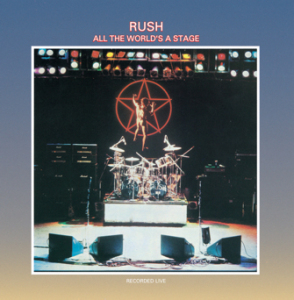
All the World's a StageI’ve been thinking a lot lately about the amount of new music I’ve listened to since joining Progarchy, and I’ve been wondering how I managed to get along without much of the music I listen to on an almost daily basis now! I’ve also been thinking about my first exposure to what I know understand to be progressive rock. At the time, I would have just called it classic rock.

I was a little kid. Maybe 6th grade, but for some reason I think it was a few years earlier. Let’s go with 2004 or 2005. I remember sitting in my brother’s bedroom as my Dad plugged his 40 gig iPod classic (remember those, black and white screen, weighed a couple pounds) into my brother’s stereo to relive the glory days with his college roommate who was in town and over for dinner. My first experience hearing Rush was the…

View original post 595 more words

More Russell Kirk on Abraham Lincoln

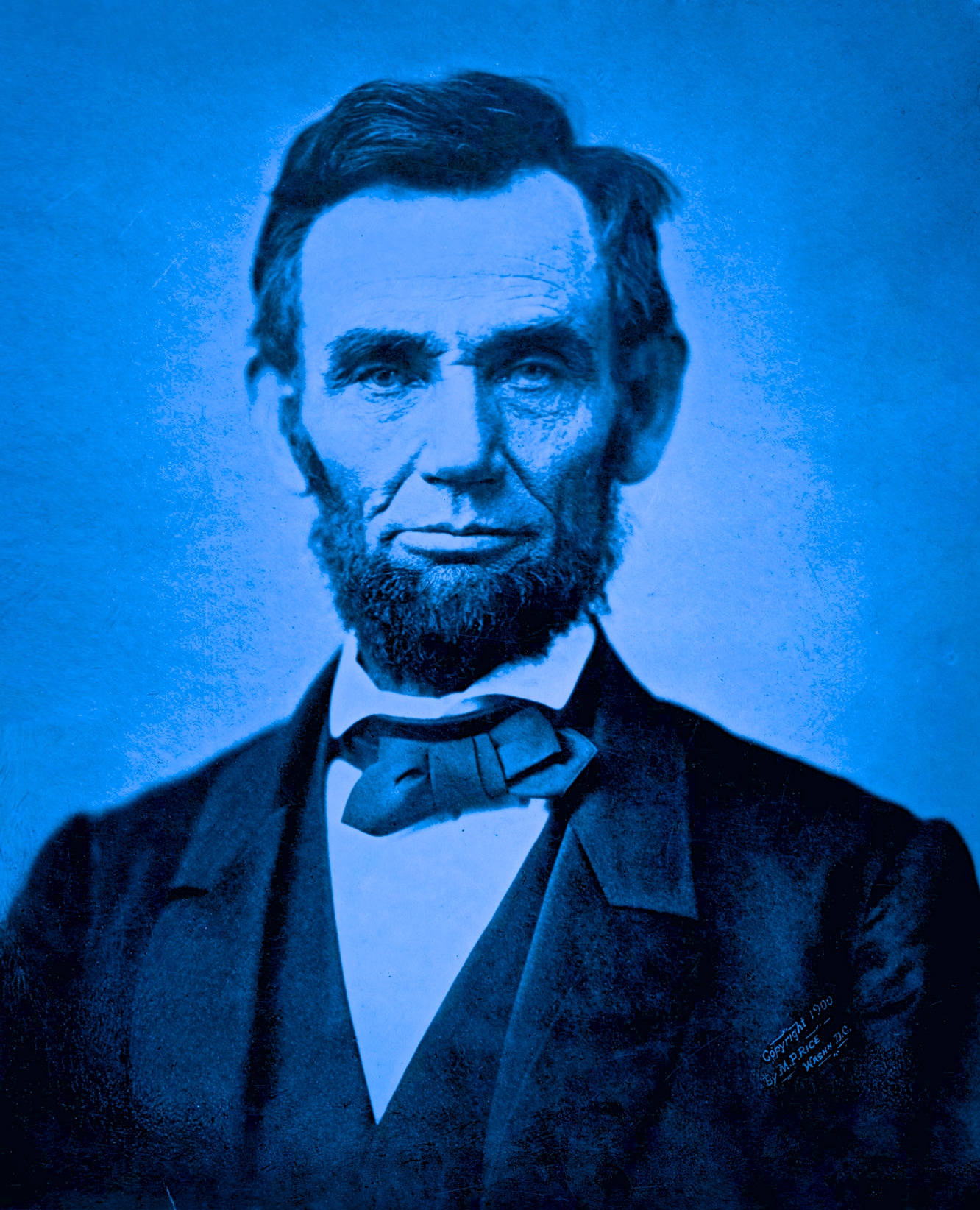
Abraham_Lincoln_November_1863 2

Kind of blue.

As Americans continue celebrating, remembering, and analyzing the events of 150 years ago, the noble tragedy of the American Civil War, it is certainly worth considering the words of great and profound thinkers who have studied the event.

I just posted the magnificent Russell Kirk’s words on President Abraham Lincoln from a 1970 speech he delivered in California. Now, I am posting quotes/excerpts from a Kirk article, “The Measure of Abraham Lincoln,” published in the English Jesuit periodical, The Month, 1954.

As he did in the 1970 speech, Kirk here again painted Lincoln as the great conservative of his day, a man who understood timeless principles and who implemented them to the best of his ability.

The Right, unfortunately, remains rather conflicted about the legacy and significance of Abraham Lincoln. I write unfortunate not because I dislike debate (should the Right ever totally agree on some thing, we might very well expect the fourth rider of St. John’s Apocalypse to appear from around the next corner), but because the debate has become simplistic and polarized. Just as Manichaeism has been declared heretical, so should this polarization be declared.

Kirk offered a third approach. Russell Kirk was, after all, his own man.

*****

SOURCE: Russell Kirk, “The Measure of Abraham Lincoln,” The Month 11 (April 1954): 197-206.

“But as Mr. Stanley Pargellis, in 1945, pointed out with cogency, in his cast of mind, his policies, and his empiricism, Lincoln was strongly conservative; and Mr. Weaver, for rather different reasons, holds the same opinion. Moreover, Lincoln’s original allegiance was to the Whigs, then the conservative party of the United States; and, says Mr. Weaver, ‘it is no accident that Lincoln became the founder of the greatest American conservative party, even if that party was debauched soon after his career ended. He did so because his method was that of the conservative.’” [pg. 199]

“In his great conservative end, the preservation of the Union, he succeeded; and he might have succeeded in a conservative labor equally vast, the restoration of order and honesty, had not Booth’s pistol put an end to the charity and fortitude of this uncouth, homely, melancholy, lovable man.” [pg. 200]

“Here was a man; and as the best of life is tragic, and as the highest reward of virtuous life is a noble and, so this man was fortunate in the hour of his death. Lincoln was struck down at the height of his powers, having endured with meekness and resignation all the agony of the war years; he died at the moment all his hopes were rewarded and all his acts justified. He passed from life unblemished by the rancor and corruption of the Reconstruction era, so that intended evil of Booth’s bullet was in reality, for link and a great relief and blessing.” [Pages 203–204].

Lincoln’s “proposals for Reconstruction in the South—carried out by Johnson so far as Johnson had the power to enforce them—save the Southern states from much of the ignominy, and some of the material ruin, which the Radicals would have inflicted upon them; and had his moderate projects for the gradual improvement of the Freedmen then made ineffectual, the whole present problem of race in America might be a good deal less distressing.” [Page 205].

“In this, for the most part, as in much else, Abraham Lincoln was a conservative statesman of a high order. Lincoln himself remarked of the founders of American independence (as Mr. Weaver reminds us), ‘they meant to set up a standard maxim for free society, which should be familiar to all, and revered by all; constantly looked to, constantly labored for, and even though never perfectly attained, constantly approximated, and thereby constantly spreading and deepening its influence and augmenting the happiness and value of life to all people of all colors everywhere.’ To this ideal of liberty under law, Lincoln added his own example, which has worked in calculable good in the altered America which has followed 1865. His greatness came from his recognition of enduring moral principle.… Abraham Lincoln, knowing that there is a truth above the advantage of the hour, argued from definition, on most occasions.… This is a long way from the big battalions; it is also a long way from Jacobin abstraction. Lincoln’s strength, and his conservatism, did not arise from an affection for the excluded middle, which he called a ‘sophistical contrivance.’ He knew that what moved him was a power from without himself; and, having served God’s will according to the light that was given him, he received the reward of the last full measure of devotion.” [Pps. 205-206].

Russell Kirk on Abraham Lincoln, 1970

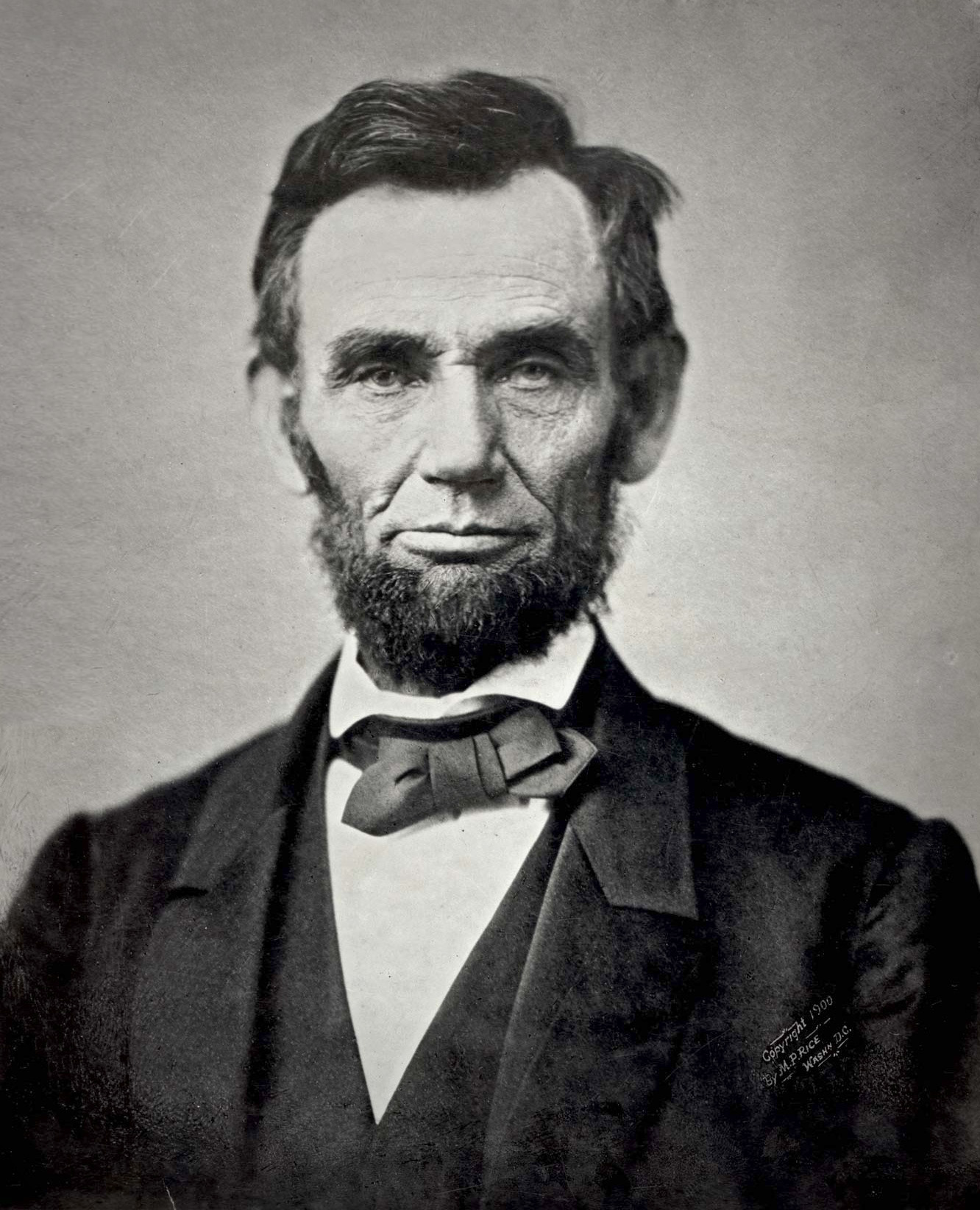
Abraham_Lincoln_November_1863“As the Roman Republic was at the back of the minds of the framers of the American Constitution; it was their hope that the chief magistrate of these United States would conduct himself with “the high old Roman virtue,” becoming an exemplar of pietas, gravitas, constantia, firmitas, comitas, disciplina, industria, clemetia, frugalitas, and severitas. George Washington, a grand gentleman of the old model, suffused with the un-bought grace of life, set high the standard for these virtues. Eight decades later, there appeared a public man of an origin very different from Washington’s, who nevertheless has come to stand as Washington’s equal in republican virtue.”

“From a disaster greater still, we were saved by the presidential dignity of Lincoln, from whom few had expected any dignity at all.”

“Both the New England of Hawthorne and the backwoods Illinois of Lincoln were faced by the whirlwind of fanaticism that had first stirred in their youth, had wailed onward to Fort Sumter, and then had raved triumphant from Manassas to Appomattox. That whirlwind might have left total devastation, had not Abraham Lincoln’s dignity withstood it in some degree.”

“The war made Lincoln great–not by chance, but by summoning forth the noble fortitude and gravity that had no more than peeked out from him in his Illinois years.”

“How far Lincoln himself was conscious that a Providential purpose work through him, we cannot be certain; yet some such apprehension reins from the phrases of his speeches and letters between 1861 and 1865.”

“For all that, ever since his boyhood his friends had perceived in this curious being some element of greatness. Lincoln possessed the incongruous dignity that was Samuel Johnson’s, too. Here stood a man of sorrows. It always has been true that melancholy men are the wittiest; and Lincoln’s off-color yarns, told behind a log barn or in some dingy Springfield office, were part and parcel of his consciousness that ours is a world of vanities. When he entered upon high office, this right humor became an element of the high old Roman virtue: comitas, the belief that seasons gravitas, or the sense of grand responsibility.”

“He was no woman’s man, and his marriage was made tolerable only by his own vast charity and tenderness, but he never was the man to weep over his own blemishes or blunders.”

“Lincoln’s awareness of this ineluctable reality, combining with his knowledge of the weaknesses of poor sinning mortality, made demand strong in his sadness, and gave him the power to endure with humility and generosity the awful burdens of his office.”

Pietas was his, too, in the old Roman sense: willing subordination to the claims of the divine, of ‘the contract of eternal society,’ of neighbors, of country.”

“There have lived few Americans more abundantly graced with the theological virtues, charity most of all. The New Testament shines out from his acts of mercy, and the Old from his direction of the war. We all know the deep piety of his Gettysburg Address; and in some of his letters there looms a stern justice, at once Christian and classical.”

“Prudent amidst passion, Lincoln never was a doctrinaire; he rose from very low estate to very high estate, and he knew the savagery that lies close beneath the skin of man, and he saw that most men are good only out of obedience to routine and custom and convention. The reckless Fire–eager in the uncompromising Abolitionist were abhorrent to him; yet he took the middle path between them not out of any misapplication of the doctrine of the Golden mean, but because he held that the unity and security of the United States transcended any fanatics scheme of uniformity.… Here he was like Edmund Burke; yet it is improbable that he read much Burke, or any other political philosopher except Blackstone; his wisdom came from close observation of human nature, and from the Bible and Shakespeare. The Radical Republicans detested him as cordially as did the Southern zealots. In his conservative object, the preservation of the Union, he succeeded through the ancient virtue of prudential.”

“Lincoln was a conservative statesman on the intellectual model of Cicero. In his dignity there was no hubris, no presumption; much, he knew, must be left to Providence.”

“Lincoln knew that what moved him was a power from without himself and, having served God’s will according to the light that was given him, he received the reward of the last full measure of devotion. He did not assert dignity; rather, he was invested with it.”

SOURCE:  Russell Kirk, speech, “Lincoln and the Dignity of the Presidency,” February 12, 1970. Typescript in the Russell Kirk Center, Mecosta, Michigan.

My Notes/Index to the 1989 Edition of Prospects for Conservatives

Most recent edition of PROSPECTS, edited by Winston Elliott.

Most recent edition of PROSPECTS, edited by Winston Elliott.

Notes on Kirk, PROSPECTS FOR CONSERVATIVES, 1989

notes taken by Brad Birzer (May 10, 2002; revised on August 9, 2010)

In preparation for August 13, 2010 CAI conference, Houston, Texas

Me presiding/DL

Winston’s 50th birthday

***

Neither American liberalism nor conservatism an ideology (Kirk, PROSPECTS, xi)

scholar vs. intellectual (Kirk, PROSPECTS, 5)

quote J. Adams: ideologue as idiot (Kirk, PROSPECTS, 6); ideology justifies every atrocity (Kirk, PROSPECTS, 273)

all problems blend together: social, ethical, religious, politics (Kirk, PROSPECTS, 7)

must detest abstraction and seek the common good (Kirk, PROSPECTS, 9)

evils of twentieth century make the conservative’s burden greater (Kirk, PROSPECTS, 11)

liberals are “smugness incarnate” (Kirk, PROSPECTS, 11)

the archaic in America are those who still believe in progress and reason (Kirk, PROSPECTS, 12)

liberal is slave to his own prejudices (Kirk, PROSPECTS, 13)

for some problems, simply NO solution (Kirk, PROSPECTS, 14)

truth and beauty are terrifying to modern man (Kirk, PROSPECTS, 16)

sin is real (Kirk, PROSPECTS, 17)

myth is vital; transcendent truth (Kirk, PROSPECTS, 18)

object of life is love (Kirk, PROSPECTS, 21, 75)

must fight the machine (Kirk, PROSPECTS, 21, 93, 145)

conservative relies on habit and custom (Kirk, PROSPECTS, 22)

like all bodies, though, society must be willing to renew itself (Kirk, PROSPECTS, 25)

abolition of man (Kirk, PROSPECTS, 27)

real progress when good men and women fight evil (Kirk, PROSPECTS, 28)

American revolution to conserve (Kirk, PROSPECTS, 29)

Burke vs. French Revolution (Kirk, PROSPECTS, 30)

ideologues really just want power (Kirk, PROSPECTS, 31)

French introduced a horrible disease into the world (Kirk, PROSPECTS, 31)

T.J. more Anglo than French (Kirk, PROSPECTS, 32)

individualism: conservatism without tradition; not good (Kirk, PROSPECTS, 34-35); no simple solutions (Kirk, PROSPECTS, 261)

conservative fearful of the state (Kirk, PROSPECTS, 35)

extreme individualism is understandable–but still a mistake (Kirk, PROSPECTS, 36)

moderns dismiss the sacred and end in decadence (Kirk, PROSPECTS, 39)

Joad and decadence (Kirk, PROSPECTS, 40)

obsession with experience (Kirk, PROSPECTS, 42)

Must redeem the time (Kirk, PROSPECTS, 42, 71, 88)

Unbought grace of life (Kirk, PROSPECTS, 44)

Cicero, honesty, and character (Kirk, PROSPECTS, 45)

Burke (and Livy) on true patriotism: to love our country, our country must be lovely (Kirk, PROSPECTS, 49)

starving the moral imagination (Kirk, PROSPECTS, 50-51)

purpose of liberal education (Kirk, PROSPECTS, 51)

Quotes Paul Elmer More on liberal arts on virtue (Kirk, PROSPECTS, 53)

internal betrayel of the liberal arts (Kirk, PROSPECTS, 54)

liberal arts disciplines free minds (Kirk, PROSPECTS, 55)

Dewey makes men less human! (Kirk, PROSPECTS, 57-59)

every society needs an aristocracy (Kirk, PROSPECTS, 59)

modernity values speed over honor (Kirk, PROSPECTS, 65)

education: not for equality, but to develop gifts (Kirk, PROSPECTS, 67)

twentieth-century has been an age of propaganda (Kirk, PROSPECTS, 68)

but, we should be guardians of the word (Kirk, PROSPECTS, 69)

societal disorder is sign of interior disorder (of the soul) (Kirk, PROSPECTS, 73)

will vs. grace (Kirk, PROSPECTS, 74)

boredom results when we ignore/destroy the sacred (Kirk, PROSPECTS, 91)

we do everything possible to avoid suffering (Kirk, PROSPECTS, 94); death of character results (Kirk, PROSPECTS, 95)

modernity is purgatory, not hell (Kirk, PROSPECTS, 94)

should believe in authority (Kirk, PROSPECTS, 98, 100); large families not bored (Kirk, PROSPECTS, 99)

private judgment = mediocrity (Kirk, PROSPECTS, 101)

tradition-directed person not bored, as he understands purpose (Kirk, PROSPECTS, 101)

masses cruel and dangerous (Kirk, PROSPECTS, Kirk, PROSPECTS, 103)

the bored rule us (Kirk, PROSPECTS, 105)

the bored seek consolation in sexual and moral perversity (Kirk, PROSPECTS, 105)

if bored, means not know self or purpose (Kirk, PROSPECTS, 107)

to relieve boredom (Kirk, PROSPECTS, 108ff): must

1.  Renew religious faith and piety (Kirk, PROSPECTS, 121ff)

2.  Revive honor and dignity

3.  Understand property rights and self-reliance

4.  Reaffirm right of men to what is their own (justice)

5.  Security not better than true freedom

6.  Reawake concept of contract of eternal society

definition of a proletariat (Kirk, PROSPECTS, 110)

love efficiency means suicide (Kirk, PROSPECTS, 115)

Progress = effeminacy (Kirk, PROSPECTS, 117)

discussion of true leisure (Kirk, PROSPECTS, 117ff)

cannot fight ideology with our own propaganda; only firm understanding of traditional moral principles will work (Kirk, PROSPECTS, 129)

justice rooted in nature (Kirk, PROSPECTS, 132); justice leads to diversity (Kirk, PROSPECTS, 133)

true justice allows man to receive reward for his gifts (Kirk, PROSPECTS, 135); Pope Pius XI agrees (Kirk, PROSPECTS, 138)

we’ve become a TV culture; mass mind (Kirk, PROSPECTS, 140-141)

variety is true life; only equality in hell (Kirk, PROSPECTS, 142)

justice demands inequality (Kirk, PROSPECTS, 143)

Ability (Kirk, PROSPECTS, 146)

Avarice (Kirk, PROSPECTS, 159)

consumer decadence (Kirk, PROSPECTS, 163)

government planning for economy destroys traditional virtues (Kirk, PROSPECTS, 169)

beautiful passage: “Stability instead of velocity, community instead of reckless self-expression, satisfying work instead of novel amusement, a decent competence instead of an incessant pursuit of luxuries–those are the ways to personal and social tranquility.” (Kirk, PROSPECTS, 172)

Roepke and the Third Way (Kirk, PROSPECTS, 180ff)

decrease in private trust=increase in public power (Kirk, PROSPECTS, 188ff)

subsidiarity, community, and the variety of talents; community allows true individualism rather than the “mass man” (Kirk, PROSPECTS, 190ff, 204)

too finite to govern ourselves unaided (Kirk, PROSPECTS, 196); God has assigned each of us a part (Kirk, PROSPECTS, 196)

order is natural (Kirk, PROSPECTS, 197)

Economy of Grace–as described in Ecclesiasticus (Kirk, PROSPECTS, 198)

meaning of words (Kirk, PROSPECTS, 208)

Quotes Burke on Jacobin attack on true individualism (Kirk, PROSPECTS, 212)

conservatives restrain power (Kirk, PROSPECTS, 215); two checks on power: moral and legal authority (Kirk, PROSPECTS, 216)

vs. conspiracies (Kirk, PROSPECTS, 216-217)

creeping socialism (Kirk, PROSPECTS, 219)

humanitarianism is simply ½ egoism (Kirk, PROSPECTS, 219)

peoples need to do penance (Kirk, PROSPECTS, 223)

definition of tradition (Kirk, PROSPECTS, 228ff)

church baptizes best of the pagan (Kirk, PROSPECTS, 230-232)

mystery (Kirk, PROSPECTS, 234)

virtue linked to tradition (Kirk, PROSPECTS, 245)

Conservatives must acknowledge that we may lose (Kirk, PROSPECTS, 252)

justice and freedom are gifts from our ancestors–who sacrificed much to give them to us (Kirk, PROSPECTS, 270)

To order the most recent edition, click here.

Russell Kirk on Irving Babbitt and Liberal Education

One of the Harvard greats, Irving Babbitt.

One of the Harvard greats, Irving Babbitt.

“We may define Babbitt’s humanism as the belief that man is a distinct being, government by laws peculiar to his nature: there is a law for man, and law for thing. Man stands higher than the beasts that perish because he recognizes this law of his nature. The disciplinary arts of humanitas teach man to put checks upon his will and his appetite. Those checks are approved by reason—not the private rationality of the Enlightenment, but the higher reason which grows out of a respect for the wisdom of our ancestors and out of the endeavor to apprehend the transcendent order which gives us our nature. The sentimentalist, who would subject man to the rule of impulse and passion; the pragmatic naturalist, who would treat man as a mere edified ape; the leveling enthusiast, who would reduce human differences to a collective mediocrity—these are the enemies of true human nature.” (7)

“Irving Babbitt saw about him a civilization intellectually devoting itself to the study of subhuman relationships, which it mistook for the whole of life; that civilization was sinking into a meaningless aestheticism, an arid specialization, and a mean vocationalism. Babbitt’s attempted renewal of an understanding of true humanism was intended to return his generation to the real aim of education, the study of the greatness and the limitations of human nature.” (7)

“The purpose of studying humane letters was to seek after the Platonic ends of wisdom and virtue: that is, to develop right reason and sound character. The purpose of the rival utilitarian disciplines was to acquire power and wealth. Babbitt is demanding, what will become of college graduates who know the price of everything and the value of nothing?” (10)

“The curricula of even the better institutions, nevertheless, as the years passed, increasingly reflected the commercial and industrial interests of the American Republic, at the cost of humane studies.” (18)

“The aim of the oldfangled college education was ethical, the development of moral understanding and humane leadership; but the method was intellectual, the training of the mind and conscience through well-defined literary disciplines. A college was an establishment for the study of literature: it was nearly so simple as that. Through an apprehension of great literature young men were expected to fit themselves for leadership in the churches, in politics, in law, in the principle positions of leadership in their communities.” (63)

“Certain things a good college can do very well. It can give the student the tools for educating himself throughout his life. It can present to him certain general principles for the governance of personality and community. It can help him to see what makes life worth living. It can teach him basic disciplines which will be of infinite value in professional specialization at a university, or in his subsequent apprenticeship to any commercial or industrial occupation. And certain things no honest college can pretend to do at all. It cannot teach him directly how to win friends and influence people. It cannot make him a successful captain of industry or engineer or specialized scientist. It cannot guarantee him worldly prosperity. It cannot enroll him in a survey-course in “world culture” and pour wisdom into him, as milk is poured into a bottle.” (65)

“At best, what the typical college has offered its undergraduates, in recent decades, has been defecated rationality: that is, a narrow rationalism or Benthamite logicalism, purged of theology, moral philosophy, and the wisdom of our ancestors. This defecated rationality exalts private judgment and gratification of the senses at the expense of the inner order of the soul and the outer order of the republic.” (66)

“If we forget the primacy of moral worth in our scheme of education, we will establish no Arcadia of unchecked personal liberty, but instead bring upon ourselves a congeries of warring ideologies and fierce private appetites.” (66)

“Take away from the student his patrimony of moral imagination and ethical knowledge, and we are confronted, perhaps, by the secularized Pharisee, ignorantly denouncing as ‘immoral’ the imperfect but tolerable order to which he owes his existence.” (66)

SOURCE: Kirk, Russell. “Babbitt and the Ethical Purpose of Literary Studies.” In Literature and the American College, 1-68. Washington, D.C.: National Humanities Institute, 1986.

Russell Kirk on Alexis De Tocqueville, 1953

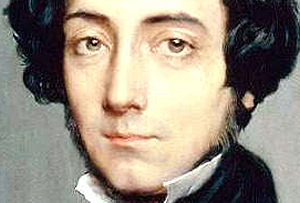
alexis-de-tocqueville

“Tocqueville is a writer who should be read not in abridgment, but wholly; for every sentence has significance, every observation sagacity. The two big volumes of Democracy in America are a mine of aphorisms, his Old Regime is the germ of a hundred books, his Recollections have a terse brilliance of narrative that few memoirs possess.” (342)

“The spirit of the gentleman and the high talents of remarkable individuals, Tocqueville thought, were sliding into an engulfing mediocrity, and the society of his day was confronted with the prospect of a life-in-death. The futility of crying agains the monstrous deaf and blind tendency of the times made Tocqueville painfully conscious of his impotent insignificance.” (343)

“’I’m not opposed to democracies,’ he wrote to M. de Freslon, in 1857. ‘They may be great, they may be in accordance with the will of God, if they be free. What saddens me is, not that our society is democratic, but that the vices which we have inherited and acquired make is to difficult for us to obtain or to keep well-regulated liberty. And I know nothing so miserable as a democracy without limits.” (343)

“What menaces democratic society in this age is not a simple collapse of order, nor yet usurpation by a single powerful man, but a tyranny of mediocrity, a standardization of mind and spirit and condition enforced by the central government.” (345)

“That men are kept in perpetual childhood—that, in spirit, they never become full human beings—seems no great loss to a generation of thinkers accustomed to compulsory schooling, compulsory insurance, compulsory military service, and even compulsory voting. A world of uniform compulsion is death to variety and the life of the mind; knowing this, Tocqueville felt that the materialism which democracy encourages may so far obsess the public consciousness as to stifle, in all but a few independent souls, the notions of freedom and variety.” (346)

“Materialism, as a governing force in society, is open to two overpowering objections: first, it enervates the higher faculties of man; second, it undoes itself.” (347)

“Moral decay first hampers and then strangles honest government, regular commerce, and even the ability to take genuine pleasure in the goods of the world. Compulsion is applied from above as self-discipline relaxes below, and the last liberties expire under the weight of the unitary state. Once a society has slipped so far, almost no barrier remains to withstand absolutism.” (348)

SOURCE: Kirk, “The Prescience of Tocqueville,” University of Toronto Quarterly 22 (1953): 342-353.