The Primary Fact of the 20th Century: Murder by Government
“Arrest! Need it be said that it is a breaking point in your life, a bolt of lightning which has scored a direct hit on you? That is it an inassimilable spiritual earthquake not every person can cope with, as a result of which people often slip into insanity?,” Solzhenitsyn asks in volume one of the Gulag Archipelago. “The universe has as many different centers as there are living beings in it. Each of us is a center of the Universe, and that Universe is shattered when they hiss at you: ‘You are under arrest.’”[1] Arrest could many anything in the terror regimes of the twentieth century: interrogation, torture, loss of employment, deportation, forced labor, or execution. Worse, it could mean the death of a friend or family member, supposedly corrupted by the infection of the “thought crimes” of the one arrested. Arrest could mean anything.
The twentieth century witnessed the shattering of innumerable individual universes as the very real infection of the ideologues and their ideological regimes spread throughout the developed and developing world. It began in earnest and unabated with the assassination of a central European archduke and the consequent destruction of the Old World in 1914. But, in truth, the forces that would imprison much of the world’s population from 1917 to 1991 (but continues, to be sure, through the present), have their origins with the French disciples of Jean Jacques Rousseau and their assault on a Parisian prison in the summer of 1789. Dawson explained its significance:
The history of the nineteenth century developed under the shadow of the French Revolution and the national liberal revolutions that followed it. A century of political, economic and social revolution, a century of world discovery, world conquest and world exploitation, it was also the great age of capitalism; and yet saw too the rise of socialism and communism and their attack upon the foundation of capitalism society. . . . When the century began, Jefferson was president of the United States, and George III was still King of England. When it ended Lenin already was planning the Russian Revolution.[2]
More than any other event in world history to that point, the leaders of the French Revolution murdered history, virtue, and tradition. Indeed, the Anglo-Irish statesman, Edmund Burke, called the introduction of the French revolutionary spirit the “most astonishing [thing] that has hitherto happened in the world.”[3] Other scholars saw it as well. “A confederacy of evil, marshalling its hosts from all parts of the world, organizing itself, taking its measures, enclosing the Church of Christ as in a net, and preparing the way for a general Apostacy from it,” John Henry Newman feared in 1838.[4]
Jammin’ in the Kingdom with Chris Cornell [from Progarchy]
And I’m lost, behind
The words I’ll never find
And I’m left behind
As seasons roll on by
Thus far, 2017 has been a rather amazing year when it comes to rock and prog. PROG magazine is back and better than ever. Thank the Good Lord for Jerry Ewing.
The music releases–already and forthcoming–this year are nothing less than stunning. Big Big Train has released the finest of the band’s career, and The Tangent’s new release has yet to come. Steven Wilson is coming out with a progressive pop album, and newspaperflyhunting and Bjorn Riis have, as with BBT, released the best thing either’s written and done, thus far in their respective careers. There’s a new Anathema that is pretty good, and Steve Hogarth seems, at the moment, unstoppable with Marillion as well as with Isildur’s Bane.
Now I want to fly above the storm
But you can’t grow feathers in the rain
And the naked floor is cold as hell
This naked floor reminds me
Oh the naked floor reminds me
As I type this (having just returned from a conference on libertarian thought in 1840’s France), I have just received in the mail two grand packages. The first I opened is Steven Wilson’s remix of Jethro Tull’s SONGS FROM THE WOODS. The second is Aryeon’s signed five-disk ear-book, THE SOURCE. Honestly, I’m not sure how to react with anything that would be regarded as decorous. I’m a 13-year old boy, at the moment, just having had my first listen of MOVING PICTURES.
Holy schnikees.
Kate Bush, This Woman’s Work
One of my favorite songs from the 1980s, made famous by the great John Hughes.
Our Present Totalitarianism

I’m not sure it really matters what we want to label it–democratic despotism, managerial tyranny, soft fascism, a variety of communism–we definitely live in a world that no longer respects basic Natural Rights and true diversity (that is, of the individual human person).
Whatever form of government it is in terms of a label, we live in a society that regulates and controls and watches us from the moment we awake to the moment we fall asleep, from the moment we come into this world until the moment we leave this world.
Group has replaced person, unreason has replaced reason, and power has replaced love.
We have our many, many (some excellent) entertainments–but, ultimately, each serves as a mere distraction from what matters most–our autonomy, our free will, and our growth and maturation.
And, believe it or not, I’m actually in a good mood today.
Final Day of American Heritage Class
Washington as victor from PATRIOT SAGE, ed. by Gary Gregg and Matt Spalding.

Faith as Struggle and Mother Mary as Comfort

The Lady.
Three years later, this essay rings just as true. Still struggling, still relying. . .
Of those I admired most—that is, the Catholics who bore witness to all of the love and best of Christianity—they each held a special devotion to the holy eucharist and to Jesus’ mother. These two devotions have always impressed me. While I certainly thought and think some Catholics take their love of Mary, the Mother of Jesus, too far and into dangerous territory (but, really, who am I to judge?), I have always found those who didn’t love Mary far more perplexing. In my own life, I have flirted with a number of other religions, both east and west. But, what held me back from becoming Protestant has always been what seems to be the unreality of ignoring or, at best, neglecting Mary. I’m fairly certain that if I ever leave Catholicism, it will be toward the East, not the West. Toward Constantinople, not Geneva.
With the Mr. Wilson, I can easily sing: “God only knows what I’d be without you.” With Mr. McCartney, “Mother Mary, comfort me.”
For the full piece, go here: http://www.theimaginativeconservative.org/2014/05/oh-white-lady-faith-struggle.html
Happy May Day!
April is the cruelest month, but May is the month of our beloved mother, Mary.

         Out of the mouth of the Mother of God
          Like a little word come I;
          For I go gathering Christian men
          From sunken paving and ford and fen,
          To die in a battle, God knows when,
          By God, but I know why.

          "And this is the word of Mary,
          The word of the world's desire
          'No more of comfort shall ye get,
          Save that the sky grows darker yet
          And the sea rises higher.'"

          Then silence sank. And slowly
          Arose the sea-land lord,
          Like some vast beast for mystery,
          He filled the room and porch and sky,
          And from a cobwebbed nail on high
          Unhooked his heavy sword.
--G.K. Chesterton, BALLAD OF THE WHITE HORSE
American Heritage Final Study Guide 2017
Final possibilities, Spring 2017, American Heritage; Dr. Bradley Birzer
This comprehensive final examination covers all assigned readings, all handouts, all lectures, etc.
Section 1. Possible Essay Questions. Two of the following will appear. Worth 40% of your final exam grade.
- Through a strange series of mishaps, H.G. Wells grabs Aristotle and transports him to Washington, D.C., May 2017. H.G. Wells moves on, but Aristotle has coffee with a historian (who shall remain nameless, but who teaches at a small, traditional college with very bright students in the upper American Midwest). The historian explains to the ancient Greek philosopher how much he and his ideas have shaped and influenced the development of American politics and culture. What exactly does the historian tell Aristotle?
- Through a strange series of mishaps, George Washington, during his second administration, finds himself in the Woods between the Worlds. He steps into the pool leading to Washington, D.C., May 2017. Once there, he encounters Supreme Court Chief Justice Roberts. Roberts—in an objective fashion—explains to the first president the state of the world and the history of the United States since roughly 1800. What does Washington think of the history of the country he made for us?
- Through a strange series of mishaps, Lenin does not actually reside in his tomb in Red Square. That “honor” belongs to some poor schlep that inconveniently happened to look like Lenin. Instead, two just aliens, Kudos and Kang, abducted Lenin prior to his death. They deposit him (alive) in Chicago, Illinois, in May 2017. Tried for crimes against humanity in the twentieth century, Lenin sits anxiously as a number of witnesses walk through and testify: Pol Pot, Stalin, Whittaker Chambers, Ronald Reagan, Russell Kirk, and Pope John Paul II. What do they say? And, what is the verdict?
Civil War Final Study Guide
Final 2017 study guide; Civil War; Birzer
N.B. The final is worth 35% of your course grade. To earn anything above a “C”, you must employ—to a significant extent—the readings you were assigned.
Section I: Essay. One of these will appear on the final. Worth 35% of your final.
- Consider Lincoln’s relationships with other politicians, cabinet members, generals, and the America people. What kind of president and person was he?
- Explain both Union and Confederate motivations/justifications for beginning as well as continuing the war, 1861-1865.
- Explain the evolution of Lincoln’s thought/understanding regarding secession and the purpose of the war, 1861-1865.
The Immorality of CONTAINMENT (Full Lecture)
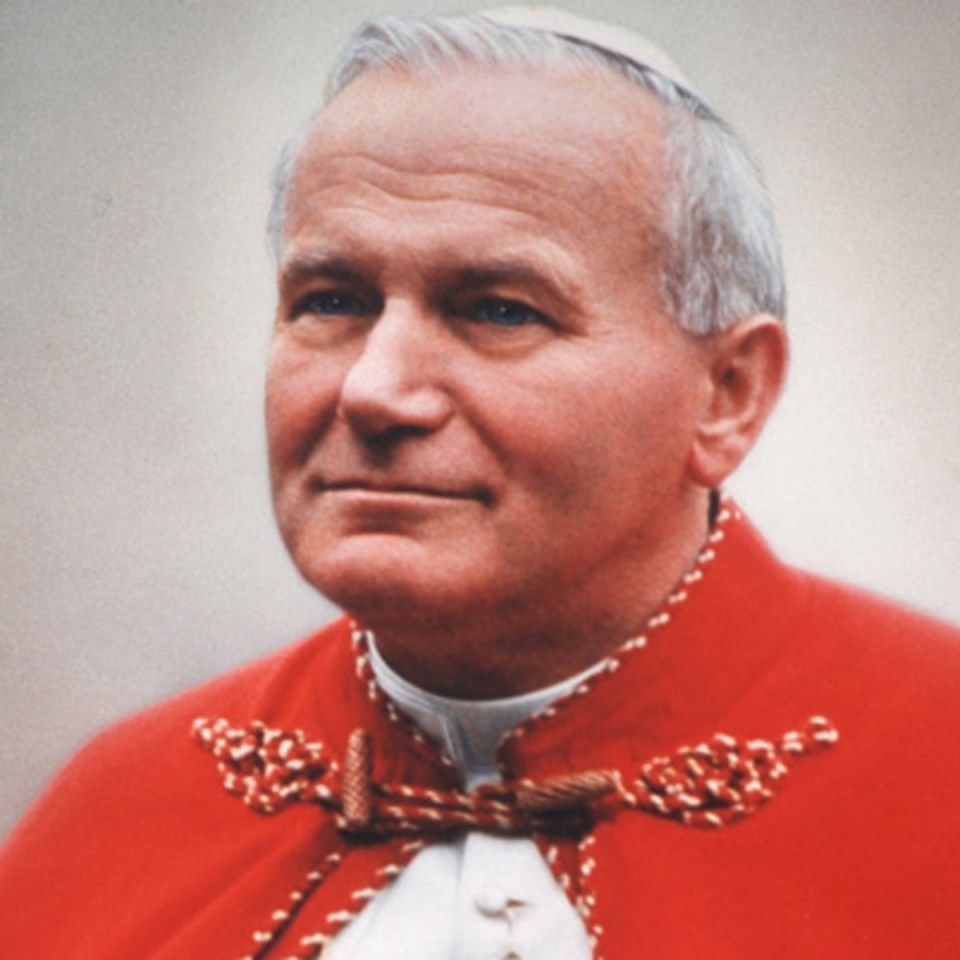
Why “containment” was morally bankrupt and the three great men who helped end it and the Soviet threat to the world.
Today in American Heritage: 1989
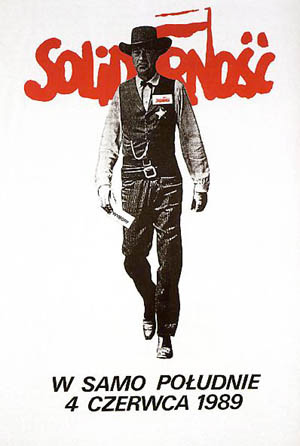
1989: The Annus Mirabilis
Stalin: “How many divisions does the Pope have?”
Revolts in Eastern Europe
1953 East Germany U.S. Ignored
1956 Hungary U.S. Ignored
1968 Czechoslovakia U.S. Ignored
1979 Poland U.S. Ignored
Key events in the Collapse of Russian Communism
1973-1975 Western Publication of Solzhenitsyn’s Gulag
October 1978 Election of Karol Wojtyla as JPII
June 2, 1979 JPII gives Homily in Warsaw: “Be Not Afraid”
Lech Walesa, the leader of Solidarity, said of JPII: “The pope started this chain of events that led to the end of communism,” Walesa said. “Before his pontificate, the world was divided into blocs. Nobody knew how to get rid of communism. “He simply said: Don’t be afraid, change the image of this land.”
Communist General Jaruzelski, leader of Poland, said, “That was the detonator.”
November 1980 Election of Ronald Reagan as 40th U.S. President
Spring 1981 Assassination attempts on RR and JPII
May 17, 1981 RR Commencement address at the University of ND
June 7, 1982 RR and JPII meet for the first time
Richard Allen, RR’s National Security Advisor: RR and JPII “agreed to undertake a clandestine campaign to hasten the dissolution of the communist empire.”
June 8, 1982 RR Speech to British Parliament: “Ash Heap of History”
October 10, 1982 Canonization of Maximilian Kolbe
1983 RR announces the Star Wars program
“Reagan’s SDI was a very successful blackmail,” Gennady Gerasimov, an official Soviet spokesman, remembered. “The Soviet economy couldn’t endure such competition.”
March 8, 1983 RR major address to the Nat. Assoc. of Evangelicals
June 12, 1987 RR at Berlin Wall: “Tear down this wall”
1989: An Annus Mirabilis in World History
Soviets had planned world-wide celebrations to commemorate the 200th anniversary of the French Revolution
April: Poland announced free elections
May 2: Hungary opened its borders to West Germany and Austria
June: Hungarians reburied Imre Nagy and martyrs of the 1956 revolt
September 12: Poland’s first non-communist party elected
October: Hungarian Communist Party disbanded
October 16-20: Hungarian government reformed as representative democracy
November 4: Demonstrations began in East Germany
November 9: After the protestors circled the extant medieval walls of Leipzig seven times, Hoenecker resigned and sought refuge with the Lutheran minister he had tortured
December 3: President Bush and Premier Gorbachev declare Cold War over at Malta Conference
December: Romanian leader Ceausescu arrested Lazlo Tokes, a prominent Calvinist minister
December 15: Timisoara (Romania) massacre
December 22: Baptist minister Peter Dugulescu led counter demonstration: “God exists!”
December 24: Ceausescu arrested and executed
December 25: Romania celebrated death of the “Anti-Christ”
The 1950s (Full Lecture)
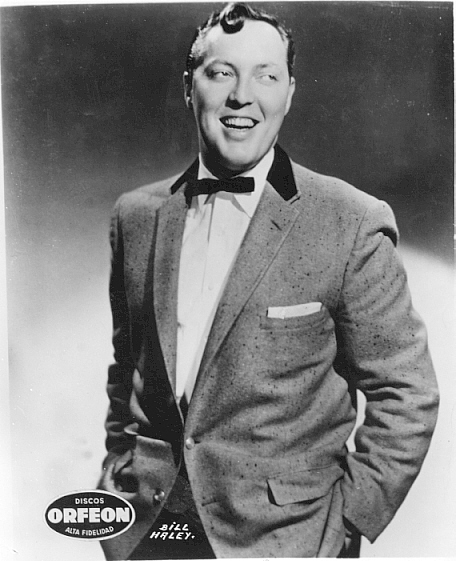
Bill Haley, Rock ‘n’ Roll.
C. Wright Mills, Russell Kirk, conformism, TV, the Military Industrial Complex, love, and rock n roll.
 Stormfields