Two T.S. Eliot Classics
tse thoughts on Lambeth
tse lancelot andrewes For Lancelot Andrewes.
I’d like to wish all Pileus readers a very happy 2015. The last three years, we have had a tradition of making predictions for the upcoming year and reviewing those of the past year. This year, I haven’t had time to come up with predictions for 2015, but here’s a look back at those for 2014:
Oklahoma will win its case (carry over from last year).
This is the Halbig case, where I have predicted for 2 years a defeat for the Obama Administration. This one is still wending its way through the courts, but one district court has ruled in favor of the plaintiffs.
U.S. real GDP growth will top 3% in 2014.
Final numbers are not in, but so far this one is looking good. Real GDP rose 5% in the third quarter of 2014 after an anemic start to the year. This was a pretty bold…
View original post 327 more words
“Walls that no man thought would fall,
The altars of the just… crushed…
Dust in the wind”
 Oh, yes. “Dust in the Wind.”
It started out this time as two thoughts. They didn’t seem to have to anything to do with each other. Thought one was “Dust in the Wind,” apropos of I-don’t-know-what. Thought two was “concept,” in relation to The Lamb. (It’s supposed to be a concept album, right? And I really do need to start posting again, right?)
I think about associations a lot, because I’ve been reading Freud. That theme has come up here before. But it’s not just some technical psychological thing. I’ll bet you’ve experienced this a lot, if you think about it. Things that aren’t associated, that you’re sure are proximate only as a matter of coincidence, end up being associated after all. Your experience is not just a big container with a…
View original post 723 more words
Who wouldn’t love this cover? Holy schnikees, it’s gorgeous. Admittedly, I’m a rather huge fan of Jerry Ewing. But, he’s outdone himself with this one. I’m drooling. . . .

 Whether it comes down to talent, musical choices, or the genius of their management, Rush continues to pull off an inspired feat: embedding themselves in the rock mainstream while maintaining a reputation as music biz outsiders and, deceptively, cultural dark horses. It’s a trick most rock and punk bands would kill for and it actually does come down to a question of honesty. Rush never cared about being one of the cool kids and guess what, turns out the world’s not made up of cool kids after all. And those un-cool kids want to see their band live.
Based on the evidence of Rush’s officially released live catalog, you’d be hard pressed to find a better, or better-documented, live “stadium” rock band. For its consistent onstage delivery the band itself credits its grind in the clubs of Toronto in the early 1970s. As that decade wore on and they began…
View original post 386 more words
 The famous poet and philosopher, Donald Davidson, looks back on the creation of the southern agrarian movement, six years earlier.
Source: Donald Davidson, “I’ll Take My Stand: A History,” AMERICAN REVIEW 5 (1935): 301-321.
Source: Ross J.S. Hoffman, “Liberty and Authority: A Political Essay,” AMERICAN REVIEW 3 (1934): 562-590.
Carl Olson very kindly included me in his “Best of 2014” books over at Catholic World Report.
http://www.catholicworldreport.com/Item/3605/The_Best_Books_I_Read_in_2014.aspx#sdendnote2sym
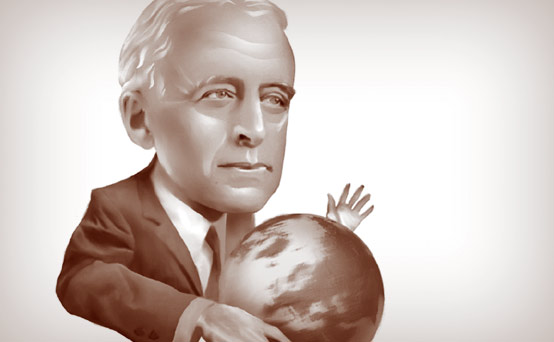
Image of Irving Babbitt by Michael Hogue, borrowed from THE AMERICAN CONSERVATIVE.
Source: G.R. Elliott, “Irving Babbitt as I Knew Him,” AMERICAN REVIEW 8 (1936-1937): 36-60.
Source: Jacques Maritain, “The Christian and History,” JUBILEE (November 1957), 36-40.
Source: J. Duncan Spaeth, “Conservations with Paul Elmer More,” SEWANEE REVIEW 51 (Autumn 1943): 532-545.


 Stormfields