
Why Andy?
As you all know–after all, I’ve been bombarding this blog as well as various social networking outlets with the news for almost three weeks now–Andy Tillison will be speaking and performing this afternoon, 5:30-7, in the Old Main Chapel.

The first album by The Tangent (2003). Art by Ed Unitsky.
Why Andy?
In my time here (and what a glorious time I’ve had–thank you, CU and Colorado!!!), I’ve tried to bring in a real diversity of speakers. Last semester, CU CTP speakers lectured mostly about the liberal arts, philosophy, and education. In January, I had famed science-fiction master, Kevin J. Anderson and his lovely wife, Rebecca, to talk about writing, selling, and persevering. In March, we’ll hear from an economist and a philosopher.
For February, then, I wanted to bring in a musician, an artistic, and a cultural critic. Andy Tillison is all three–in spades.
Specifically, he is an English rock and jazz musician, a genius when it comes to the word as well as to the music, a far-more-than-proficient pianist, organist, and keyboardist. I’ve been listening intently to Tillison’s music for exactly a dozen years. To say that his art changed my life would not be too much of an exaggeration. When I listen to his music, I feel the inspiration of the muses and the spheres, and I find that his soul, mind, and heart inspire the equivalent in me. Whether I’m worthy of such inspiration is another matter. . . but, when I found out I would be holding this position this year, I knew with absolute certainty that I wanted Tillison to be a part of it. He and his lovely equal, Sally Collyer, readily and graciously agreed to leave their northern English home for a week to help us here in Colorado. What a gift for all of us.
They arrived last Saturday, and after spending a wonderful weekend with them, they took off to explore the Wyoming and Colorado rockies. Not surprisingly, they embraced every moment, every scene, and every encounter with the verve that appears in every word and every note of Andy’s music.
At 5:30, when I introduce Tillison to a CU audience, I will be introducing a man who is a hero to me. A man of immense talent, but, even more importantly, a man of immense integrity. I will be privileged to introduce a genius.
I hope you will join us in a celebration of all that is good, true, and beautiful in this post-modern world.
Steven Wilson sine ira et studio

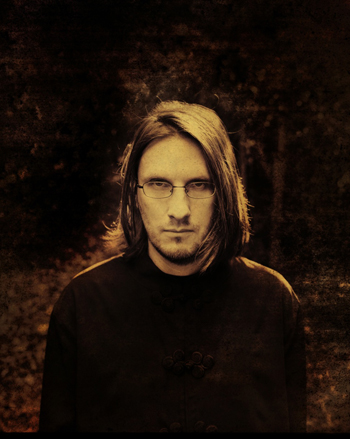
I’m somewhat mystified by the accusations of arrogance and hubris against Steven Wilson. The remarks I read him making don’t strike me as being uttered in that spirit.
He strikes me, rather, as more of a Peartian “most endangered species”: viz., “the honest man.” The evidence brought forward against him, as evidence of his alleged ego, seems to me, rather, to be evidence for his lack of ego.
He frequently stresses how art holds up a mirror in which we can find a common experience. This seems to me to be the opposite of an egoist who insists on his own special uniqueness.
Here is Wilson’s spiritual apologetic for how he operates; I think he does quite well correcting the unfair misunderstandings about him with his own words:
With Grace for Drowning, I was moving into the next phase of my creativity, which is a balance between me as…
View original post 520 more words
Glass Hammer Breaks the World

Review: Glass Hammer, THE BREAKING OF THE WORLD (Sound Resources, 2015).
Tracks: Mythopoeia; Third Floor; Babylon; A Bird When it Sneezes; Sand; Bandwagon; Haunted; North Wind; and Nothing, Everything.
The band: Steve Babb; Fred Schendel; Kamran Alan Shikoh; Aaron Raulston; Carl Groves; and Susie Bogdanowicz.
Additional musicians: Steve Unruh and Michele Lynn. Produced by Schendel and Babb.
Birzer rating: 10/10
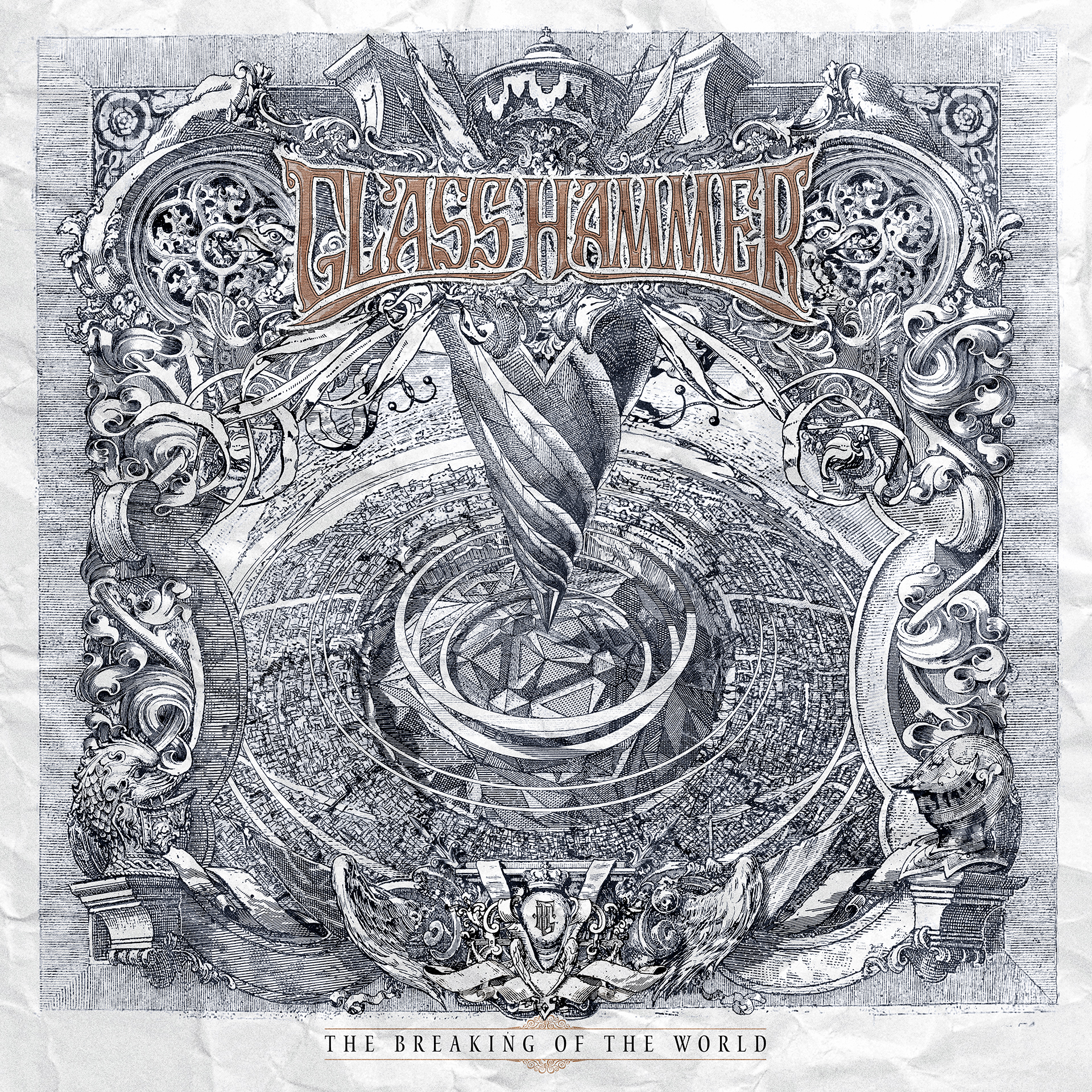 The cover art is as gorgeous as the music. Now, THIS is a real album cover.
A mortal yet strives in his fallen state
Blessed is he
Who hears yet the strains of the song eternal
–Mythopoeia
Just when you thought the greatest and most venerable American prog band could get “none more prog,” along comes THE BREAKING OF THE WORLD, the best work of Glass Hammer’s career and, in some related fashion, their most progressive album thus far. This is not just album number fifteen in a list…
View original post 1,845 more words
The Golden Rectangle and Fibonacci

One of the best things about teaching math is sharing all of the connections that exist between seemingly unrelated topics. Take, for example, the Golden Rectangle. Often described as the most visually “pleasing” quadrilateral, it is a rectangle whose length, l, and whose width, w, are in the the proportion $latex displaystyle frac{l}{w}=frac{l+w}{l}$ .
Here’s an example:
 4.69 / 2.9 = 1.62, and (4.69 + 2.9) / 4.69 = 1.62. The number they equal, 1.62, is called the Golden Ratio, and it has its own Greek letter, phi. It’s actually irrational, like pi and e, and it equals $latex displaystyle frac{1+sqrt{5}}{2}$ . You can derive phi algebraically by solving $latex displaystyle frac{l}{w}=frac{l+w}{l}$ for l in terms of w. From the quadratic formula, $latex displaystyle l=left( frac{1+sqrt{5}}{2} right)w$, so $latex displaystyle frac{l}{w}=frac{1+sqrt{5}}{2}$.
A Golden Rectangle can be constructed with a straightedge and compass (or GeoGebra!):
1. Construct a square ABCD:
View original post 341 more words
Lord David Cecil, “Oxford’s Magic Circle” (1979).
SOURCE: David Cecil, “Oxford’s Magic Circle,” Books and Bookman (January 1979), 10-12.
 There are two reasons for reading this book [Carpenter’s INKLINGS]. It has an interesting subject and is the work of a gifted author. Let us take the subject first. It is an account of a small group of Oxford friends, who nicknamed themselves The Inklings and who, from the Thirties to the early Fifties of this century, met, during term time, on Tuesday mornings at a pub called the ‘Eagle and the Child’ and on Thursday evenings at Magdalen College to drink beer and discuss literary subjects. Usually one of them read aloud a piece from some book he was writing. The outstanding figures of the group were C.S. Lewis, tutor in English at Magdalen, Ronald Tolkien, professor of Old English, and Charles Williams, poet and critic who worked for the Oxford Press. The meetings were also occasionally attended by persons who did not share The Inklings’ distinctive point of view but who liked spending an evening in their company. I myself was one of these; I found such evenings enjoyable and stimulating; and all the more because the spirit of The Inklings was in piquant contrast to those of the Oxford circles in which I spent most of my time.
This spirit, as Mr. Carpenter says, is hard satisfactorily to define. Superficially and from the point of view of a literary historian, the group may be described as a latter-date phase of Pre-Raphaelite Romanticism and its patronage as by G.K. Chesterton out of William Morris. From Morris is derived a taste for sagas and the Middle Ages and a suspicion of science and machinery, from Chesterton a militant colourful Christianity and an instinctive antipathy to ‘modern’ movements in thought.
This description does not sound inspiring. Luckily it is inadequate and misleading. The Inklings’ more controversial opinions did not in fact play a significant part in their meetings. Moreover, the leading members disagreed with each other more than appeared on the surface. Williams liked a great deal of present-day literature; Lewis delighted in science fiction, if not in science; Tolkien’s brand of orthodox Roman Catholicism made him unsympathetic to Williams’s religion, a home-made mystical version of Christianity with disturbing erotic overtones. Indeed, the fact that the writer was a Christian was not enough to make the Inklings approve of him. Lewis felt much more in sympathy with pagan William Morris than with such committed Christians as T.S. Eliot or John Betjeman.
The qualities, then, that gave The Inklings their distinctive personality were not primarily their opinions; rather it was a feeling for literature, which united, in an unusual way, scholarship and imagination. Their standard of learning was very high. To study a book in translation or without proper knowledge its historic background would have been to them unthinkable; they were academic in the best sense of the word. But—and this is what made them different from most academics—they already read imaginatively. The great books of the past were to them living in the same way as the work of a contemporary. Lewis talked about Spenser, Williams about Milton as other critics of their time talked about Eliot or D.H. Lawrence. Yet they did not try to bring them up-to-date. Simply they read their books in the spirit in which they were written. And they could communicate their sense of this spirit to their hearers so that, for these also, these great books sprang to fresh, full life. This was a unique achievement in the Oxford of their time.
The Inklings’ imagination displayed itself more freely in their purely creative writing; Lewis’s science fiction, Williams’s mystical thrillers, Tolkien’s Hobbit saga. Differing in other respects, these were alike in being all full-blooded romantic fantasies in which their authors found a model in which to express their deeper convictions about life. Once again, they carried their audience with them. These books made them famous. That of Williams was a limited fame: he was the object of a small but distinguished band of admirers. Lewis’s fiction appealed more widely; and together with this religious writings, placed him among the popular English authors of his time. As for Tolkien, his Lord of the Rings crossed the oceans to make him renowned all over the world.
Some critics have complained that this success was undeserved. But the truth was that he—and Lewis and Williams as well—satisfied a want unsupplied by other contemporary writers, namely for a form of literature that at once delighted the fancy and had a message for the soul. In the past this want had often been supplied by poetry: this was what had made ‘The Fairie Queen’ and ‘The Ancient Mariner’ popular. Not so most twentieth century poetry and fiction. But the Inklings’ books—if not works of high genius like Spenser’s and Coleridge’s—did so effectively enough to gain them a host of readers. The imagination which inspired this achievement was their common and distinctive characteristic.
They were also bound together by a personal link, C.S. Lewis. It was in his rooms that they met on Thursdays. For Mr. Carpenter’s purpose this second link is the more important. His [begin page 11] book is not an essay in criticism but a biographical study. An admirable one too; he is that rare phenomenon, a biographical artist, combining a capacity to give us a well-researched record of fact with the power vividly to recreate human beings and present them as part of a pleasant and significant design. His life of Tolkien is a model in this way. The Inklings is not quite so successful formally; for here he had more intractable material to deal with. Since he had written about Tolkien in an earlier volume, he concentrates on Williams and Lewis. The book consists of their two biographies, but Mr. Carpenter combines them into a unity by a short chapter in the middle describing an imagined evening at Magdalen at which both his heroes were present and displayed their contrasting personalities. By this means he succeeds in imposing a single pattern on his material. But the result does seem a little artificial. The imagined scene appears contrived for its purpose: the effect of organic unity is not achieved. For the rest however, the two life stories are admirably told; in a clear animated prose, alive with sharp insights into the characters of two odd and remarkable men.
Williams was the most obviously odd. Very tall, and indisputably ugly with a high forehead and with gleaning spectacles, he yet diffused a curious charm that came from an enthusiastic warmth of spirit united to a comic lack of inhibition. If amused, he slapped his thighs on merriment; if quoting poetry—he often quoted poetry—he did so in a sort of passionate chant that was at once melodically majestic and unmistakably cockney. Now and again he broke off to comment on the poem quoted in a fashion at once mysterious and illuminating.
A man of humble origin, Williams had spent most of his grownup life in the service of Oxford Press. He devoted his spare time to literature and religion, the two things in his mind were inextricably connected. His life was further complicated by love. A marriage close but stormy, was diversified by ardent platonic flirtations with young women. These experiences led him to evolve a religious philosophy, whose central tenet was that sexual love, if properly restrained, was a chief means to open man’s eyes to a vision of the Divine. He met Lewis shortly before the Second World War, who, struck by his writings and his personality, immediately formed a close friendship with him. The war, which brought the University Press to Oxford brought Williams with it. There Lewis introduced him to The Inklings and more especially to his other great friend Tolkien. Tolkien, in spite of efforts to do so, did not take to Williams. He called him a witch doctor—Williams enjoyed dabbling in the occult—and was irritated by Lewis’s enthusiasm for him. Williams, unaware of all this, was naively pleased by his Oxford welcome. Yet he remained an exotic in academic society. His manners were too uninhibited and he was fond of female company. Before these differences became awkwardly apparent, he died. For Lewis this was a great blow. Yet, even after death, he felt Williams’s presence in a way that continued to inspire him.
Lewis at first sight appeared less unusual; stocky, red-faced, loud-voiced, he ight indeed have been taken for an innkeeper or even a butcher. Such a mistake would not have displeased him, he liked to think of himself as representing the common man, in contrast to the sophisticated intellectual. In fact, no-one was less like the common man either in taste or in temperament. Half of him was incurably intellectual, the other half was childlike. He had been a highly-strung hyper-sensitive unboyish boy absorbed bin an intense fantasy life. Neither public school, which he hated, nor service in the 1914 war, which he bore with an admirable courage, weakened this boyish strain. Nor did the development at Oxford a powerful critical intelligence: powerful mind and childlike imagination co-existed to compose an arresting personality. Both contributed to make him, after a short period of unbelief, a fervent Christian. He never became at home in the ordinary world and was only at ease with the few chosen spirits who shared his interests and sympathised with his outlook. For these he felt a strong affection; he liked to fancy that with them he formed a front against an alien society.
The war years made him a public figure. He became known as a Christian apologist writing, speaking, broadcasting. Meanwhile, unknown to all but a few intimates, he was living an odd home life. As a youth he had become attached to a much older woman called Mrs. Moore and for years lived with her and her daughter on the outskirts of Oxford. Though their relationship was platonic, the tie between them was so strong as to involve him in a life of sacrifice; for Mrs. Moore grew ill-tempered and exacting, forcing him to spend much of his spare time doing housework for her. Unselfishly he stayed with her until she died, by which time he was advanced in middle life. The years passed his life grew sadder. Though the most [begin page 12] distinguished member of the English faculty in Oxford, he was not a professor there, because his forceful manner combined with his equally forceful piety to make him unpopular with a prim and agnostic electorate. Meanwhile Williams was dead and his friendship with Tolkien had cooled. Then fortune took a turn for the better. First of all, he was made professor at Cambridge and enjoyed it. More sensationally, and very late in life, he found love. This was in unexpected circumstances. His success as a religious writer had brought him an American admirer in the shape of a lively intelligent lady called Joy Davidman. She came to England to see him, but stricken, it was thought, with a mortal illness. To help her and ensure the future of her sons—she was divorced from an unsatisfactory husband—Lewis married her. This act of mercy released a flood of a passionate love on both sides. Inspired by it, Mrs. Lewis’s health took a turn for the better: Lewis found himself enjoying a happiness, physical and spiritual, of which he had thought himself incapable. It was not for long: his wife’s recovery proved a false dawn and she died. There followed for Lewis months of agony in which his faith in God, though not shaken, was darkened. Gradually the cloud lifted; but by now Lewis’s own health was declining. He died four years later but not before he had written A Grief Observed, a poignant memoir of his feelings following his bereavement. Though nervously reticent about himself in conversation, he was, paradoxically, ready to talk about his most intimate feelings in print.
Lewis was a distinguished man and a good one. But he was a strange man too. Mr. Carpenter has the art and intelligence to bring home to us—as few biographers could do—the distinction and the goodness and the strangeness.
Dawson, “The Dark Mirror” (1930)
N.B. This is one of Christopher Dawson’s most important pieces regarding the soul and imagination. It is about what Winston Elliott would call “imaginative conservatism.” Enjoy.
Source: Christopher Dawson, “The Dark Mirror,” DUBLIN REVIEW (October 1930): 177-200.
Dawson “The End of an Age” (1930)
Source: Christopher Dawson, “The End of an Age,” CRITERION 9 (1930): 386-401.
Dawson, MEDIAEVAL CHRISTIANITY (1935)
Source: Christopher Dawson, MEDIAEVAL CHRISTIANITY 25 (Studies in Comparative Religion, 1935).
Dawson, “The Problem of Christ and Culture” (1952)
Source: Christopher Dawson, “The Problem of Christ and Culture,” DUBLIN REVIEW (1952): 64-68.
 Stormfields