
Yes! It’s A New Book by Tolkien! ‘The Story of Kullervo’


In what seems to be a yearly tradition, the Tolkien Estate is treating us to a new book by our favourite author.
If you’ve done some reading about the Professor (beyond Middle-earth, that is), you may have encountered many references about Tolkien’s love for the Finnish epic tale of the Kalevala.
Well, turns out when he was a young man – already teeming with ideas and exquisite writing skills – he decided to write his own version of the book.
Here’s what an excerpt of what Harper Collins had to say on their site:
Kullervo son of Kalervo is perhaps the darkest and most tragic of all J.R.R. Tolkien’s characters. ‘Hapless Kullervo’, as Tolkien called him, is a luckless orphan boy with supernatural powers and a tragic destiny.
Tolkien himself said that The Story of Kullervo was ‘the germ of my attempt to write legends of my own’, and was ‘a major…
View original post 166 more words
Roland Orzabal is Our Greatest Living Pop Artist

 In my post two days ago offering a twenty-year retrospective of RAOUL AND THE KINGS OF SPAIN by Tears for Fears, I made some bald claims:
Orzabal has never embraced the term “progressive,” identifying it with Pink Floyd, but he is certainly the most experimental pop musician alive—rivaled only by Brian Wilson, Paul McCartney, Robert Smith, Andy Partridge, and Peter Gabriel. From my perspective, Orzabal is the greatest living pop musician, but I think this would be open to debate. And, of course, the debate would demand a proper definition of pop.
A good friend of mine (a fellow music lover and a fellow Kansan), Derek, properly challenged this assertion of mine while also admitting how much he loves Orzabal.
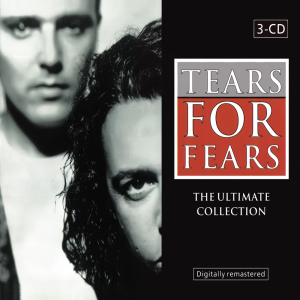
I did my best to defend my claim. Here’s the conversation:
Derek: “From my perspective, Orzabal is the greatest living pop musician…” Wow! I’m still trying to wrap my head…
View original post 1,389 more words
The Holy Ground of Charleston

AME Church, Holy Ground.
Upon waking this morning, the first thing I read was the New York Times coverage of the horrific massacre of innocents in Charleston, South Carolina. Clearly, the murders were committed as an act of racial hatred, and it would be both ethically wrong and foolish to dismiss this critical aspect of the murders.
It is, however, also worth remembering that the murders were committed against Christians, members of a religion which transcends EVERY SINGLE aspect of race. The murders were—as with all massacres—committed against humanity as well.
What moved me about the NYT account was the bravery and fortitude with which the martyrs accepted their fate. What incredible stories. When I die, I hope I die with even a semblance of the dignity these women and men demonstrated.
We thank Thee for Thy mercies of blood, for Thy redemption by blood. For the blood of Thy martyrs and saints
Shall enrich the earth, shall create the holy places.
For wherever a saint has dwelt, wherever a martyr has given his blood for the blood of Christ,
There is holy ground.
–T.S. Eliot, MURDER IN THE CATHEDRAL
Charleston martyrs, you will never be forgotten. Here or in eternity.
The Catholic Imagination of Roland Orzabal: Tears for Raoul
Review retrospective: Tears for Fears, RAOUL AND THE KINGS OF SPAIN (Sony, 1995; Cherry Red, 2009).
Twenty years ago, Roland Orzabal (born Raoul Jaime Orzabal de la Quintana to an English mother and a Basque/Spanish/French father) released the fifth Tears for Fears studio album, RAOUL AND THE KINGS OF SPAIN.
Overall, we should remember, 1995 was a pretty amazing year for music—really the year that saw the full birthing of third-wave prog.
 Raoul’s mythic mother.
Not all was prog, of course, but there was so much that was simply interesting. Natalie Merchant, TIGERLILY; Radiohead, THE BENDS; Spock’s Beard, THE LIGHT; The Flower Kings, BACK IN THE WORLD OF ADVENTURES; Marillion, AFRAID OF SUNLIGHT; and Porcupine Tree, THE SKY MOVES SIDEWAYS.
As the time that RAOUL came out, I liked it quite a bit, but I didn’t love it. The first five songs just floored me, but then I thought the…
View original post 946 more words
Friendship and Art at its Highest: Tears for Fears in Denver, 2015
Last night, my wife and I—just about to celebrate our 17th wedding anniversary—treated ourselves to a concert by Tears for Fears.
For those of you who read progarchy.com regularly, you know that not only do we as a website love the work of TFF, but I, Brad, have been rather obsessed with Roland Orzabal and Curt Smith since 1985.
Yes, 30 years—just four more years than I’ve been in love with Rush. And, of course, what a comparison. Can you imagine Peart and Orzabal writing lyrics together? Tom Sawyer meets Admiral Halsey!
 A blurry iPhone picture from last night’s concert in Denver: Tears for Fears.
I came to TFF in the same way almost every American my age did, from hearing “Everybody wants to rule the world” on MTV. What a glorious song. Here was New Wave, but New Wave-pop-prog. Here were intelligent lyrics. Here, to my mind, was…
View original post 1,378 more words
Grace Perfecting Nature: A Tenth Anniversary Toast to Kate Bush’s “An Endless Sky of Honey”
Most proggers regard side two of Hounds of Love as Kate Bush’s greatest work. I love it as well, and I have since I first heard it thirty years ago this coming autumn. Who wouldn’t be moved by the invocation of Tennyson’s Ninth Wave, by Kate as an ice witch, and by the observation of it all from orbit? The entire album, but especially side two, is a thing of beauty.
 A vision of the Natural Law itself: Kate Bush, ca. 2005
Equally gorgeous to me, though, is Bush’s 2005 album, Aerial, and, in particular, side two, “An Endless Sky of Honey.”
No one, no one is here
No one, no one is here
We stand in the Atlantic
We become panoramic
The stars are caught in our hair
The stars are on our fingers
A veil of diamond dust
Just reach up and touch it
The sky’s above…
View original post 474 more words
Rocket 88 Books: Humor and Excellence
Last night, as I was getting ever closer to sleep, I decided to check out the website for Rocket 88 Books.

I’ve been reading and throughly enjoying their book on the history of Dream Theater, LIFTING SHADOWS.
Lo and behold, what did I find on the website? That Rocket 88 will soon be releasing a paperback version of the 2012 coffee-table book, THE SPIRIT OF TALK TALK.
For those of you who know me, you know how much I adore Talk Talk. But, even with my normal lack of frugality and my love of the band, I just couldn’t bring myself to pay the price that was being asked for that hardback–no matter how beautiful–three years ago.
And yet, here it is.

So, of course, I ordered it. Immediately. Here’s the response I awoke to from the press:
Hello Bradley,
Congratulations, you were the first person to pre-order the new paperback…
View original post 354 more words
Advanced Review Copies of RUSSELL KIRK: AMERICAN CONSERVATIVE Now Available
 If you’re interested in reviewing RUSSELL KIRK: AMERICAN CONSERVATIVE, please contact Mack McCormick at the University of Kentucky Press. Advanced review copies are now available.
Thank you, and enjoy!
New Contact Information, July 1, 2015
For those of you sending me physical reviews of books, CDs, etc., please note that my new mailing address (as of July 1, 2015) is:
Bradley Birzer/Stormfields
6 West Montgomery ST
Hillsdale MI 49242
USA
Bradbury and F451–Over at TIC
My thoughts on Bradbury and F451. Perfect Sunday afternoon reading–sans mechanical hounds.

http://www.theimaginativeconservative.org/2015/06/ray-bradbury-the-dystopia-of-fahrenheit-451.html
Lord David Cecil on the Inklings, 1979
SOURCE: David Cecil, “Oxford’s Magic Circle,” Books and Bookman (January 1979), 10-12.
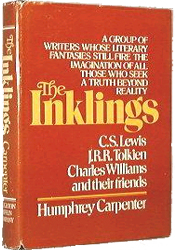 There are two reasons for reading this book [Carpenter’s INKLINGS]. It has an interesting subject and is the work of a gifted author. Let us take the subject first. It is an account of a small group of Oxford friends, who nicknamed themselves The Inklings and who, from the Thirties to the early Fifties of this century, met, during term time, on Tuesday mornings at a pub called the ‘Eagle and the Child’ and on Thursday evenings at Magdalen College to drink beer and discuss literary subjects. Usually one of them read aloud a piece from some book he was writing. The outstanding figures of the group were C.S. Lewis, tutor in English at Magdalen, Ronald Tolkien, professor of Old English, and Charles Williams, poet and critic who worked for the Oxford Press. The meetings were also occasionally attended by persons who did not share The Inklings’ distinctive point of view but who liked spending an evening in their company. I myself was one of these; I found such evenings enjoyable and stimulating; and all the more because the spirit of The Inklings was in piquant contrast to those of the Oxford circles in which I spent most of my time.
This spirit, as Mr. Carpenter says, is hard satisfactorily to define. Superficially and from the point of view of a literary historian, the group may be described as a latter-date phase of Pre-Raphaelite Romanticism and its patronage as by G.K. Chesterton out of William Morris. From Morris is derived a taste for sagas and the Middle Ages and a suspicion of science and machinery, from Chesterton a militant colourful Christianity and an instinctive antipathy to ‘modern’ movements in thought.
This description does not sound inspiring. Luckily it is inadequate and misleading. The Inklings’ more controversial opinions did not in fact play a significant part in their meetings. Moreover, the leading members disagreed with each other more than appeared on the surface. Williams liked a great deal of present-day literature; Lewis delighted in science fiction, if not in science; Tolkien’s brand of orthodox Roman Catholicism made him unsympathetic to Williams’s religion, a home-made mystical version of Christianity with disturbing erotic overtones. Indeed, the fact that the writer was a Christian was not enough to make the Inklings approve of him. Lewis felt much more in sympathy with pagan William Morris than with such committed Christians as T.S. Eliot or John Betjeman.
The qualities, then, that gave The Inklings their distinctive personality were not primarily their opinions; rather it was a feeling for literature, which united, in an unusual way, scholarship and imagination. Their standard of learning was very high. To study a book in translation or without proper knowledge its historic background would have been to them unthinkable; they were academic in the best sense of the word. But—and this is what made them different from most academics—they already read imaginatively. The great books of the past were to them living in the same way as the work of a contemporary. Lewis talked about Spenser, Williams about Milton as other critics of their time talked about Eliot or D.H. Lawrence. Yet they did not try to bring them up-to-date. Simply they read their books in the spirit in which they were written. And they could communicate their sense of this spirit to their hearers so that, for these also, these great books sprang to fresh, full life. This was a unique achievement in the Oxford of their time.
The Inklings’ imagination displayed itself more freely in their purely creative writing; Lewis’s science fiction, Williams’s mystical thrillers, Tolkien’s Hobbit saga. Differing in other respects, these were alike in being all full-blooded romantic fantasies in which their authors found a model in which to express their deeper convictions about life. Once again, they carried their audience with them. These books made them famous. That of Williams was a limited fame: he was the object of a small but distinguished band of admirers. Lewis’s fiction appealed more widely; and together with this religious writings, placed him among the popular English authors of his time. As for Tolkien, his Lord of the Rings crossed the oceans to make him renowned all over the world.
Some critics have complained that this success was undeserved. But the truth was that he—and Lewis and Williams as well—satisfied a want unsupplied by other contemporary writers, namely for a form of literature that at once delighted the fancy and had a message for the soul. In the past this want had often been supplied by poetry: this was what had made ‘The Fairie Queen’ and ‘The Ancient Mariner’ popular. Not so most twentieth century poetry and fiction. But the Inklings’ books—if not works of high genius like Spenser’s and Coleridge’s—did so effectively enough to gain them a host of readers. The imagination which inspired this achievement was their common and distinctive characteristic.
They were also bound together by a personal link, C.S. Lewis. It was in his rooms that they met on Thursdays. For Mr. Carpenter’s purpose this second link is the more important. His [begin page 11] book is not an essay in criticism but a biographical study. An admirable one too; he is that rare phenomenon, a biographical artist, combining a capacity to give us a well-researched record of fact with the power vividly to recreate human beings and present them as part of a pleasant and significant design. His life of Tolkien is a model in this way. The Inklings is not quite so successful formally; for here he had more intractable material to deal with. Since he had written about Tolkien in an earlier volume, he concentrates on Williams and Lewis. The book consists of their two biographies, but Mr. Carpenter combines them into a unity by a short chapter in the middle describing an imagined evening at Magdalen at which both his heroes were present and displayed their contrasting personalities. By this means he succeeds in imposing a single pattern on his material. But the result does seem a little artificial. The imagined scene appears contrived for its purpose: the effect of organic unity is not achieved. For the rest however, the two life stories are admirably told; in a clear animated prose, alive with sharp insights into the characters of two odd and remarkable men.
Williams was the most obviously odd. Very tall, and indisputably ugly with a high forehead and with gleaning spectacles, he yet diffused a curious charm that came from an enthusiastic warmth of spirit united to a comic lack of inhibition. If amused, he slapped his thighs on merriment; if quoting poetry—he often quoted poetry—he did so in a sort of passionate chant that was at once melodically majestic and unmistakably cockney. Now and again he broke off to comment on the poem quoted in a fashion at once mysterious and illuminating.
A man of humble origin, Williams had spent most of his grownup life in the service of Oxford Press. He devoted his spare time to literature and religion, the two things in his mind were inextricably connected. His life was further complicated by love. A marriage close but stormy, was diversified by ardent platonic flirtations with young women. These experiences led him to evolve a religious philosophy, whose central tenet was that sexual love, if properly restrained, was a chief means to open man’s eyes to a vision of the Divine. He met Lewis shortly before the Second World War, who, struck by his writings and his personality, immediately formed a close friendship with him. The war, which brought the University Press to Oxford brought Williams with it. There Lewis introduced him to The Inklings and more especially to his other great friend Tolkien. Tolkien, in spite of efforts to do so, did not take to Williams. He called him a witch doctor—Williams enjoyed dabbling in the occult—and was irritated by Lewis’s enthusiasm for him. Williams, unaware of all this, was naively pleased by his Oxford welcome. Yet he remained an exotic in academic society. His manners were too uninhibited and he was fond of female company. Before these differences became awkwardly apparent, he died. For Lewis this was a great blow. Yet, even after death, he felt Williams’s presence in a way that continued to inspire him.
Lewis at first sight appeared less unusual; stocky, red-faced, loud-voiced, he ight indeed have been taken for an innkeeper or even a butcher. Such a mistake would not have displeased him, he liked to think of himself as representing the common man, in contrast to the sophisticated intellectual. In fact, no-one was less like the common man either in taste or in temperament. Half of him was incurably intellectual, the other half was childlike. He had been a highly-strung hyper-sensitive unboyish boy absorbed bin an intense fantasy life. Neither public school, which he hated, nor service in the 1914 war, which he bore with an admirable courage, weakened this boyish strain. Nor did the development at Oxford a powerful critical intelligence: powerful mind and childlike imagination co-existed to compose an arresting personality. Both contributed to make him, after a short period of unbelief, a fervent Christian. He never became at home in the ordinary world and was only at ease with the few chosen spirits who shared his interests and sympathised with his outlook. For these he felt a strong affection; he liked to fancy that with them he formed a front against an alien society.
The war years made him a public figure. He became known as a Christian apologist writing, speaking, broadcasting. Meanwhile, unknown to all but a few intimates, he was living an odd home life. As a youth he had become attached to a much older woman called Mrs. Moore and for years lived with her and her daughter on the outskirts of Oxford. Though their relationship was platonic, the tie between them was so strong as to involve him in a life of sacrifice; for Mrs. Moore grew ill-tempered and exacting, forcing him to spend much of his spare time doing housework for her. Unselfishly he stayed with her until she died, by which time he was advanced in middle life. The years passed his life grew sadder. Though the most [begin page 12] distinguished member of the English faculty in Oxford, he was not a professor there, because his forceful manner combined with his equally forceful piety to make him unpopular with a prim and agnostic electorate. Meanwhile Williams was dead and his friendship with Tolkien had cooled. Then fortune took a turn for the better. First of all, he was made professor at Cambridge and enjoyed it. More sensationally, and very late in life, he found love. This was in unexpected circumstances. His success as a religious writer had brought him an American admirer in the shape of a lively intelligent lady called Joy Davidman. She came to England to see him, but stricken, it was thought, with a mortal illness. To help her and ensure the future of her sons—she was divorced from an unsatisfactory husband—Lewis married her. This act of mercy released a flood of a passionate love on both sides. Inspired by it, Mrs. Lewis’s health took a turn for the better: Lewis found himself enjoying a happiness, physical and spiritual, of which he had thought himself incapable. It was not for long: his wife’s recovery proved a false dawn and she died. There followed for Lewis months of agony in which his faith in God, though not shaken, was darkened. Gradually the cloud lifted; but by now Lewis’s own health was declining. He died four years later but not before he had written A Grief Observed, a poignant memoir of his feelings following his bereavement. Though nervously reticent about himself in conversation, he was, paradoxically, ready to talk about his most intimate feelings in print.
Lewis was a distinguished man and a good one. But he was a strange man too. Mr. Carpenter has the art and intelligence to bring home to us—as few biographers could do—the distinction and the goodness and the strangeness.
“The words are stones in my mouth”: Katatonia’s Sanctitude

 A beautifully-conceived live album and concert video, Sanctitude finds Katatonia going (mostly) acoustic in a well-curated exhibition of songs sympathetic to the quieter spaces. Yes, there are candles, and yes, they play in a church, but this is not an overwrought episode of MTV Unplugged; rather it’s an essential expression for Katatonia and its songs, an approach they explored at length on their Dethroned and Uncrowned album, where they offered the entirety of Dead End Kings in similar stripped down fashion. Sanctitude is a complement to last year’s Last Fair Day Gone Night; where that live set, issued on CD/DVD last year, offered a rocked-out, straightforward career retrospective, the new album demonstrates why Katatonia is Katatonia. Because they’re a death metal, no a black metal, no a doom metal, no a shoe-gazey rock band — or are they? — that has the chops and the artistic will to…
View original post 581 more words
 Stormfields