
BookTV at Hillsdale: Russell Kirk
I had a great time on BookTV (or, as my kids call it: Reading Rainbow for Adults). This was recorded at Hillsdale College, September 5, 2016. The makeup person even trimmed my insanely academic and mad-scientist like eyebrows. I kind of miss those whooly things.
Vote, Or Demos Will Kill You
So, I’m in favor of voting as well, but I can’t believe a group would advocate such tapioca conformity and bullying. The mob will destroy you if you don’t join the mob! Something out of a Shirley Jackson horror story. Disgusting.
Intro to Latin Patristics (Full Lecture)

A great nexus, St. Augustine
Best Political Ad of the Season
A real man. God bless the Geralds of the world! And, kudos to his hilarious, deadpan wife!
Updated Batman: Legacies of the DC Animated Universe
 Some of you know that I’ve been a huge Batman fan since about 1971 (at the tender age of 3). I was expecially taken with the Bruce Timm, Paul Dini (and many others) version, produced for television between 1992 and 2006.
Now, a few talented and dedicated guys–Ted Kendrick and James Strecker–have decided to continue the story Timm and team started well over twenty years ago. Pretty impressive effort.
Check it out here:
And, here’s the video explaining their project.
My only concern is that I can’t find where to subscribe! Regardless, I’m in.
Martyrdom and the Early Church (Full Lecture)

St. Perpetua
Some Favorite BXVI Quotes
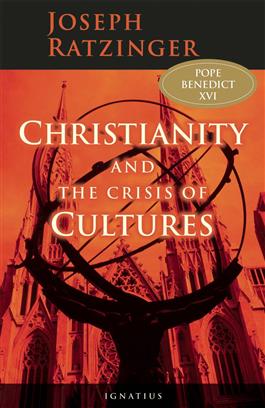 Joseph Cardinal Ratzinger, Christianity and the Crisis of Culture (San Francisco, California: Ignatius Press, 2005).
“Accordingly, the refusal to refer to God in the Constitution is not the expression of a tolerance that wishes to protect the non-theistic religions and the dignity of atheists and agnostics; rather, it is the expression of a consciousness that would like to see God eradicated once and for all from the public life of humanity and shut up in the subjective sphere of cultural residues from the past. In this way, relativism, which is the starting point of this whole process, becomes a dogmatism that believes itself in possession of the definitive knowledge of human reason, with the right to consider everything else merely as a stage in human history that is basically obsolete and deserves to be relativized. In reality, this means that we have need of roots if we are to survive and that we must not lose sight of God if we do not want human dignity to disappear” (44-45)
“This means that both parties must reflect on their own selves and be ready to accept correction. Christianity must always remember that it is the religion of the Logos. Christianity is faith in the Creator Spiritus, from whom comes everything that is real. Precisely this ought to give Christianity its philosophical power today, since the problem is whether the world comes from an irrational source, so that reason would be nothing but a ‘by-product’ (perhaps even a harmful by-product) of the development of the world, or whether the world comes from reason, so that its criterion and its goal is reason. The Christian faith opts for this second thesis and has good arguments to back it up, even from a purely philosophical point of view, despite the fact that so many people today consider the first thesis the only ‘rational’ and modern view. A reason that has its origin in the irrational and is itself ultimately irrational does not offer a solution to our problems. Only that creative reason which has manifested itself as love in he crucified God can truly show us what life is.” (49)
“We need men whose intellect is enlightened by the light of God, so that their intellect can speak to the intellect of others and their hearts can open the hearts of others. It is only by means of men who have been touched by God that God can return to be with mankind.” (52)
“The way I look at the other is decisive for my own humanity” (69).
“This is why morality, which beings with this look directed to the other, is the custodian of the truth and the dignity of man: man needs morality in order to be himself and not lose his dignity in the world of things.” (70)
“In reality, morality is always embedded in a wider religious context in which it ‘breathes’ and finds its proper environment. Outside this environment, morality cannot breathe; it weakens and then dies.” (70)
“We too succeed in looking at others in a manner that respects their personal dignity if we experience how God looks at us in love.” (71)
“Christianity is the remembrance of the look of love that the Lord directs to man, and that look preserves the fullness of his truth and the ultimate guarantee of his dignity” (71).
“For Paul, the moral decadence of society is nothing more than the logical consequence and the faithful reflection of this radical perversion. When man prefers his own egoism, his pride, and his convenience to the demands made on him by the truth, the only possible outcome is an upside-down existence. Adoration is due to God alone, but what is adored is no longer God; images, outward appearances, and current opinion have dominion over man. This general alteration extends to every sphere of life. That which is against nature becomes the norm; the man who lives against he truth also lives against nature. His creativity is no longer at the service of the good: he devotes his genius to ever more refined forms of evil. The bonds between man and woman, and between parents and children, are dissolved, so that the very sources from which life springs are blocked up. It is no longer life that reigns, but death. A civilization of death is formed (Rom 1:21-32). The description of decadence that Paul sketches here astonishes us modern readers by its contemporary relevance.” (95)
“The knowledge of God has always existed. And everywhere in the history of religions, in various forms, we encounter the significant conflict between the knowledge of the one God and the attraction of other powers that are considered more dangerous or nearer at hand and, therefore, more important for man than the God who is distant mysterious. All of history bears the traces of this strange dilemma between the non-violent, tranquil demands made by the truth, on the one hand, and the pressure brought to make profits and the need to have a good relationship with the powers that determine daily life by their interventions, on the other hand. Again and again, we see the victory of profit over truth, although the signs of the truth and of its own power never disappear completely. Indeed, they continue to live, often in surprising forms, in the very heart of a jungle full of poisonous plants.” (98)
Ten Guidelines for Studying Catholic Theology

“By Grace Alone”
Ten Truths of Roman Catholic Theological Study
- Theology is often the study of what we do not know. In theology, it is easier to disprove than to prove. Therefore, we begin by studying what we know and what we do not know. Once we have ruled out the incorrect, there is significant room for agreement, disagreement, and exploration within what remains. Hence, there are multiple ways of reaching the truth—and there are legitimate differences of opinion, within the Catholic Church specifically and the Christian Church generally. All truth belongs to God, the Author of All (Genesis 1:1-2; John 1:1-4), and He calls us to search His wisdom, and to find our center in His Son, Christ.
- All Good comes from the One. Therefore, sin is inherently unreality. Goodness and love are the most concrete of realities; that is, truth pervades them. The greater the truth, the greater the reality. God is the only True Being (Genesis 1:1-2; John 1:1-4). We are derivative and, therefore, shadows of His Pure Being—yet, because of the Incarnation, we have fuller being (John 1:9; Galatians 2: 20-21). We are made and animated by the Love of the Trinity (Romans 5:5; 1 Corinthians 13:12; Ephesians 1:4-8; 1 John 4:7-12). We (humanity and the universe) will be re-ordered by that Love as well (Philippians 3:20-21; Colossians 1:17-20).
- God, though existing in eternity, uses history/time as His vehicle for Divine Revelation. Christ, for example, came in the “fullness of time” (Galatians 4:4)—Jewish religion, Greek culture, and Roman polity. The Word Became Flesh (John 1:14); it did not enter flesh, it became flesh; thus He is the Incarnate Word. (See, also, point 2—there is a theology and philosophy of history within scripture).
- We know Truths (yes, capital T) through four sources:
- direct Divine Revelation (scripture; 2 Tim 3:16). Catholic belief is Prima Scriptura—that is, scripture first. We take this very seriously.
- indirect Divine revelation (Natural Law; Romans 1:20; Romans 2:15)
- the sacraments, traditions, and teachings of the Church (John 21:25; 2 Thess 2:15)
- the unveiling of humanity (each human person is a reflection of God, Imago Dei; Genesis 1:26).
- Related to the fourth point of Point 4, we need a proper anthropology (reflection) to understand theology (absolute). A proper anthropology recognizes us as unique, fallen, made in the Image of Christ, and both body and spirit (the metaxy). “The concept of [the] person as the unique and unrepeatable center of freedom and responsibility, whose inalienable dignity must be recognized,” Pope John Paul II argues, “has proved to be the cornerstone of any genuinely human civilization.”[1] As a corollary, philosophy is the highest expression of a given culture, but it is not universal (though it may contain universal truths).
- The questions of Grace/Works and Free Will/Predestination are a mystery (see, for example, the tension between Romans 8:29-30 and 1 Timothy 2:4). The fullest statement of works is found in the Book of James, but see also the importance of works in Romans 2:6; 1 Corinthians 3:10-15; and Apocalypse 20:12, to name merely a few examples in scripture. The Church has never answered the questions around these two larger issues definitively, except to state that we are saved by Grace alone. The Council of Trent offered the most definitive statement on Grace/Works:
That they who sin had been cut off from God, may be disposed through his quickening and helping grace to convert themselves to their own justification by freely assenting to and cooperating with that grace, so that, while God touches the heart of man through the illumination of the Holy Ghost, man himself neither does absolutely nothing while receiving that inspiration, since he can also reject it, nor yet is he able by his own free will and without the face of God to move himself to justice in his sight.
It is wrong, from a Catholic point of view to accept fully either pre-destination or free will, though every Catholic and every Catholic order has leaned to one side or the other.
- Each person, each culture, and each time/epoch is vital to the Economy of Grace (Romans 12:3). God makes nothing in vain, that is, every created thing has a purpose. St. Augustine wrote:
All natures, then, inasmuch as they are, and have therefore a rank and species of their own, and a kind of internal harmony, are certainly good. And when they are in the places assigned to them by the order of their nature, they preserve such being as they have received.[2]
- Beauty, properly understood, and Wisdom (that is, God’s wisdom, not the wisdom of the world) are synonymous. We apprehend these, art, and the higher theological truths through imagination, a gift of the Holy Spirit. Imagination allows us to see beyond the accidents (appearance) to the essence of a thing. “Finally, brethren, whatever is true, whatever is honorable, whatever is just, whatever is pure, whatever is lovely, whatever is gracious, if there is any excellence, if there is anything worthy of praise, think about these things” (Philippians 4:8) Or, as John Paul II put it in 1996: “Abundantly drawing on the inexhaustible riches of Revelation, he can grasp one or another aspect of the ‘beauty, ever ancient and ever new,’ that shines on the face of the Redeemer, to nourish a genuine creative vein in the various areas of human expressiveness. The history of twenty centuries of Gospel sowing amply documents the wonderful harvest which has ripened beneath the most various skies of fertile fields of Christian humanism.”[3]
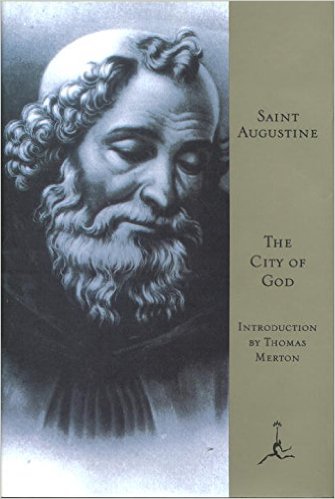
- God makes all evil things ultimately work for His Good (Romans 8:28). All that He was created was good, therefore, evil does not come from Him (Genesis 1:31; Wisdom 1:13-14; 1 John 5). In The City of God, St. Augustine wrote that:
The spirit of life, therefore, which quickens all things, and is the creator of every body, and of every created spirit, is God Himself, the uncreated spirit. In His supreme will resides the power which acts on the wills of all created spirits, helping the good, judging the evil, controlling all, granting power to some, not granting it to others. For, as He is the creator of all natures, so also is He the bestower of all powers, not of all wills; for wicked wills are not from Him, being contrary to nature, which is from Him.[4]
Evil is the absence of good. As a corollary, truth is often driven by heresy. That is, heresy forces the Christian to comprehend the truth and proclaim dogma. “Oh, happy Fall.”
- The Church is the embryo of the Kingdom. Through the Grace of the Sacraments (that is, the Body of Christ (Romans 12; 1 Corinthians 12; and Colossians 1:24), moved by the Spirit of Christ), we as humans are called to be members of the Army of Christ, to sanctify the world. As Hugh of St. Victor wrote:
For the Incarnate Word is our King, who came into this world to war with the devil; and all the saints who were before His coming are soldiers as it were, going before their King, and those who have come after and will come, even to the end of the world, are soldiers following their King. And the King himself is in the midst of His army and proceeds protected and surrounded on all sides by His columns. And although in a multitude as vast as this the kind of arms differ in the sacraments and the observance of the peoples preceding and following, yet all are really serving the one king and following the one banner; all are pursuing the one enemy and are being crowned by the one victory.[5]
The form may remain, but the essence must be baptized. Therefore, when we encounter the alien, we should not throw the baby out with the bath water. Instead, we should use the water to baptize the baby. This is the mission of the Church (Matthew 28: 18-20; 1 Corinthians 15:27-28; Colossians 1:20; Ephesians 1:10).
Notes
[1] Pope John Paul II, “Incarnation inspires Christian genius,” L’Osservatore Romano (Vatican City), 4 December 1996.
[2] St. Augustine, The City of God, Book 12, Section 5.
[3] John Paul II, “Renewing Christian Humanism for the Millennium,” Address of Pope John Paul II to a Joint Session of all the Pontifical Academies, 28 November 1996.
[4] St. Augustine, The City of God, Book 5, Section 9.
[5] Hugh of St. Victor, De Sacramentis, II.2.1-2.
Universalism and the Early Christian Church (Full Lecture)

This morning’s western heritage lecture–an examination of Christianity as the first serious religion (and philosophy) to promote the dignity of the human person regardless of the accidents of one’s birth. An astounding achievement, frankly.
Here’s hoping you enjoy. . .
Full Video: Birzer on Kirk, ISI/Paolucci
An extraordinary night to celebrate the legacy of all that was and is Russell Amos Kirk.
https://www.c-span.org/video/?415963-1/bradley-birzer-accepts-paolucci-book-award
At The Imaginative Conservative: Ludwig Von Mises

One of the greats of the twentieth century: Ludwig Von Mises
Good morning. Excellent piece at The Imaginative Conservative on one of the most interesting thinkers of the 20th century: Ludwig Von Mises. By another fascinating thinker: Israel Kirzner.
 Stormfields