Stormfields

Roine Stolt in the World of Adventures: The Birth of Third-Wave Prog

bradbirzer's avatarProgarchy

The Flower Kings, Back in the World of Adventures
1995 Foxtrot Music/Insideout Music

71 minutes; 10 tracks: Back in the World of Adventures; The Prince/Kaleidoscope; Go West Judas; Train to Nowhere; Oblivion Road; Theme for a Hero; Temple of the Snakes; My Comic Lover; The Wonder Wheel; Big Puzzle.

All lyrics and music by Roine Stolt (b. 1956).

In 1994, famed (justly so) Swedish guitarist, Roine Stolt, released a solo album under the title of the FLOWER KING. Less than a year later, he formed—around himself and the band he’d used for the FLOWER KING—the Flower Kings. It’s never quite clear who the FLOWER KING exactly is, but he seems be the embodiment of Jesus. Or, at the very least, a very peace loving Johannine hippie Jesus, and his betrayer is Judas Iscariot. In the opening song of the 1994 album, with the same name as the album, Stolt sings:

View original post 775 more words

A Classic Album: SIXPENCE NONE THE RICHER (1997)

bradbirzer's avatarProgarchy

Sixpence None the Richer

Twenty years ago, the almost entirely unknown (then) and barely remembered (now) Texas-Tennessee band, Sixpence None the Richer, released its second album, a pop masterpiece, This Beautiful Mess. The cover, a picassoesque homage with eye-popping reds and yellows, captivates today as much as it did two decades ago. Imagine a southern American version of The Sundays crossed with Nebraskan, Matthew Sweet, and a little bit of the poppiest aspects of XTC, and you’ll start to get a sense of this album. The best tracks, by far, are the least poppy songs: “Within a Room Somewhere” and “Disconnect.” Each is existential and necessarily plodding. Each gorgeously develops organically with hardly a pop hook in audible range—at least relatively speaking.

View original post 2,394 more words

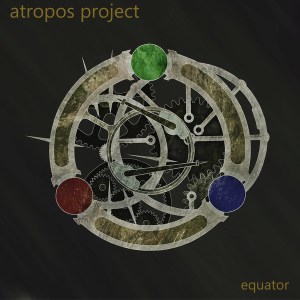
Atropos Project – Equator (2013)

Bryan Morey's avatarProgarchy

Equator“Dead String Scrolls. Bring your own lyrics.” This is how New York musician John Quarles describes his creation, Atropos Project. While purely instrumental “prog,” John draws upon a variety of influences and experiences for his album, Equator. The beauty of this album is that it cannot be pigeonholed into one specific genre or sub-genre of rock. Musically, Atropos Project explores many different aspects of progressive rock.

John began his musical journey when he was in high school, playing drums for a variety of local metal bands. As he grew older, he began trying out different instruments, eventually settling on the guitar as his weapon of choice. Over the course of the last decade or so, through collaborating with other musicians, John began to pick up other instruments as well, including the keyboards. Equator is the product of those experiences. John cites bands such as Rush, Queen, Boston, and Kiss as his early…

View original post 529 more words

Reagan’s Creative Society, 1968

A nice contrast to Johnson’s supposed “Great Society”:

The Creative Society, in other words, is simply a return to the people of the privilege of self-government, as well as a pledge for more efficient representative government–citizens of proven ability in their fields, serving where their experience qualifies them, proposing common sense answers for California’s problems, reviewing governmental structure itself and bringing it into line with the most advanced, modern business practices. Those who talk of complex problems, requiring more government planning and more control, in reality are taking us back in time to the acceptance of rule of the many by the few. Time to look to the future. We’ve had enough talk–disruptive talk–in America of left and right, dividing us down the center. There is really no such choice facing us. The only choice we have is up or down–up, to the ultimate in individual freedom consistent with law and order, or down, to the deadly dullness of totalitarianism.–Ronald Reagan, 1968

A Grand Experiment, indeed. Morse Conquers All.

bradbirzer's avatarProgarchy

The Neal Morse Band, The Grand Experiment (Radiant Records, 2015), Special Edition. Tracks: The Call; The Grand Experiment; Waterfall; Agenda; Alive Again; New Jerusalem (Freedom is Coming); Doomsday Destiny; MacArthur Park; The Creation (Live); and Reunion (Live).

Not as beautiful as last year's Flying Color's SECOND NATURE album cover, but just as intriguing.  Not as beautiful as last year’s Flying Color’s SECOND NATURE album cover, but just as intriguing.

Birzer rating: 9.5/10.

“The Call” begins with a multipart gospel/Trevor Rabin-Yes era harmony before breaking into a wild keyboard/drum sequence that is pure third-wave prog. Quickly, all instruments play at full blast. It’s a rather ingenious immersion into the album.

Everything soars with a precision and beauty. “With every beating of my heart. . . I am engulfed in who you are.” Morse is doing for the listener what God’s grace has done for him. As the lyrics suggest, the only thing that prevents disaster of an eternal magnitude is an embracing of “The Call,” unique to…

View original post 1,166 more words