Stormfields

The Plimmers Interview Tolkien, 1968

Excerpts from: Plimmer, Charlotte, and Denis Plimmer. “The Man Who Understands Hobbits.” London Daily Telegraph Magazine (March 22 1968), 31-32, 35.

“‘Spiders,’ observed Professor J.R.R. Tolkien, cradling the word with the same affection that he cradled the pipe in his hand, ‘are the particular terror of northern imaginations.’” (Plimmer interview 1968, Daily Telegraph Magazine, 31)

“Discussing one of his own monsters, a man-devouring, spider-like female, he said, ‘The female monster is certainly no deadlier than the male, but she is different.  She is a sucking, strangling, trapping creature.” (Plimmer interview 1968, Daily Telegraph Magazine, 31)

“When John Ronald Reuel Tolkien leads you into the cramped garage that serves as library, he leads you at once into the magic and legend of Middle-earth, the three-dimensional cosmology of The Lord of the Rings .  Not that the garage itself is any cave of wonders.  Jammed between the Professor’s own house and the one next door, in an undistinguished Oxford suburb, it would be no more than a banal little room, filled with files and a clutter of garden chairs, if it were not for the man.” (Plimmer interview 1968, Daily Telegraph Magazine, 31)

“Tolkien, who describes himself as ‘tubby,’ has grey eyes, firm tanned skin, silvery hair and quick decisive speech.  He might have been, fifty years ago, the model of the kindly country squire.  Any hobbit would trust this man, any dragon quail before him, any elf name him friend.  Effortlessly, he compels you to admire as much as–and herein lies his charm–he clearly admires himself.” (Plimmer interview 1968, Daily Telegraph Magazine, 31)

“Tolkien cultists, though predominately academic and egghead, are not wholly so.  Housewives writes him from Winnipeg, rocket-men from Woomera, pop-singers from Las Vegas.  Ad-men discuss him in London pubs.  Germans, Spaniards, Portuguese, Poles, Japanese, Israelis, Swedes, Dutch and Danes read him in their own language.  He is also a literary opiate for hippies, who carry his works to their farthest-flung pad, from San Francisco to Istanbul and Nepal.” (Plimmer interview 1968, Daily Telegraph Magazine, 31)

“‘I never expected a money success,’ said Tolkien, pacing the rooms, as he does constantly when he speaks.  ‘In fact, I never even though of commercial publication when I wrote The Hobbit back in the Thirties.’” (Plimmer interview 1968, Daily Telegraph Magazine, 31)

“‘I knew no more about the creatures than that, and it was years before his story grew.  I don’t know where the word came from.  You can’t catch your mind out.  It might have been associated with Sinclair Lewis’s Babbitt.  Certainly not rabbit, as some people think.  Babbitt has the same bourgeois smugness that hobbits do.  His world is the same limited place.” (Plimmer interview 1968, Daily Telegraph Magazine, 32)

“Tolkien let a few of his Oxford friends read The Hobbit.  One, a tutor, lent it to a student, Susan Dagnell.  When, some time later, Miss Dagnell joined Allen & Unwin, the publishers, she suggested it as a children’s book.” (Plimmer interview 1968, Daily Telegraph Magazine, 32)

“Sir Stanley Unwin, whose competitors called him man when he published the first two volumes in 1954, told us, ‘I was in Japan when the manuscript arrived.  Rayner wrote to say it seemed a big risk.  It would have to be published in three volumes, at a guinea each–this at a time when 18 shillings was top for a best-seller.  But Rayner added, ‘Of course, it’s a work of genius.’  So I cabled him to take it.’” (Plimmer interview 1968, Daily Telegraph Magazine, 32)

“‘Anyone who invents a language,’ he said, ‘finds that it requires a suitable habitation and a history in which it can develop.  A real language is never invented, of course.  It is a natural thing.  It is wrong to call the language you grow up speaking your native language.  It is not.  It is your first learnt language.  It is a by-product of the total make-up of the animal.’” (Plimmer interview 1968, Daily Telegraph Magazine, 32)

“Tolkien’s friend and fellow author, the late C.S. Lewis, ‘was immensely immersed’ in the development of the Ring, but not always mutely admiring.  ‘He used to insist on my reading passages aloud as I finished them, and then he made suggestions.  He was furious when I didn’t accept them.  Once he said, ‘It’s not use trying to influence you, you’re uninfluenable!’  But that wasn’t quite true.  Whenever he said, ‘You can do better than that.  Better, Tolkien, please!’ I used to try.’” (Plimmer interview 1968, Daily Telegraph Magazine, 32)

“Professor Tolkien sold his original 4,200 page typescript of the Ring to Marquette University in Milwaukee, Wisconsin: ‘I wanted the money very badly to buy this house.’” (Plimmer interview 1968, Daily Telegraph Magazine, 32)

“He was born in Bloemfontein in South Africa.  ‘I was three when I was brought to England,’ he said.  ‘After the dry, barren places I had known, I had in a way been ‘trained’ to savour the delicate English flowers and the grass.  I had this strange sense of coming home when I arrived.  The hobbit business began partly as a Sebnsucht for that happy childhood which ended when I was orphaned, at twelve.’” (Plimmer interview 1968, Daily Telegraph Magazine, 32)

“He recalled, ‘As a child, I was always inventing languages.  But that was naughty.  Poor boys must concentrate on getting scholarships.  When I was supposed to be studying Latin and Greek, I studied Welsh and English.  When I supposed to be concentrating on English, I took up Finnish.  I have always been incapable of doing the job in hand.’” (Plimmer interview 1968, Daily Telegraph Magazine, 32)

“‘The book,’ he said, ‘is not about anything but itself.  It has no allegorical intentions, topical, moral, religious or political.  It is not about modern wars or H-bombs, and my villain is not Hitler.’” (Plimmer interview 1968, Daily Telegraph Magazine, 32)

“Must fairy-tales be confined to legendary times and places, or could they be staged in modern settings?  ‘They cannot,’ he said, ‘not if you mean in a modern technological idiom.  The reader must approach Faerie with a willing suspension of disbelief.  If a thing can be technologically controlled, it ceases to be magic.’” (Plimmer interview 1968, Daily Telegraph Magazine, 32)

“He said to us: ‘Believable fairy-stories must be intensely practical.  You must have a map, no matter how rough.  Otherwise you wander all over the place.  In The Lord of the Rings I never made anyone go farther than he could on a given day.’” (Plimmer interview 1968, Daily Telegraph Magazine, 32)

“It is the appendix, Tolkien things, which has helped trigger the enormous new enthusiasm for the Ring among students in the United States: ‘A lot of it is just straight teen-age stuff.  I didn’t mean it to be, but it’s perfect for them.  I think they’re attracted by things that give verisimilitude.’” (Plimmer interview 1968, Daily Telegraph Magazine, 35)

“Tolkien received innumerable offers for film rights, musical-comedy rights, TV rights, puppetry rights.  A jigsaw-puzzle company has asked permission to produce a Ring puzzle, a soap-maker to soap-sculpt Ring characters.  Tolkien worshippers are outraged by these crass approaches.  ‘Please,’ wrote a 17-year old-girl, ‘don’t let them make a movie out of your Ring.  It would be like putting Disneyland into the Grand Canyon.’” (Plimmer interview 1968, Daily Telegraph Magazine, 35)

“He [Tolkien] feels strongly that the Ring should not be filmed: ‘You can’t cramp narrative into dramatic form.  It would be easier to film The Odyssey.  Much less happens in it.  Only a few storms.’” (Plimmer interview 1968, Daily Telegraph Magazine, 35)

“Some people have criticized the Ring as lacking religion.  Tolkien denies this: ‘Of course God is in The Lord of the Rings.  The period was pre-Christian, but it was a monotheistic world.’  Monotheistic?  Then who was the One God of Middle-earth?  Tolkien was taken aback: “The one, of course!  The book is about the world that God created–the actual world of this planet.’” (Plimmer interview 1968, Daily Telegraph Magazine, 35)

Henry Resnick Interviews Tolkien, 1966

Excerpts from: Henry Resnick, “An Interview with Tolkien [March 2, 1966],” Niekas No. 18 (Late Spring 1967).

“Well, I think it’s been building up [popularity of Tolkien’s books], you know; I think it’s an error to say that it was really related to the Ace Books edition–I think that simply the Ace Books were very wisely advised to bring it out at the right time, whereas the other people did not.” (Resnick, “An Interview,” 37)

“I think it [popularity of the story] was building up steadily, you know, and the book was really makings it own way.  There was a very large fan mail long before this so-called explosion.” ((Resnick, “An Interview,” 37)

“I think it is [the popularity of LOTR], if you really want to know my opinion, a partly reactionary influence.  I think it’s part of the run after so much rather more dreary stuff, isn’t it. . . . [such as] The Lord of the Flies.” ((Resnick, “An Interview,” 38)

“I do not [approve of studies of Tolkien or his works] while I am alive anyhow.  I do not know why they should research without any reference to me; after all, I hold the key” ((Resnick, “An Interview,” 38)

“Yes [I have seen those studies of me and my work], and they are very bad, most of them; they are nearly all either psychological analyses or they try to go into sources, and I think most of them rather vain efforts” (Resnick, “An Interview,” 38)

“In England my fan mail is largely very adult, even without professional letters” (Resnick, “An Interview,” 39)

“Neither am I obsessed with my own work.  I read newspapers. . . they’re there, and I read them when I’m interested.  I take a strong interest in what is going on, both in the university and in the country and in the world.” (Resnick, “An Interview,” 39)

“I don’t remember writing a lot of it.  One of the things I remember moving me most in quite different ways was the sound of the horns in the morning when the Nazgul sat in the gate of Rohan of Minas Tirith.  Another one which I think is the most moving point in the story for me is when Gollum repents and tries to caress Frodo and his is interfered with by Sam.  The tragedy is that the good people so often upset the not-so-good people when they try to repent and it’s a tragic moment.” (Resnick, “An Interview,” 39)

“I said that one of my chief feelings was that it [the LOTR] was too short” (Resnick, “An Interview,” 40)

“No [I don’t read Charles Williams any more]” (Resnick, “An Interview,” 40).

“I’ve read a good many [of Williams’s novels], but I don’t like them” (Resnick, “An Interview,” 40)

“Well, that’s quite wrong.  Williams had no influence on me at all; I didn’t even know him very well.  I’ll tell you one thing on that point, one of the many things I remember Lewis saying to me–of course, Lewis was very influenced as you may know–was, ‘Confound you, nobody can influence you anyhow.  I’ve tried by it’s no good.’” (Resnick, “An Interview,” 40)

“After someone had criticized me I just went on my own sweet way and took no notice of it.” (Resnick, “An Interview,” 40)

“No, I’ve been isolated, not a rebel.  Williams had no conceivable influence on me; I disliked his whole Arthurian business with great intensity and considered it rather nonsense” (Resnick, “An Interview,” 40)

“It’s [Middle-earth] only an old-fashioned word for ‘world.’  That all.  Look in the dictionary.  It isn’t another planet.” (Resnick, “An Interview,” 40)

“It [the creation of the myth] was during the war, during the first war, when I was just growing up.” (Resnick, “An Interview,” 40)

“You asked me what books move me; mostly mythology moves me and also upsets me because most mythology is distasteful to people.  But it seems to me that we miss something by not having a mythology which we can bring up to our own grade of assessment.  That’s what I always wanted to do–mythological things like Greek or Norse myths; I tried to improve on them and modernize them–to modernize them is to make them credible.” (Resnick, “An Interview,” 40)

“The seed [of the myth] is linguistic, of course.  I’m a linguist and everything is linguistic–that’s why I take such pains with names.  The real seed was starting when I was quite a child by inventing languages, largely to try to capture the esthetic mode of the languages I was learning, and I eventually made the discovery that language can’t exist in a void and if you invent a language yourself you can’t cut it in half.  It has to come alive–so really the languages came first and the country after.” (Resnick, “An Interview,” 41)

“Rhun is the Elvish word for ‘east.’  Asia, China, Japan, and all the things which people in the west regard as far away.  And south of Harad is Africa, the hot countries” (Resnick, “An Interview,” 41)

“Yes, of course [Middle-earth is Europe], Northwestern Europe where I was born–well, I wasn’t born there actually; but where my imagination comes from.” (Resnick, “An Interview,” 41)

“Oh well, my parents both came from Birmingham in England.  I happened to be born there by accident.  But it had this effect; my earliest memories are of Africa, but it was alien to me, and when I came home, therefore, I had for the countryside of England both the native feeling and the personal wonder of somebody who comes to it.  I came to the English countryside when I was about 3 ½ or 4–it seemed to me wonderful.  If you really want to know what Middle-earth is based on, it’s my wonder and delight in th earth as it is, particularly with the natural earth. . .  And I also was born with a great love of trees.” (Resnick, “An Interview,” 41)

“Well, no, it is the real world; while you’re inside the book it does exist–that’s the whole point of literature, isn’t it?” (Resnick, “An Interview,” 41)

“As a matter of fact, insofar as . . . without harping or preaching on the side of various rather old-fashioned things like humility, valor, and so on. . . and courage, you can carry those over and I think it has rather an effect on people–young folks are ready in their attitudes to rather be changed.  But I didn’t intend these things, because I didn’t write it for children.” (Resnick, “An Interview,” 41)

“That’s why I don’t like George MacDonald very much; he’s a horrible old grandmother.  That a very kind woman figure, of course, really–the Queen is rather a mother.” (Resnick, “An Interview,” 41)

“All this kind of stuff–Ace Books, correspondence, fan mail–all this interferes, (41) you know.  That’s why I answer some of them very briefly or not at all.  I’m an old man now, and I’ve got a short working day.  I cannot go on working until two, as I used to” (Resnick, “An Interview,” 42)

“Most of it [the Silmarillion] is written, of course, but when I offered it to the publishers first and they turned it down they were too high and mighty.  But now The Lord of the Rings has been a success they want it and of course now it has to be made to fit The Lord of the Rings .  I am hoping to get it out in the course of next year.  Because of the market and the interest I shall probably try to publish it bit by bit.” (Resnick, “An Interview,” 42)

“It’s [the Fourth Age] the beginning of what you might call history.  What you have is an imaginary period in which mythology was still actually existing in the real world.  Let’s say you would have. . . abstract figures–not abstract figures, but myths incarnate; but once that’s gone, scattered, dispersed, all you get is the history of human beings–the play of good and evil in history.” (Resnick, “An Interview,” 42)

“This [the Fourth Age] is the beginning of history, when there are no more devils or angels to be seen walking about.” (Resnick, “An Interview,” 42)

“I did write a continuation story, taking place about one hundred years after the end of The Lord of the Rings .  Of course he’ll go bad because he’s sick of peace.” (Resnick, “An Interview,” 42)

“Well, I haven’t finished writing it because I didn’t want to gon with it; it’s called ‘The New Shadow.’  The people cannot bear peace for one hundred years.  After a hundred years of peace and prosperity people would all be going into every kind of madness.” (Resnick, “An Interview,” 42)

“Not necessarily war [as inevitable], but there are other evils just as bad.  War is only the outbreak of these.  My views of current affairs is not as depressed as some people’s.  I should say that I’m a bit frightened that the Greeks hadn’t got something in saying that those whom the gods wish to destroy they must first drive mad.” (Resnick, “An Interview,” 42)

“It’s [the modern world] like the tower of Babel, isn’t it?  All noise and confusion.” (Resnick, “An Interview,” 42)

“You don’t have to be Christian to believe that somebody has to die in order to save something.  As a matter of fact, December 25 th occurred strictly by accident, and I let it in to show that this was not a Christian myth anyhow.  It was a purely unimportant date, and I thought, Well, there it is, just an accident.” (Resnick, “An Interview,” 42)
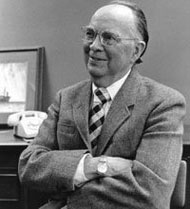
University Bookman, Autumn 1974 (Full Issue)

Now, this is an issue!  It gets an A rather than an A+, only because Kirk didn’t write anything directly for it.

Articles by Robert Speaight, Father Schall, and Thomas Howard. . . dealing with Russell Kirk, Mother Teresa, and Unamuno.

university bookman autumn 1974

Clyde Kilby Reports on Tolkien, December 1966

An edited transcript of remarks at the December 1966 TSA meeting by Clyde S Kilby, Niekas, volume 19, 1968.

Clyde S. Kilby of Wheaton College.

Clyde S. Kilby of Wheaton College.

I might say first that there is a very small manuscript called “Mr. Bliss” that I think may now be in the hands of Raynor Unwin. There is very little text to it, but the nice thing about it is (I understand, for I have not seen the manuscript) that its illustrations are by Prof. Tolkien, himself, in color. I’ve been trying for some time to get it released to a publisher and I hope it may get into print before too long.

I would first like to report that we had a session on Tolkien and C.S. Lewis at the modern language Association convention up at the Statler Hilton this afternoon. I was saying up there that so far as feature articles on Tolkien are concerned you would better take them with a grain of salt. Prof. Tolkien’s secretary, who of course is British, told me she felt lucky if she got 80% of what he was saying. He talks very fast, often with his pipe in his teeth. Also he will skip around fast as lightning. He will see a connection, but his mind works very fast and you may wait a half hour until you discover what the connection is. In other words, it is extremely easy to misunderstand. So take these feature articles with a grain of salt. Some of them are ridiculously wrong places. I have no time now to suggest which are wrong.

Let me quickly mention a few other things:

[Omitting one paragraph on how to pronounce Tolkien’s name]

And then I thought I might tell you something that very few people in this country know about. I went to a dramatized version of the Ring in Cheltenham England, done by 10 and 11-year-old children. It was astonishingly good. Every one of the actors and it was perfectly serious through the whole play and did a splendid job.

I’m not sure what should be said about the Silmarillion. I might say that the middle story, that is, of the Second Age of middle Earth, is at present only one long and exciting story. That is, it is nothing like the length of the ring or of the Silmarillion. How much more may be written I don’t know. Prof. Tolkien is nearly 75, and he is a perfectionist in his writing.

Back to the Silmarillion. I didn’t read the entire story this summer [1966]. I have no time, and indeed I don’t feel free, to tell you of its details. They could be changed — many of them — before it is published. The whole story will, Prof. Tolkien thinks, be about as long as the Ring when it is published. In 1964 he told me, by way of a very quick — sort of one sentence summary — that it was about the Creation and the Fall. That covers quite a bit of territory.

There is in it a beautiful — truly beautiful — creation story, and then there is a rebel among the sort of angelic host. If this sounds very prosaic, I can tell you that the story as a whole is comparable in detail and power to the ring,

And then there is the movement from Valinor, which is the original country, across to Middle-earth. You know where the Shire is on the map, and then there are the mountains to the west and to the other side of those mountains of very small margin of shoreline. This is where much of the action of the Silmarillion takes place.

I couldn’t figure out, trying to work from the ring itself, the mountains and places and a whole geographical area mentioned. Well, it turns out this whole section was destroyed in a vast and bloody battle. It was such a great battle but some of the land was destroyed in the conflict.

I wish I could say something optimistic about the publication of the Silmarillion. I wrote Prof. Tolkien and offered to go over there and help them, to facilitate the publication, by answering his mail or doing anything possible. (He has a vast mail which is bothersome to him, by the way, and takes up a great deal of his time.) I confess I was surprised when, on Christmas Eve a year ago [1965], I got a letter from him which had been forwarded around, saying you’d like to have me come. Now of course the great question I hoped to help answer was, when will the Silmarillion be published? The last word I had from Prof. Tolkien, just before I left England, was that he hoped he could get one volume of it to the publisher Summer [1967]. He had told me two years ago when I saw him that it might be ready for publication in a year, and that meant it would have been out a year ago.

And then, you remember, the little manner with Ace Books. He said it took nine months of his time. I think I would’ve settled the affair in an hour or two and had it off my mind, but he is not that sort and kept bothering with it. He should’ve turned it over to his lawyer and let it go at that. He says that the controversy took nine months away from the completion of the Silmarillion.

Mr. Unwin told me that he’d been waiting for a brief introduction to translations of Sir Gawain and the Green Knight and the Pearl. The translations are already (though Prof. Tolkien did not really think they came quite up to his own standard) but the publisher has waited a long time for the introduction and it isn’t ready yet. He hopes to get it ready before he went with Mrs. Tolkien, in September, on a vacation in the Mediterranean, but he told me, rather sadly I felt, in early September, “I won’t get it in.” When it will be in, nobody knows. And when the Silmarillion will be out nobody knows. I wish I could tell you to be prepared for it in the next few months. But it isn’t going to be that way. But I can say that Prof. Tolkien does have plans to get back to the Silmarillion and completed.

In conclusion let me tell you a little story Prof. Tolkien told me a couple of years ago. He said he received a letter from a man in London whose name was Sam Gamgee. He said he wrote back to this man saying he was glad Sam was a good character and what he really was afraid of was receiving a letter from somebody named S. Gollum!

Tolkien on Tolkien, 1966

From: J.R.R. Tolkien, “Tolkien on Tolkien,” Diplomat (October 1966): 39.

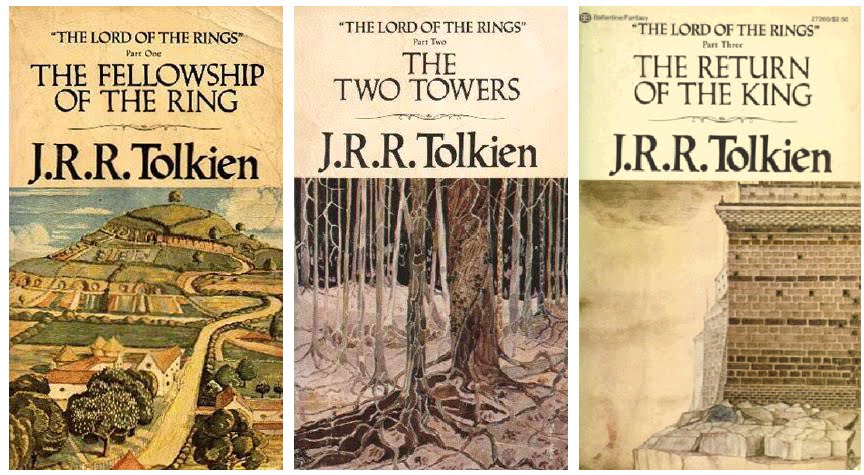
LOTR_book_coversThis business began so far back that it might be said to have begun at birth. Somewhere about six years old I tried to write some verses on a dragon about which I now remember nothing except that it contained the expression a green great dragon and that I remained puzzled for a very long time at being told that this should be great green. But the myth­ology (and associated languages) first began to take shape during the 1914-18 war. The Fall of Gondolin (and the birth of Eärendil) was writ­ten in hospital and on leave after surviving the Battle of the Somme in 1916. The kernel of the mythology, the matter of Lúthien Tinúviel and Beren arise from a small woodland glade filled with “hemlocks” (or other white umbellifers) near Roos on the Holderness peninsula to which I occasionally went when free from regimental duties while in the Humber Garrison in 1913.

I think the so-called fairy story one of the highest forms of litera­ture, and quite erroneously associ­ated with children (as such).

I came eventually and by slow degrees to write The Lord of the Rings to satisfy myself: of course without success, at any rate not above 75 percent. But now (when the work is no longer hot, immedi­ate or so personal) certain features of it, and especially certain places, still move me very powerfully. The heart remains in the description of Cerin Amroth (end of Vol. 1, Bk. ii, ch. 6). but I am most stirred by the sound of the horses of the Rohirrim at cockcrow; and most grieved by Gollum’s failure (just) to repent when interrupted by Sam: this seems to me really like the real world in which the instruments of just retribution are seldom themselves just or holy; and the good are often stumbling blocks.

A primary “fact” about my work is that it is all of a piece, and fun­damentally linguistic in inspiration. The authorities of the university might well consider it an aberration of an elderly professor of philology to write and publish fairy stories and romances, and call it a “hobby,” pardonable because it has been (sur­prisingly to me as much as to any­one) successful. But it is not a “hobby,” in the sense of something quite different from one’s work, taken up as a relief-outlet. The in­vention of languages is the founda­tion. The “stories” were made rather to provide a world for the languages than the reverse. To me a name comes first and the story follows. I should have preferred to write in “Elvish.” But, of course, such a work as The Lord of the Rings has been edited and only as much “language” has been left in as I thought would be stomached by readers. (I now find that many would have liked much more.) But there is a great deal of linguistic matter (other than actually “elvish” names and words) included or myth­ologically expressed in the book. It is to me, anyway, largely an essay in “linguistic aesthetic,” as I sometimes say to people who ask me, “what is it all about?”

It is not “about” anything but itself. Certainly it has no allegorical intentions general, particular or topical; moral, religious or political. The only criticism that annoyed me was one that it “contained no religion” (and “no women” but that does not mater, and is not true anyway).  It is a monotheistic world of “natural theology.” The odd fact that there are no churches, temples or religious rites and ceremonies, is simply part of the historical climate depicted. It will be sufficiently explained—if (as now seems likely The Silmarillion and other legends of the First and Second Ages are published. I am in any case myself a Christian; but the “Third Age” was not a Christian world.

“Middle-earth,” by the way, is not a name of a never-never land without relation to the world we live in (like the Mercury of Edison). It is just a use of Middle-English middel-erde (or erthe), altered from Old English Middangeart: the name for the inhabited lands of men between the seas. And though I have not at­tempted to relate the shape of the mountains and land-masses to what geologists may say or surmise about the nearer past, imaginatively this “history” is supposed to take place in a period of the actual Old World of this planet.

Nothing has astonished me more (and I think my publishers) than the welcome given to The Lord of the Rings. But it is, of course, a constant source of consolation and pleasure to me. And, I may say, a piece of singular good fortune, much envied by some of my contemporaries. Wonderful people still buy the book, and to a man “retired” that is both grateful and comforting.


Tolkien’s 1923 Poem, “The Cat and the Fiddle”

“The Cat in the Fiddle”

A nursery rhyme untimed and its scandalous secret unlocked

by J.R.R. Tolkien

They say there’s a little crooked inn

behind an old grey hill,

Where they brew a beer so very brown

The man in the moon himself comes down,

And sometimes drinks his fill.

And there the ostler has a cat

Who plays of five-stringed fiddle;

Mine host a little dog so clever

He laughs in any joke whatever,

And sometimes in the middle.

They also keep a horned cow,

To said, with golden hoofs;

But music turns her head like ale,

And makes her way her tufted tail

And dance upon the roofs.

But, O! the row of silver dishes,

And store of silver spoons;

For Sunday there’s a special pair,

And these they polish up with care

On Saturday afternoons

The Man in the Moon had drunk too deep;

The Ostler’s cat was totty;

A dish made love to a Sunday spoon;

The little dog saw all the jokes too soon;

And the cow was dancing dotty.

The man in the moon had another mug

And fell beneath his chair,

And there he called for still more ale,

Though the stars were getting thin and pale,

And the Dawn was on the stair.

The ostler said to his tipsy cat;

“The white horses of the moon,

They neigh and champ their silver bits,

But their masters been and drowned his wits,

And the sun will catch him soon.

Come play on your fiddle a-hey-diddle-diddle,

Twill make him look alive.”

So the cat played a terrible drunken tune,

While the landlord shook the man in the moon

and cried “tis nearly 5!”

They rolled him slowly up the hill

And bundled him in the Moon;

And his horses galloped up in rear,

And the cow came capering like a deer,

And the dish embraced the spoon.

The cat then suddenly changed the tune;

The dog began to roar;

The horses stood upon their heads;

The guests all bounded upon their beds

And danced upon the floor.

The cat broke all his fiddle strings;

The cow jumped over the Moon;

The little dog laughed to see such fun;

In the middle the Sunday dish did run

Away with the Sunday spoon.

Round moon rolled off over the hill —

But only just in time,

For the sun looked up with a fiery head,

And ordered everyone back to bed,

And the ending of the rhyme.

–Tolkien, Yorkshire Poetry 2 (October-November 1923): 1-3.

Tolkien’s 1925 Poem, “Light as Leaf on Lindentree”

“Light as Leaf on Lindentree”

‘Tis of Beren Ermabwed brokenhearted,

How Luthien the lissom he loved of yore

In the enchanted forest chained with wonder.

Tinûviel he named her, than nightingale

More sweet her voice, as veiled in soft

And wavering wisps of woven dusk

Shot with starlight, with shining eyes,

She danced like dreams of drifting sheen,

Pale twinkling pearls in pools of darkness.

The grass was very long and thin,

The leaves of many years lay thick,

The old tree-roots wound out and in,

And the early moon was glimmering.

There went her white feet lilting quick,

And Dairon’s flute did bubble thin,

As neath the hemlock umbels thick

Tinûviel danced a-shimmering.

The pale moths lumbered noiselessly,

And daylight, died among the leaves,

As Beren from the wild country

Came thither wayworn sorrowing.

He peered between the hemlock sheaves,

And watched in wonder noiselessly

Her dancing through the moonlit leaves

And the ghostly moths a-following.

There magic took his weary feet,

And he forgot his loneliness,

And out he danced, unheeding, fleet,

Where the moonbeams were a-glistening.

Through the tangled woods of Elfinesse

They fled on nimble fairy feet,

And left him to his loneliness

In the silent forest listening,

Still hearkening for the imagined sound

Of lissom feet upon the leaves,

For music welling underground

In the dim-lit caves of Doriath.

But withered are the hemlock sheaves,

And one by one with mournful sound

Whispering fall the beechen leaves

In the dying woods of Doriath.

He sought her wandering near and far

Where the leaves of one more year were

strewn,

By winter moon and frosty star

With shaken light a-shivering.

He found her neath a misty moon,

A silver wraith that danced afar,

And the mists beneath her feet were strewn

In moonlight palely quivering.

She danced upon a hillock green

Whose grass unfading kissed her feet,

While Dairon’s fingers played unseen

O’er his magic flute a-flickering ;

And out he danced, unheeding, fleet,

In the moonlight to the hillock green:

No impress found he of her feet

That fled him swiftly flickering.

And longing filled his voice that called “Tinûviel Tinûviel”

And longing sped his feet enthralled

Behind her wayward shimmering.

She heard as echo of a spell

His lonely voice that longing called “Tinûviel Tinûviel”

One moment paused she glimmering.

And Beren caught that elfin maid

And kissed her trembling starlit eyes,

Tinûviel whom love delayed

In the woods of evening morrowless.

Till moonlight and till music dies

Shall Beren by the elfin maid

Dance in the starlight of her eyes

In the forest singing sorrowless.

Wherever grass is long and thin,

And the leaves of countless years lie thick,

And ancient roots wind out and in,

As once they did in Doriath,

Shall go their white feet lilting quick,

But never Dairon’s music thin

Be heard beneath the hemlocks thick,

Since Beren came to Doriath.

–J.R.R. Tolkien, THE GRYPHON (June 1925), 217.