Dawson, “Future of National Government,” 1935
Source: Christopher Dawson, “The Future of National Government,” DUBLIN REVIEW (1935): 236-251.

Source: Christopher Dawson, “The Future of National Government,” DUBLIN REVIEW (1935): 236-251.
A nice contrast to Johnson’s supposed “Great Society”:
The Creative Society, in other words, is simply a return to the people of the privilege of self-government, as well as a pledge for more efficient representative government–citizens of proven ability in their fields, serving where their experience qualifies them, proposing common sense answers for California’s problems, reviewing governmental structure itself and bringing it into line with the most advanced, modern business practices. Those who talk of complex problems, requiring more government planning and more control, in reality are taking us back in time to the acceptance of rule of the many by the few. Time to look to the future. We’ve had enough talk–disruptive talk–in America of left and right, dividing us down the center. There is really no such choice facing us. The only choice we have is up or down–up, to the ultimate in individual freedom consistent with law and order, or down, to the deadly dullness of totalitarianism.–Ronald Reagan, 1968
The Neal Morse Band, The Grand Experiment (Radiant Records, 2015), Special Edition. Tracks: The Call; The Grand Experiment; Waterfall; Agenda; Alive Again; New Jerusalem (Freedom is Coming); Doomsday Destiny; MacArthur Park; The Creation (Live); and Reunion (Live).
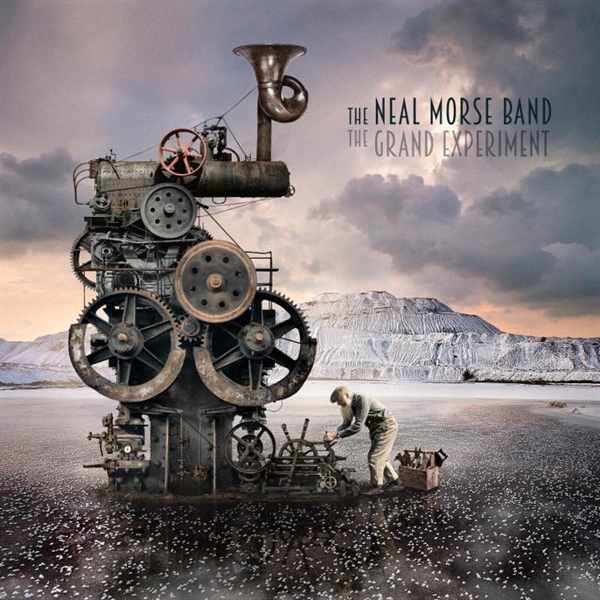 Not as beautiful as last year’s Flying Color’s SECOND NATURE album cover, but just as intriguing.
Birzer rating: 9.5/10.
“The Call” begins with a multipart gospel/Trevor Rabin-Yes era harmony before breaking into a wild keyboard/drum sequence that is pure third-wave prog. Quickly, all instruments play at full blast. It’s a rather ingenious immersion into the album.
Everything soars with a precision and beauty. “With every beating of my heart. . . I am engulfed in who you are.” Morse is doing for the listener what God’s grace has done for him. As the lyrics suggest, the only thing that prevents disaster of an eternal magnitude is an embracing of “The Call,” unique to…
View original post 1,166 more words
 At risk of annoying those who waded through my New Year’s Day post on my favorite prog/rock albums of 2014, I’m (re)posting my #1 pick from that list, as I think it stands alone just fine as a review. And because I think so highly of this album. Oh, and because I don’t post nearly enough on this fine blog, so maybe this can count toward my post total! By the way, a recent issue of PROG magazine (Issue 51 2014) raved about this album—but did get into the lyrical content as I do below.
“Second Nature” by Flying Colors. Every once in a while—perhaps once every few years—I hear an album that I listen to again and again…and again: Jeff Buckley’s “Grace”, “OK Computer” by Radiohead, and Soundgarden’s “Superunknown” come to mind. I’ve now listened to this album 75 times or so (according to my iTunes), and I’ve not…
View original post 917 more words
 Over at The Imaginative Conservative, I had the wonderful opportunity to praise my maternal grandmother, a person I admired deeply.
http://www.theimaginativeconservative.org/2015/01/thy-will-be-done-great-woman.html
Nice piece on Neil Peart on NPR this morning.
http://www.npr.org/2015/01/06/375171736/mystic-rhythms-rushs-neil-peart-on-the-first-rock-drummer
Reposted from the CU CTP:
Please consider this post as a PSA for Colorado rather than for conservatism. I have no idea what Kevin J. Anderson’s politics are, and, frankly, I’m happy knowing him only as a person and as an artist. When it comes to these two things, he’s absolutely brilliant. A man who does Colorado proud.
One of the best known and most published science fiction novelists in the world, Anderson leads seminars on the art of writing and publishing. I’ve not attended one, but, having gotten to know Kevin personally (after reading his fiction for over 20 years now), I certainly want to.
Here’s the information:

The sixth annual Superstars Writing Seminar is coming up, only a month away. We’ve already got more signups than ever before, more speakers, more panel opportunities.

Here are some of the new additions to make this even more awesome than previous years:
• We will have two tracks of programming in the afternoon. There were so many topics to cover, this allows us to add nine extra hours of talks, workshops, and panels.
• Individual one-on-one clinics: editors from two major publishing houses will meet directly with students to critique cover letters and pitches; art directors and publishers will critique and offer improvements to individual indie published books.
• A professional photographer will set up and take high-quality author/PR photos for all Superstars attendees—FREE.
• Special presentation of new data from Jeff Brazell, the CEO of a global market research company, The Modelers, which has done studies on just about everything in entertainment, from gaming to movies, from books to devices. His company commissioned an extensive study on books, ebooks, and reading, and he will be presenting the results of the study—for the first time in public—at the 2015 Superstars Writing Seminar.
• Eggs Benedict Breakfast with James Artimus Owen, a unique presentation and breakfast prepared by one of our bestselling speakers with a special message for all writers. Because the first morning sold out almost immediately, we have offered a second Eggs Benedict Breakfast.
• Hands-on workshops on cover design and representatives from Kobo and Wattpad for indie authors.
Our speakers this year are Kevin J. Anderson, Rebecca Moesta, Eric Flint, David Farland, James Artimus Owen, Jody Lynn Nye, Todd McCaffrey, Toni Weisskopf (Baen Books), Mark LeFebvre (Kobo), Ashleigh Gardner (Wattpad), Kristine Kathryn Rusch, Dean Wesley Smith, Lisa Mangum (Shadow Mountain Publishing), Allyson Longueira (WMG Publishing), Peter Wacks (WordFire Press), M. Scott Boone (IP and copyright attorney), and others.
The Superstars Writing Seminar is held in Colorado Springs, February 5–7. Make your plans now.
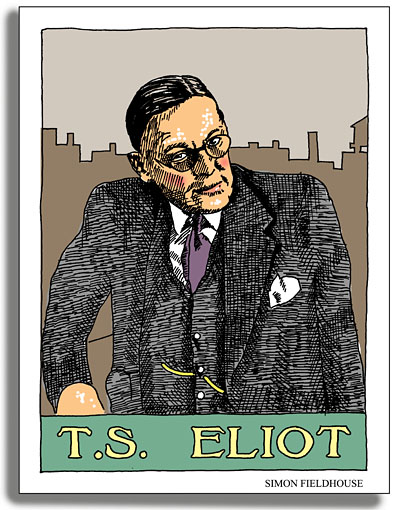 Certainly, one of Eliot’s greatest works, despite one unfortunate remark–which Eliot himself regretted. Still, well worth reading. Enjoy.
As always, my apologies for my marginalia and notes.
 To celebrate what would’ve been J.R.R. Tolkien’s 123rd birthday on January 3 of this year, I posted the following at The Imaginative Conservative.
As a person who has written on Tolkien for almost fifteen years and read Tolkien for thirty-six years, I am often asked about his political views. In a sense, this is a funny question, as Tolkien really despised most politics. In fact, he really thought of himself as very anti-political. His few statements on the matter reveal just how unpolitical and apolitical and anti-political he could be.
It is also, however, a natural question for someone to ask about the great man, as we live in a highly politicized age.
So, what do we know?
To keep reading, please click the link below.
http://www.theimaginativeconservative.org/2015/01/ten-points-tolkiens-politics.html
The following quotes are from a 1933 speech Eliot gave considering the role of Catholicism (Anglo, mostly) in preserving western civilization.
 Source: Eliot, ESSAYS ANCIENT AND MODERN (London: Faber and Faber, 1936).
“I believe that the Catholic Church, with its inheritance from Israel and from Greece, is still, as it always has been, the great repository of wisdom. Wisdom seems to be a commodity less and less available in educational institutions; for the methods and ideals coming into vogue in modern education, scientific specialization on the one hand, and the treatment of humanities either as a kind of pseudoscience or as superficial culture, are not calculated to cultivate a disposition towards wisdom; something which, certainly, educational institutions cannot teach, because it cannot be learnt in the time or wholly in such surroundings, but which they can teach us to desire, which they can teach us how to go about acquiring. The modern world separates the intellect and the emotions. What can be reduced to a science, in its narrow conception of ‘science’, whatever can be handled by sharpness of wit mastering a limited and technical material, it respects; the rest may be a waste of uncontrolled behavior and immature emotion. I wish that the classical conception of wisdom might be restored, so that we might not be left wholly to the political scientist on the one hand, or the demagogue on the other. For the ordinary politician, wisdom is identified with expediency, for the political scientist it disappears in theory; but wisdom, including political wisdom, can neither be abstracted to a science, nor reduced to a dodge; nor can you supply it by forming a committee composed of scientists and dodgers in equal numbers. And human wisdom, I add finally, cannot be separated from divine wisdom without tending to become merely worldly wisdom, as vain as folly itself.” Pages 117-118.
“And we ourselves, I suspect, are liable to fall into booby-traps of our own setting. We are in danger always of translating notions too literally from one order to another. I discerned two chief pitfalls. The ideas of authority, of hierarchy, of discipline in order, applied inappropriately in the temporal sphere, may lead us into some error of absolutism or impossible theocracy. Or, the IDs of humanity, brotherhood, equality before God, may lead us to affirm that the Christian can only be a socialist. Heresy is always possible; and where there is one possible heresy, there are always at least two; and when to doctrines contradict each other, we do not always remembered that both may be wrong. And heresy may extend, of course, into affairs of this world which people do not ordinarily judge according to such standards; we might well expect to find it, for instance, in some forms of Fascism as well as in some forms of Socialism.” Pages 118 –119.
“But unless this humanity is considered always in relation to God, we may expect to find an excessive love that created beings, in other words humanitarianism, leading to a genuine oppression of human beings in what is conceived by other human beings to be their interest.” Page 119.
“For truly worldly wisdom leads up to, and is fulfilled in, and is incomplete without, other–worldly wisdom.” Page 120.
“The Catholic should have high ideals — or rather, I should say absolute ideals — and moderate expectations: the heretic, whether he calls himself fascist, or communist, or Democrat or rationalist, always has low ideals and great expectations.” Page 122.
“What we have to aim at is not merely an order which will not contradict the Christian order, an order in which Christians and non-Christians can accommodate themselves in perfect harmony; any programme that a Catholic can envisage must aim at the conversion of the whole world. The only positive unification of the world, we believe, is religious unification; by which we do not mean simply universal submission to one world-wide ecclesiastical hierarchy, but cultural unity in religion — which is not the same thing as cultural uniformity.” Pages 123–124.
“Our duty, it seems to me, with regard to all purely secular attempts to set the world right, is to welcome them for what they are worth, when they have any good in them, and at the same time proclaim their limitations and the danger of expecting more of them than such human inventions can perform. We’ve been undeceived about developments which at one time or another were expected to bring unity to the world. At one time, progress and enlightenment were expected to do it; and the spread of democracy and Parliamentary institutions. I am afraid that this meant, so far as Britain and America were concerned, a belief that the one thing necessary was for the rest of the world to model itself or be modeled by force upon Britain or America respectively. The fact is that it is very difficult for any of us to know in what ways we are superior to other peoples, and in what ways merely different. At a later time, what was called the conquest of space was expected, by increasing facilities of communication between peoples, to favor understanding. The conquest of space has made it possible for peoples to fight from greater distances, but in other ways has not done all that it should: in America, thanks to the conquest of space, you can get fresh vegetables and fruit at anytime of the year, and none of it has any flavor. Standardization was expected to unify peoples, though perhaps at the price of monotony; standardization has tended to make peoples alike where they had better be different, and you can hear the same kind of music from any wireless station in Europe; but to exist in amity peoples need something more in common than a dance step, or universal mastery of Ford cars. More recently, we have often heard that the economic and financial independence of nations makes harmony and common action, if not inevitable, at least imperative: we must agree, or we shall perish. You can put a variety of savage beasts together in one cage, and tell them that they must tolerate each other and share their food equitably or they will perish: but it would be simpler and more humane to confine them in different cages according to their kind. Such interdependence of peoples of widely different emotional organization begins to appear now to be merely multiplying occasions of discord; and to hope for anything from it is the illusory reward of those who continue to perform oblations to that deceitful goddess of Reason who was only born some hundred and 50 years ago.” Pages 124–126.
“I have little hope for the future of America until that country falls apart into its natural components, divisions which should not simply be those of the old North and South and still less those of the 48 states. I imagine that my general sympathies and tendencies, in the matter of social and economic reform, are familiar to those which individual members of this School have expressed. But one thing I feel more and more sure, and that is that the Catholic cannot commit himself utterly and absolutely to any one form of temporal order. I do not mean by this that he should remain aloof, or refuse to champion any cause or adopt any course to which reason, sensibility and wisdom converge to point; but that his attitude must always be relative, that he must never devote the same passion to any Kingdom of this world that he should render to the Kingdom of God. There are many possible occasions on which he may suitably give up his life for temporal causes, but never his sense of values; remembering the Platonic hint that nothing in this world is wholly serious — that ‘nothing’ including of course the prolongation of one’s own existence in the world.” Pages 127 –128.
“Accordingly, if we are to contribute our share, not merely as citizens, but his Catholic citizens, we must not be content to peruse blue books, newspapers, and political and economic treatises; we must first of all become thoroughly conversant with our own theology.” Pages 128 –129.
“In any public causes to which we may devote ourselves, we are always likely to find ourselves allied with non-Catholics of goodwill; and we have sometimes to remind ourselves of the very different presuppositions which can underlie a common action. I have already suggested that the world is liable to set its ideals to low and its expectations too high; that it is apt to put a blind faith in mechanism; that it is apt to hope that an intelligent recognition of material interests and possibilities, arrived at by conferences and reports, will set things right. It expects too much from vague benevolence, and refuses to face the fact that no great change can ever come without a moral conversion. It lives in the constant expectation of some material miracle, and follows a Willow wisp which to some eyes takes the shape of Prosperity, and to others that of Revolution.” Pages 129 – 130.
“I believe that there is a Catholic habit of thought and feeling, which is a bond between Catholics of the most diverse races, nations, classes and culture.” Page 131.
“I have no more sympathy with the purely humanitarian attitude toward war than with the humanitarian attitude toward anything else: I should not enjoy the prospect of abolishing suffering without at the same time perfecting human nature. In face of any naturally horrifying phenomenon like war we must measure the suffering, direct and indirect, against the spiritual goods which may come of suffering. We may find that the proportion of futile suffering, and the that kind of suffering which makes men worse rather than better, with the which abates their human dignity and deadens their sense of their responsibility, is far too high; and that the total effect is at best one of futility. What we have to concern ourselves with primarily is the causes in modern society, in our industrial and financial machinery it may be, which bring about the kind of war which we have experienced; and to give our adherence to all alterations in that machinery which tend to remove the motives. We do not, I suppose, deny that society is very deeply affected morally and spiritually by material conditions, even by a machinery which has constructed piecemeal and with shortsighted aims. This is not to accept any doctrine of determinism, for it means no more than that society, and the majority of individuals composing it, are only imperfectly conscious of what they are doing, directed by impure motives and aiming at false goods.” Pages 133–134.


 Stormfields