
Conservative Scholar Takes a Deep Dive into Rush Excellence Book

 Brad Birzer
Bradley Birzer, a professor of history at Hillsdale College in Michigan who is on a one-year visiting scholar appointment at the University of Colorado at Boulder, took time out of his teaching schedule to write a thoughtful review of my book Rush: Life Liberty and the Pursuit of Excellence. Birzer is a conservative humanist, probably not unlike Neil Peart, and is the author of well-received books on Charles Carroll, one of our country’s lesser known founding fathers but an inspirational man who exemplified the ideal of Republican virtue, and on Christopher Dawson, the eminent Catholic historian.
I’m grateful Birzer gives the book a thumb’s up. He knows his history and his philosophy and he knows his Rush as well as anyone. So, I feel like the main idea of my book—that Aristotelian individualism is at the root of Rush’s lyrics—passed a big test.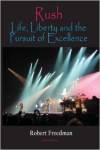
Birzer’s main…
View original post 736 more words
Luther’s Two Kingdoms: Christ and Authority

 The differentiation between the jurisdictions of Christ and the temporal authority does not limit Christian activity to the spiritual sphere alone, but dictates the manner in which the Christian wields the sword and obeys temporal authority. Turning to the Biblical passages in question, Luther argues that Christ’s words in Matthew 5 should be interpreted to mean that the temporal sword not be used among Christians, that the means of rule of the kingdom of the world should not be allowed to rule the kingdom of Christ. Luther writes that, “For [Christ] is a king over Christians and rules by the Holy Spirit alone, without law. Although he sanctions the sword, he did not make use of it, for it serves no purpose in his kingdom, in which there are none but the upright.”[47]Matthew 5 thus prohibits…
View original post 918 more words
Luther’s Two Kingdoms: Christian Passivity?
 To this point it seems that using Bornkamm’s understanding of Luther’s doctrine would allow for little passivity from the Christian when their neighbor was confronted with evil. On the breadth of secular authority, Luther’s concern was that temporal authority must not endeavor to control the prescription of laws for the soul, for to do so would encroach upon Christ’s government, which would mislead and destroy souls.[56] Luther speaks against both those leaders of God’s kingdom who have sought to control temporal matters such as land and animals, as well as those rulers of the temporal kingdom who have abandoned their just duties concerning land and property and have rushed into the insanity of attempting to exercise spiritual control over souls.[57] Luther, citing St. Paul, St. Peter, King David, and Christ,[58] argues that temporal authorities only…
View original post 688 more words
Order, Issue no. 2
Here is a not-so-great photocopy/scan of the second issue of ORDER, edited by Tom Burns and Christopher Dawson.
The Saving Grace of Neil Peart
Why I love Neil Peart.

In part, a review of Rob Freedman, Rush: Life, Liberty, and the Pursuit of Excellence (Algora, 2014).
N.B. This post should be approached with caution. It is at least PG-13, if not NC17. Not for language, but for personal revelation and content. Additionally, I’ve written about one or two of these things before, especially about Peart as a big brother. Please don’t fear thinking—“hey, I’ve read this before.” But, even the few things I’ve mentioned before are here rewritten. Final note: for an exploration of Peart’s Stoicism, see Erik Heter’s excellent piece on the subject, here at progarchy.com.
 Neil Peart, ca. 1987.
***
As I’ve mentioned before in these pages and elsewhere, few persons, thinkers, or artists have shaped my own view of the world as strongly as has Neil Peart, Canadian drummer, lyricist, writer, and all-around Renaissance man. I’ve never met him, but I’ve read all of his words…
View original post 3,049 more words
The 150th Anniversary of the Sand Creek Massacre
 The Sand Creek Massacre, a blatant and unjustified attack on civilian targets, was the worst such incident conducted against American Indians during the nineteenth century. One of the heroes of the 1862 Civil War battle of Glorietta Pass, Colonel John M. Chivington considered himself maligned as the local Denver press labeled him “Bloodless Chivington,” a reference to his inactivity since the famous New Mexican battle. Only increasing tensions in Colorado, Indians had raided numerous settlements throughout the summer of 1864.
Humiliated by the press and angry at Indians at large, Chivington, a former Methodist minister, led a small but well-armed and determined force into eastern Colorado searching for Indian encampments. Even more significant, an attack might further Chivington’s political ambitions once Colorado became a state.
Chivington searched the Great Plains in vain for two months. In extreme eastern Colorado, along the Sand Creek, Chivington and his men ran across Black Kettle’s village of nearly five hundred Northern Cheyenne Indians in late November 1864. Although Black Kettle’s band had had conflicts with American settlers in the past, it was currently flying the American flag under the protection of Major Edward W. Wynkoop of Fort Lyon. That fort had also supplied the band with goods and provisions for the winter.
Though the village flew an American and a white surrender flag, Chivington and his forces struck at dawn on November 29, 1864. Within a few hours, the Colorado forces had killed and mutilated nearly 200 of the formerly 500 member tribe. Most of those killed and cut apart were women and children. Taking scalps from women (near the vagina) and children, Chivington and his men returned to Denver and proudly displayed their “trophies” to great applause of the Denver citizenry and the local press.
The massacre polarized the Indians on the Great Plains. It became apparent to them that they might become the next victims of unrestrained brutality. Their distrust of Americans increased significantly and they retaliated across the Plains. Most eastern Americans were horrified by the events in eastern Colorado, and Congress held several hearings investigating Chivington and the massacre. None found him guilty.
Today is the 150th anniversary of the massacre. While as Americans, we should celebrate that which we do well, we should also admit and repent of our crimes. This is one of our greatest sins.
 Stormfields