
The Art of Rush, Hugh Syme: Serving a Life Sentence
This thing is heavy.

Review of ART OF RUSH, HUGH SYME: SERVING A LIFE SENTENCE, written by Stephen Humphries (2112 Books, 2015), with a brief essay by Neil Peart.
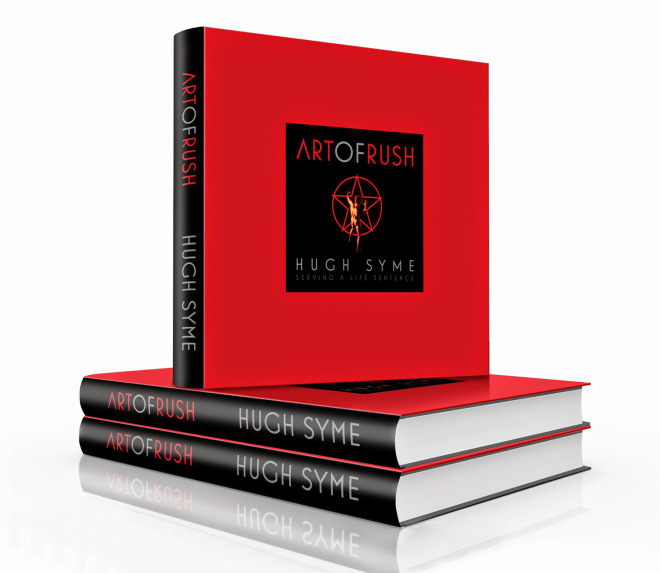 The first book by Stephen Humphries.
In a week, my family and I move back to Michigan. It’s been an incredible year in Colorado, and we’ll be very sad to leave this rather textured slice of heaven. The year went by all too quickly. As you can imagine, the house is in chaos, and, at many levels, so is my life. Books here, cds there, my brain across the street six kids and one cat feeling the “unsettlement” of the moment.
This is a long and convoluted way of writing. . . .
I should’ve reviewed THE ART OF RUSH a month ago. It’s written by a truly gifted music journalist and critic, Stephen Humphries (a graduate of Hillsdale College in Michigan). I have nothing…
View original post 500 more words
No Man Knows Himself: Excerpt from RUSSELL KIRK: AMERICAN CONSERVATIVE

Available November 5, 2015.
“No man truly knows himself, and, certainly, no man really knows another. A biographer’s work is always and every where poetic. That is, the biographer holds the high duty of being humane while also holding faithfully to the facts of his subject’s life. In one instance, the subject fires off a bitter letter, its unrestrained anger bleeding across the written page, embarrassing to the modern reader, but in ninety-nine other instances the subject behaves with saint-like charity. In his early life, the subject might express near anarchist views, but later reject those same views once so preciously possessed. In the final decade of his life, the subject might complain about the place of prominence Israel holds in American foreign policy, though in every other decade of his life had committed himself to being anti-anti-Semitic. The biographer must choose. Does one emphasize the unusual because it is bizarre and, consequently, titillating, or does one focus on the overall picture, thus obviating a vital moment in a person’s life by historicizing it. Does one accept the man as he was at 75 or at 35? Or, does the biographer attempt to piece these things together, fully aware that some evidence of the transition and evolution is simply missing.”
Warmth, Wit & Fabulous Music: An Evening With Andy Tillison

Regular readers will know that The Tangent’s Andy Tillison is a firm favourite with many of the contributors to this site, myself included. You’ll not be surprised, therefore, to see some words from me about his most recent live outing – a special “Evening with…” show last Saturday at Wesley Hall in Crookes, just on the outskirts of Sheffield.
Wesley Hall is part of a Methodist church and not the most obvious location for a prog gig – until you learn that the minister there is none other than music-loving Progarchy contributor John Simms! Anyway, it’s a charming place and in many respects a good venue for an intimate show like this one – although I’ll admit the hill-top setting made me feel somewhat foolish for deciding to walk up from the city centre.
When I arrived, just a little bit sweaty and out of breath from the climb, a handful of…
View original post 271 more words
St. Thomas More and Dr. Steve Smith
 An argument could be made that the world ended when Henry VIII had Thomas More executed.
Or, perhaps, in less drastic terms, the “modern world” began on July 6, 1535.
What was left of the world of Christendom faded away at that moment. This argument actually seems more plausible than the claim that some historians have made that the modern world began with Luther and Calvin. In almost every way, Luther and Calvin–with More, John Fisher, and Erasmus–looked first and foremost to the past for guidance and inspiration. Luther was a devout Augustinian, and Calvin’s first love was the Stoicism of Seneca.
It’s almost certainly true that, as Russell Kirk argued, Thomas More was the wisest and best man of his era.
In that spirit, I’ve thrown myself into some of the recent publications of Thomas More’s works. Every one of the best new books on and about More comes from the same editorial mind and hand of a great, great man: those of Professor Stephen W. Smith of Hillsdale College.
Smith has published three edited works on More: A Thomas More Sourcebook, Dialogue Concerning Heresies, and For All Seasons: Selected Letters of Thomas More.
With each, Smith lovingly annotates and explains the words and ideas of More. Here are three brief selections from For All Seasons:
For His wisdom better sees what is good for us than we do ourselves. Therefore, I pray you be of good cheer, and take all the household with you to church, and there thank God both for that He hath given us and for that He hath taken away from us, and for that He hath left us, which, if it please Him, He can increase when He will. And if it please Him to leave us yet, as His pleasure be it. (Thomas More to Mistress Alice, September 3, 1529, in Steve Smith, ed., For All Seasons, letter 51)
The more I realize that this post involves the interests of Christendom, my dearest Erasmus, the more I hope it all turns out successfully. (Thomas More to Erasmus, October 29, 1529, in Steve Smith, ed., For All Seasons, letter 53)
Congratulations, then, my dear Erasmus, on your outstanding virtuous qualities; however, if on occasion some good person is unsettled and disturbed by some point, even without a sufficiently serious reason, still do not be chagrined at making accommodations for the pious dispositions of such men. But as for those snapping, growling, malicious fellows, ignore them and, without faltering, quietly continue to devote your self to the promotion of intellectual things and the advancement of virtue. (Thomas More to Erasmus, June 14, 1532, in Steve Smith, ed., For All Seasons, letter 54)
Even the layout of each of these books is beautifully crafted. If you’re interested in the last glory days of English Roman Catholicism, the last moments of nearly perfected Christian Humanism, or just some profound words of advice on living well, please look to these works of Thomas More edited by Dr. Smith.
A Tears for Fears Book Proposal
As it turns out, I had to withdraw this (as I’d written two, and the press only accepts one submission at a time), but I was pretty happy with it. I hope to expand it and try it elsewhere.
***
Bradley J. Birzer
progarchy.com
6 West Montgomery
Hillsdale MI 49242
progarchy@gmail.com
Dear 333Sound,
Please consider this a formal submission for your series, 33 1/3. My proposal: a 30,000 word book, SONGS FROM THE BIG CHAIR, examining every aspect of this 1985 Tears for Fears album. In many ways, it is THE album of the MTV generation and certainly one of the best albums of its decade.
It is also, interestingly enough, hard to categorize in terms of genres. It clearly comes out of the Beach Boys/Beatles tradition of symphonic pop, but it also contains elements of theater, electronica, and progressive rock.
Part of the album’s charm, though, is not merely that it came out in the exact middle of the decade, but that it’s very intelligent—in terms of music and lyrics. It captured, I think, the spirit of an entire generation: the John Hughes generation.
Biography
I am attaching a full C.V. I’m 47, a full professor of history, author of five biographies, and founder of the music website, progarchy.com.
Projected Table of Contents
Introduction
A brief introduction to the themes of the book, outlining it, and offering some personal thoughts on why TFF and SONGS FROM THE BIG CHAIR matter. I would also include a background to the album—that is a kind of “life and times,” a context. In this, I will discuss the vital themes of the 1980s: its politics; the Cold War; the rebellion of the John Hughes generation; MTV; etc.
Chapter 1: Tears for Fears
This chapter would ask and answer the following questions.
Who are Roland Orzabal and Curt Smith? What was their purpose? What did they hope to accomplish? Why were they so interested in psychology and angst? What were their thoughts on religion, politics, culture, life?
Chapter 2: Ruling the World
Please see my sample writing piece (below) for a guide for this chapter. In it, I will look, in depth, at the lyrics and music of SONGS FROM THE BIG CHAIR, Side 1. I will especially focus on the recording process. Though the two biggest hits from the album, “Shout” and “Everybody Wants to Rule the World” appear on this side, the other two songs are critical to the success of the side and the album, providing exactly the perfect atmosphere for the entire song cycle to work.
Chapter 3: I Believe
The sequel to chapter two, chapter three will look at the music and lyrics of side two. Again, please see the sample writing at the end of this proposal for a guide to this chapter. This side, unlike the first side, is a complete story. It begins with doubt, but it ends with resignation, acceptance, and, maybe, hope.
Chapter 4: Pharoahs
As with many bands of the 1980s, Tears for Fears wrote and produced a number of songs that did not end up on the album. These b-sides would almost certainly have been included in the era of CDs and downloads. But, in 1985, there were still rather serious restrictions on what vinyl could hold. The songs that TFF wrote that didn’t make the album are every bit as interesting as those that did. The standouts are Pharoahs (a very experimental piece, anticipating much of the electronica of the early 1990s), The Big Chair, Empire Building, and Sea Song. This is TFF at its most creative, experimenting with every kind of genre. In this chapter, I will also look at the other musicians who helped make the album.
Chapter 5: Past and Future
For chapter five, I’d like to explore the context of the album in the broader scheme of music history. This album clearly descends from PET SOUNDS by the Beach Boys and SGT. PEPPER’S by the Beatles as opposed to the blues tradition of the Rolling Stones and Led Zeppelin. It also anticipates XTC’s SKYLARKING. In essence, SONGS FROM THE BIG CHAIR is progressive pop.
Conclusion
A summation of why all of this matters, and what it tells us about the history of music, about the 1980s, and about ourselves.
A sample of writing
(placed at the end of this proposal—a piece I wrote for progarchy.com)
Concise summary of book
Along with XTC, Kate Bush, and Peter Gabriel, Tears for Fears was the quintessential 1980s band/act for those who thought differently from the mainstream. Their second album, SONGS FROM THE BIG CHAIR, became the anthem of an entire generation of Americans—those who came of age in the 1980s, watched the movies of John Hughes, suspected their elders might not be so wise, and wondered if the Cold War would go nuclear. Combining elements of New Wave, electronica, jazz, theater, progressive rock, and Beatle’s-style pop, with a song cycle of intelligent lyrics and stories, SONGS FROM THE BIG CHAIR touched on the most important themes of the 1980s: power; honesty; integrity; love; confusion; and loss.
It is also one of the best-selling pop albums of all time, and remains just as relevant today as it did in 1985.
Competition
Amazingly enough, considering how many copies SONGS FROM THE BIG CHAIR has sold, there is no book specifically about it or Tears for Fears. A solid piece of analysis, Mad World, does a nice job of explaining the appeal of New Wave. This book, however, would be a help rather than a competitor. Roland Orzabal has written an autobiographical novel, but, again, this will help rather than hinder a book on SONGS FROM THE BIG CHAIR.
Why me?
From a personal standpoint, I fell in love with SONGS FROM THE BIG CHAIR the day it arrived on the shelves of my local record store. I’ve been playing it non-stop for thirty years, and I love it today as much as I did in 1985. I have written five biographies and co-authored or edited two other books. The biographies have especially done well—in terms of critical acclaim and sales. I write weekly blogs for one major website (the site receives 150,000 reads/month), and I founded a popular website dedicated to music, progarchy.com. I’m also quite active on/with social media. I have a sizeable reading audience, overall, and I have connections with record companies, musicians, and publishers. And, I’m obsessed with writing! Hypergraphia.
Which 33 1/3 books?
I’m a fan of the series. It reminds me very much of the types of books published in the interwar period—the books such as those in Essays in Order (ed. by Christopher Dawson) and in the Criterion Misc. Series (ed. by T.S. Eliot). Short, intelligent, crisply-written books meant to be read in an evening or two. Of the series itself, my favorite is ACTUNG BABY. I think that the author does a perfect job of mixing his own ideas (theological as well as philosophical) and his own voice with the ideas and voice of Bono.
Audience
Any person who is nostalgic for the 1980s. This means, of course, a whole slew of folks in their forties and fifties, each in the middle of her or his career and most with disposable income. That Mercury has just released the definitive six-disk box set of SONGS FROM THE BIG CHAIR, overseen by master audiophile, Steven Wilson, will help as well. But, also, anyone interested in good music—whether jazz, rock, or classical—will like the book. My music website, progarchy.com, will promote this book as much as possible. Progarchy.com has over 3,000 permanent subscribers, and we receive anywhere from an additional 500 to 8,000 reads per day. Finally, Tears for Fears is about to release a new album, and this will add to the interest of SONGS FROM THE BIG CHAIR.
I also have an extensive background in public speaking and radio (some TV). I will promote this book with a happy and professional intensity!
Date
I’m flexible. I’m a fast writer (serious, though), and I could have this to you as early as January 1, 2016. You set the date that’s best for you, and I will meet it.
Series
As mentioned above, I love the series. I wish more publishers did this kind of series, and I would be deeply honored to be a part of it.
Sample writing
[N.B. This is taken from a retrospective I wrote for progarchy.com. It’s a bit more personal than I would make the book on SONGS FROM THE BIG CHAIR, but I think it will give you an idea of why I like the album as much as I do. Also, it’s worth noting that PROG magazine (Issue 53; February 2015), used my piece as the basis of an article by Paul Lester, “How Prog Were Tears for Fears?”]
Title: About As Good as Pop Gets
As I finished my junior year of high school, Tears for Fears released its second album, the first to make it huge in the U.S., Songs from the Big Chair.
The first album, The Hurting, proved the sheer brilliance of Orzabal and Smith, but it also felt very, very, very, very (ok, I’ll stop–but, really, very) constricting. As Orzabal and Smith released their primal screams and healed their own hurts, the listener entered into a sort of padded but rhythmic asylum for 41 minutes and 39 seconds.
Possibly the breath would simply disappear if that album went on 21 more seconds. Imagine Andy Summers shouting “mother!” or Phil Collins begging for his “mama” but with serious prog sensibilities. Well, you get The Hurting.
Enough.
In contrast, Songs from the Big Chair, though still thematically dealing with emotional and mental trauma, sends the listener into realms of openness and euphoria. The entire album is full of possibilities, full of what might have beens–all of them good, a cornucopia of aural pleasures. For the listener, Songs from the Big Chair is one huge intake of morning air in the Rocky Mountains. This is pop at its purest, achieved, really, only by the Beatles and XTC. Rarified.
Side one (yes, I’m old enough to remember sides). Frankly, the two American hits, “Shout” and “Everybody Wants to Rule the World”, are the weakest tracks on the entire album. But, that said, they’re still brilliant. “Shout” is righteous pop, filled with a soaring guitar that might fit nicely on a Big Country album. “Everybody Wants to Rule the World” is a clever dig at oppression and imperialism, dressed in a sunny tune.
Both of these songs played so often on radio and MTV in the mid 1980s in the United States that it’s impossible for me to avoid thinking about Apple Computer, Ronald Reagan, the Icelandic summit, or John Hughes when hearing even a few notes of either.
“The Working Hour,” track two, rings with jazz flourishes and an urgency lyrically and musically. It begins with pure taste, as brass and keyboards gently dance around one another. Though only one second shorter than “Shout”, the song has much more depth to it. It’s Orzabal’s guitar work, however, that makes the song so beautiful. That, and his voice–the depth and anguish of it all. It all ends up being a song that never ages, never becomes tiresome.
Track four on side one, “Mother’s Talk,” has the percussive feel of much of The Hurting but without the claustrophobia. Indeed, it feels far more Latin American and than it does European. Or, perhaps, it has a bit of Peter Gabriel in it. Whatever it is, it works wonderfully, a perfect way to end side one. As with The Hurting, the lyrics are gut-wrenching and desperate, dealing with the fears of conformity and the inability to resist what is clearly dangerous in a community. In the end, the weak person destroys not only his own soul but the very integrity of society as well.
Side Two, a dramatic tale from beginning to end. Starting with ominous notes from a grand piano, Orzabal picks up lyrically from the previous album. “I believe,” he cries in his best croon, an affirmation that the therapy expressed in The Hurting has accomplished something. Well, at least that’s his hope. By the end of the song, however, Orzabal expresses nothing but doubt. Who are you to think that you can shape a life? No, too late.
The song slides perfectly into “Broken”–less than three-minutes long, but full of 80s production–with big and angry guitar, a relentlessly driving bass, and intricate keyboards. “Between the searching and the need to work it out,” Orzabal laments, he deceived himself by believing all would be well. Impossible. “Broken. We are broken.”Then, the haunting line: a moment only between being a child and being a man, seeing one’s life in continuity, all that is good and all that is wrong. Tempus fugit. A moment.
Back to full-blown, over the top, crooning pop: “Head over Heels.” Sheesh, Orzabal explains, I just wanted to talk, to enjoy your company. I didn’t realize this was going to get so deep, so quickly. He then explains that his family desired so much of him and for him. He. Well, he just wanted some freedom to find his own path and his own creativity. So hard to do. “I’m on the line, one open mind.”
As the song fades out with a chorus of “la-la-la-la (repeat x20),” Orzabal’s voice twists and the album returns to “Broken,” ending, strangely, with a live audience cheering wildly. As the audience’s applause dies down, swirling, psychedelic keyboard and hypnotic voices emerge. Again, with the tasteful guitar of side one. The final six minutes of the album seems like something that might have appeared on a pre-pop Simple Minds or a Tangerine Dream album. Electronica not for dance, but for centering and psychic probing.
The lyrics to the final song, “Listen,” conclude nothing but add a certain mystery to the whole album. Only a few lines repeat: Russia attempts to heal, while the pilgrims head to America. Meanwhile, Orzabal chants his desire to soothe feelings and bring mercy. Spanish voices cry in bewilderment.
The final noise of the album: percussion that sounds as though an ocean wave has overcome all.
***
For me, the album is the sound track to my senior year of high school. My debate colleague and one of my life-long friends, Ron Strayer, and I listened to the album over and over again, adding the b-side “Pharaohs.”
Frankly, I think the overwhelming popularity of Tears for Fears in the 1980s and some of the pretentiousness of their lyrics has relegated them merely to 80’s status, locked in that decade as though a museum piece. They deserve more applause and attention from those of us who love music. I never particularly liked The Seeds of Love (1989), but I think Elemental (1993) and Raoul and the Kings of Spain (1995) are some of the most creatively crafted rock/pop albums ever made.
Though, the final Tears for Fears album, Everybody Loves a Happy Ending, could be an XTC-style Dukes of Stratosphere paean to the Beatles, it works. It has some of the best pop written. . . well, since Abbey Road. “Who Killed Tangerine?” especially has to be one of the most interesting pop songs of all time.
But, these are topics for other posts. For now, enjoy a rediscovery of Songs from the Big Chair.
News Update from Artist and Writer Greg Scheckler
|


My Intellectual Biography of Neil Peart Forthcoming in August
I’m really happy to announce (ok, show off) the cover of my Neil Peart biography, NEIL PEART: CULTURAL REPERCUSSIONS (WordFire Press). It will be available this August in tangible and e-book formats.
Hope you love it!

Neil Peart: Cultural Repercussions, forthcoming August 2015 from WordFire Press.
LAST ZINE PARTS UNKNOWN…

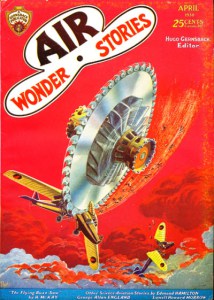
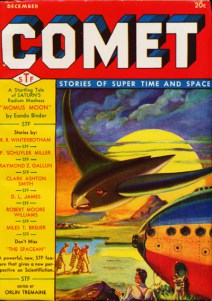
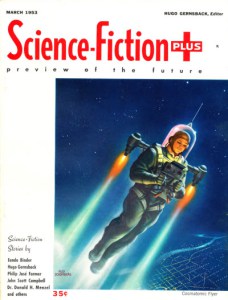
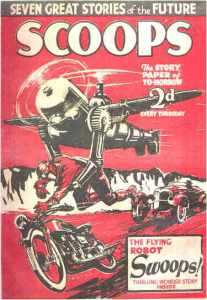
It certainly was an age of wonder and these early magazines promised readers much inside based on these covers alone…








Yes! It’s A New Book by Tolkien! ‘The Story of Kullervo’


In what seems to be a yearly tradition, the Tolkien Estate is treating us to a new book by our favourite author.
If you’ve done some reading about the Professor (beyond Middle-earth, that is), you may have encountered many references about Tolkien’s love for the Finnish epic tale of the Kalevala.
Well, turns out when he was a young man – already teeming with ideas and exquisite writing skills – he decided to write his own version of the book.
Here’s what an excerpt of what Harper Collins had to say on their site:
Kullervo son of Kalervo is perhaps the darkest and most tragic of all J.R.R. Tolkien’s characters. ‘Hapless Kullervo’, as Tolkien called him, is a luckless orphan boy with supernatural powers and a tragic destiny.
Tolkien himself said that The Story of Kullervo was ‘the germ of my attempt to write legends of my own’, and was ‘a major…
View original post 166 more words
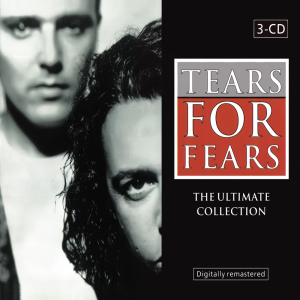
Roland Orzabal is Our Greatest Living Pop Artist
 In my post two days ago offering a twenty-year retrospective of RAOUL AND THE KINGS OF SPAIN by Tears for Fears, I made some bald claims:
Orzabal has never embraced the term “progressive,” identifying it with Pink Floyd, but he is certainly the most experimental pop musician alive—rivaled only by Brian Wilson, Paul McCartney, Robert Smith, Andy Partridge, and Peter Gabriel. From my perspective, Orzabal is the greatest living pop musician, but I think this would be open to debate. And, of course, the debate would demand a proper definition of pop.
A good friend of mine (a fellow music lover and a fellow Kansan), Derek, properly challenged this assertion of mine while also admitting how much he loves Orzabal.
I did my best to defend my claim. Here’s the conversation:
Derek: “From my perspective, Orzabal is the greatest living pop musician…” Wow! I’m still trying to wrap my head…
View original post 1,389 more words
The Holy Ground of Charleston

AME Church, Holy Ground.
Upon waking this morning, the first thing I read was the New York Times coverage of the horrific massacre of innocents in Charleston, South Carolina. Clearly, the murders were committed as an act of racial hatred, and it would be both ethically wrong and foolish to dismiss this critical aspect of the murders.
It is, however, also worth remembering that the murders were committed against Christians, members of a religion which transcends EVERY SINGLE aspect of race. The murders were—as with all massacres—committed against humanity as well.
What moved me about the NYT account was the bravery and fortitude with which the martyrs accepted their fate. What incredible stories. When I die, I hope I die with even a semblance of the dignity these women and men demonstrated.
We thank Thee for Thy mercies of blood, for Thy redemption by blood. For the blood of Thy martyrs and saints
Shall enrich the earth, shall create the holy places.
For wherever a saint has dwelt, wherever a martyr has given his blood for the blood of Christ,
There is holy ground.
–T.S. Eliot, MURDER IN THE CATHEDRAL
Charleston martyrs, you will never be forgotten. Here or in eternity.
 Stormfields