
Hit By a White Car: The Best 8 ALBUMS of 2014

And, my final “best of” post for 2014. Let’s hope that you’re not getting too tired of these!
I’ve saved the albums that hit me the hardest—at level of mind and soul—for the last. I guess it’s somewhat goofy to have a “top eight,” but these are my top eight. These are the albums that did everything right, the ones that pulled it all together, offering real glimpses of the turning spheres. The first seven are in no particular order. I like them equally, and I think they’ve each attained the highest an album can reach but in quite different ways.
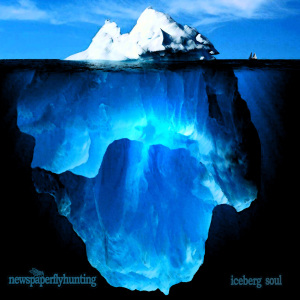 Poland’s best.
What can one say about Poland’s greatest, Newspaperflyhunting? Craig Breaden has already explained—in perfect detail—why this is a perfect album. From atmospherics to piercingly intelligent lyrics to mood swinging melodies, these Eastern Europeans have created what is certainly one of the…
View original post 1,465 more words
Is 2014 Over Already?

Time flies when you’re having fun listening to great music! 2014 brought in a bumper crop of excellent music in general, and prog in particular. Here are my favorites of the year:

10. Robert Plant: Lullaby And …The Ceaseless Roar
Mr. Plant returns to his folk roots of Britain, and delivers a thoroughly enjoyable set of songs. A couple rock out, but this is mostly an acoustic tour de force that transcends any musical trends of the day.

- Lunatic Soul: Walking On A Flashlight Beam
This album didn’t garner the rave reviews of his first two, but I still think anything Mariusz Duda produces is far better than 90% of anything else out there. “Treehouse” may be my favorite song he’s ever recorded.

- John Bassett: Unearth
This album opened my eyes to entirely different side of Mr. Bassett’s talent, and I love it. I hope he does more music in…
View original post 310 more words
The Malady of Progressivism, 1951. By Wilhelm Roepke.
Wilhelm Roepke (1899-1966) was one of the finest economists and economic thinkers of the twentieth-century. Many have credited him with the post-World War II German economic miracle, and the great author, William Shirer, called him the best of the anti-Nazis in academia. Here, he explains the commonality of all progressivisms.
*****

“The Malady of Progressivism,” by Wilhelm Röpke. Source: The Freeman (July 31, 1951), 687-691.
Modern liberals have to tackle a threefold task. First, they have to develop their own program as the answer to the challenging problems of our time. Second, they have to refute, by rational analysis, the arguments of opposite ideas and programs. Third, they must try to find out the reasons, motives and urges which drive men into those opposite camps. This third task is different from the second in so far as “the heart has its reasons which reason does not know.”
Given the largely rationalist origin of liberalism, the liberal is perhaps particularly inclined to overrate the possibility of narrowing the difference of opinions on “political” issues by rational discussion; to ascribe to his opponents entirely or preponderantly intellectual errors; and to underrate the importance of reasons which are not strictly “rational,” of motives and urges which belong to the realm of emotions, passions, creeds or psychological mechanisms of the subconscious mind.
It is this realm which is meant when we speak of the “ideological” roots of political movements. There is no disputing the urgency of exploring this rather obscure field with the mental instruments at our disposal. In doing so, we would do well to remember that the term “intelligence” is much too clumsy and undifferentiated to cover the various capacities of the human mind and to do justice to the manifold levels on which we use it. Otherwise, we are unable to understand the schizophrenia of highly “intelligent” intellectuals who entertain the most puerile notions on political questions and, more by naiveté than by evil design, become recruits of “democratic” or totalitarian socialism (communism).
We must try to realize the difference between “l’esprit geometrigue” and “l’esprit fin” or between what Bergson calls “sens” (through which we learn about things) and “bon sens” (which concerns our relations with persons) , which Bergson also identifies with “sens social.” We cannot disagree with him when he writes:
We can not help observing that a man may be a first-rate mathematician, or an expert physicist, or a subtle psychologist, as far as self-analysis goes, and yet completely misunderstand the actions of other men, miscalculate his own and perpetually fail to adapt himself to his surroundings; be, in a word, lacking in common sense. (“The Two Sources of Morality and Religion”).
We have only to consider the alarming case of Dr. Fuchs (who, we must assume, is only one among thousands and thousands) in order to appreciate the full significance of another statement of Bergson: “There is no limit to the extent of error, or of horror, to which logic may lead, when it is applied to matters not pertaining to pure intelligence.”
The True Liberal
To explore the “progressive” ideologies is not only essential for a better understanding of collectivists and for more promising tactics of the liberals in their struggle with their collectivist adversaries. It is also important for a more precise definition of what the true liberal stands for. For it is an unquestionable fact that in a certain sense we can speak of a “progressive” mentality which not only Socialists and Communists have in common, but which makes its influence felt far beyond the borderline which separates the Socialists from the liberal world. It is a leftism which reaches far into the ranks of liberals (even if understood in the European and not in the American sense), a sort of “modernism,” “radicalism” and “Jacobinism” which many “liberals”—i.e. those not sufficiently inspired by the writings of Benjamin Constant, Jacob Burckhardt, Lord Acton, Burke, de Tocqueville, or Gaetano Mosca—find it very difficult to suppress within themselves and which makes disquietingly fluid the transition from liberalism to socialism and then from socialism to communism. It typifies the kind of “radical” who is always more eager to draw the line against a “reactionary” Catholic or Protestant than against the Socialists.
Without this potential “people’s front” (which becomes actual whenever the Communist Caliphate sees fit) the advance of Soviet Russia would not have been possible. The policy of appeasement toward Moscow is different from that toward the Third Reich, in that it is much less tactical and based much more on indefatigably benevolent patience and optimism than on fear or mere miscalculation. That was so until very recently, and the fact that the West is still officially boycotting “reactionary” Spain while making rash overtures toward Tito and even Mao Tse-tung becomes all the more significant because there is much more genuine liberty in Spain than in Yugoslavia or Communist China.
To analyze this “progressivism” is very difficult for various reasons, but particularly because different persons may reach their conclusions in quite different fields. It is possible to hold highly “progressive” views on this matter and genuinely liberal or conservative views on others. This complicating fact should be kept in mind in all discussions of this problem.
The tendency in the past toward a certain solidarity of all “leftist” groups was not unnatural and certainly not incomprehensible as long as they sought mere “co-belligerence” against the common foe of the moment, like the partnership between the Western Allies and Soviet Russia in their fight against Hitler. So far it has essentially the same significance as the present “co-belligerence” of all non-Communist groups against the common foe of today. But it is hardly disputable that the partnership of the leftist groups had a much deeper meaning than that of a co-belligerence imposed by accidental circumstances.
The Roots of Progressivism
Progressivism is deeply rooted in fundamental changes in the entire philosophical outlook of those most representative of our time, and some of these changes are shared by “liberals.” The decisive secularization of the modern mind, with its dulling and final extinction of the religious sense, the loss of ultimate and transcendently fixed norms, values and beliefs, “nihilism” in the sense of the destruction of the notion of truth, absolute values and the super-material sense of life and the world—these and similar developments have two consequences. By dissolving the sense of the absolute and of the objectively given, they disarm men in relation to all revolutionary ideologies; but, at the same time, they create a vacuum which will be filled by new beliefs. Thus they make room for the passions of socialism and communism which, at closer inspection, reveal themselves as pseudo-religions, with their theology, their sweeping elan, their all-comprising claims, their arrogant sense of the “select,” their intolerance, their heresy hunts, their total direction of all aspects of life and society, and their readiness to have a prompt answer to each of them. Because of this character of progressive ideologies as “secularized creeds” it is extremely difficult to attack them successfully on the purely intellectual level. They are forces which release the passions as much as they deform mental discernment. They become an obsession which may lead to real delirium that closes the mind to obvious facts and cogent conclusions. Under such circumstances, there is little hope of convincing the addicts of collectivism by rational arguments. As they have seen the light by “conversion,” their sobering must take the form of a reconversion, which is a slow and complex psychological process.
The process of secularization with its vacuums of horror and the appearance of pseudo-religions (which are not genuine because they imply the passionate denial of any transcendent force, and the self-deification of man) makes politics the real center of all thoughts and activities and the universal point of reference. The dislodging of religion means the complete “politicalization” of existence. The self-deification of man takes the form of the deification of the society, which now becomes the real idol of men. Here is one of the origins of that mentality which may be found among many liberals and is one of the greatest curses of our times; the social obsession which makes men unable to judge anyone or anything without reference to society. It is this social obsession which, by exaggerating a respectable feeling to the point of absurdity, deprives people of all pleasures because they are haunted by the idea that some people are unable to eat oysters or whipped cream and to live in comfortable houses. It casts suspicion on any activity which, like the study of Sanskrit, has no immediate “social” value. By the way, it is a noteworthy fact that, through a significant arbitrariness, this obsessive sense of social solidarity usually pertains only to co-nationals; which is one more proof of the fact that collectivist ideas are powerful forces for what may be called the nationalization of man.
In order to understand “progressives,” we may interpret their passionate devotion to the “cause” also as an act of exasperation on the part of men who, having lost all other possibility of giving sense to life, plunge into mere “action,” “social consciousness,” or “engagement” (Sartre). It is also in such terms that modern Marxism, Freudism or Existentialism can be understood as hotbeds or manifestations of leftism.
The Search for “Emancipation”
From extreme positivism and secularization it is only one step to another conspicuous trait of progressivism: the tendency toward total emancipation from everything which seems to fetter the absolute “autonomy” of man. The ideal is to cut all roots, to “liberate” man from all bonds or outside forces which seem intolerable to the new God, the Man-God. Even the power of gravity is in his way, as some revealing tendencies in Soviet architecture indicate. To this corresponds the ideal of the complete “nomadization” of life, the emancipation from nature and the worship of technology, the cult of proletarianization, the revolt against the “accidents” and “whims” of nature and society (which, of course, only leads to submitting oneself to the whims of tyrants and the “accidents” of governmental offices).
Here is one of the main origins of the aversion of the “progressive” against the “unplanned” economy, as Hayek has shown in his “Individualism and Economic Order.” The most humiliating facts for Man-God are, of course, the subconscious part of his self, his own decrepitude in sickness and infirmity, and his final dissolution in death. As for the subconscious, Freud has found the remedy by rationalizing it through psychoanalysis. As for sickness, modern medicine is called to help; but there remains the most inconvenient fact of death.
Here the progressive answer is to embalm the Fuehrer (Lenin in Moscow) and to reduce all other individuals to mere cells of the social body whose death does not matter because the only thing which matters is the eternal life of that social body itself.
The emancipation from everything absolute means the relativization of everything (on which subject Karl Mannheim’s “Ideology and Utopia” is most revealing) and the realm of the Arbitrary, the Discretionary and the “Beliebigen.” There is a tendency toward the complete latitudinarianism where every thought is possible, every sort of art is admissible, every kind of morality is conceivable, and everything and anything might happen.
This tendency is connected with another one: emancipation from the past. If every bond is intolerable the bonds of history, of tradition, of experience, must be cut above all. History must be either forgotten or so deformed that its use becomes absolutely arbitrary. Progressives tend to call history “bunk” and to forget that the presence of the past is one of the most indispensable conditions of human sanity. To cut this bond which connects men with the past is one of the most terrible crimes which can be committed; and it is one of the profound ideas of Orwell’s “Nineteen Eighty-Four” (Orwell was still a “progressive” in many respects until his death) to make us see the consequences of this crime in his nightmarish Utopia [See also Simone Weil, “Enracinement,” (Paris, 1949).]
But this is very much in line with a marked tendency of “progressive” thinkers, to whom the past does not count, but only the future. Coupled with the characteristic optimism of progressives, we then have the cult of the Future and the Modern (in Reval a street has been recently christened “The Street of the Future”) and the highly characteristic belief in the possibility of making an entirely fresh start at any time, regardless of all historical experience. Discontinuity, arbitrariness, futurism, optimism, utopianism, and the belief in and the crusade for a New Jerusalem; these are the marks which betray the progressive radical. Here is also one of the roots of his educational Jacobin-ism which opposes the traditional humanist education as something “unmodern” and “reactionary” (the other roots being positivist worship of the natural sciences and social resentment against a system of education which can never be within the reach of all).
Fallacies of Equalitarianism
The most manifest common denominator of all “progressive” ideologies, from liberal radicalism to communism, is equalitarianism coupled with the Cult of the Common Man. Here is the point where it is perhaps most difficult even for the liberal—and especially for the generous-minded—to find the line which divides a balanced reformism from boundless radicalism. It seems all the more necessary to analyze the problem of equality dispassionately and carefully.
According to the conservative view, equalitarianism and the Cult of the Common Man are only an attempt to rationalize social resentment by the theory that any social and economic eminence is “unearned” (especially that which is beyond the reach of the advocate of this theory), and that any effort to claim the opposite is an apologetic “ideology.” There can be no doubt that the part played by “social resentment” is enormous; here is the most convenient bridge leading from Jacobinism to communism. But the term “social resentment” itself is highly unsatisfactory, since its use implies a certain disparagement that may not be justified. In fact, it is a sentiment which may have quite different motives—envy, jealousy, grievance at failure, covetousness or generosity, charity, sense of justice—though one can never overlook the highly dubious nature of a love for the “disinherited” which takes the form of hatred of the “privileged.”
Even if equalitarianism is reduced to the more moderate claim for “equality of opportunity” it is much less plausible and much more dangerous than it sounds. That equality, even in this seemingly milder form, is compatible with the essence of liberalism, i.e. freedom, is very doubtful. First, it seems illusory to believe that equality of opportunity is possible without complete economic equality, i.e. a radical leveling of income and property, since all people could not have an equal start in life unless all enjoyed the same advantages as children of the well-to-do: a cultured environment and influential friends.
Much more fundamental is the objection that even the advocates of equality of opportunity seem to start from a mistaken social philosophy. Equalitarianism presupposes that sort of “individualism” which thinks only in terms of individual shares without being able to conceive the complex and subtle pattern of real society where inequality is connected with functions serving all, including the “underprivileged.” As a conservative said recently: “By taking their ‘nobility’ from the ‘nobles’ we can not ‘ennoble’ the ‘people’ but merely annihilate a large part of the ‘nobleness’ present in the ‘people’ themselves. [See, Aurel Kolnai, in The Thomist, July 1949, pg. 2]
Though there is no denying the danger of grossly misusing this philosophy, of exploiting it for every sort of social cynicism and for defending untenable positions of privilege and protection, it contains a kernel of profound and much neglected truth.
The “individualistic” philosophy is also objectionable in so far as it regards the individual as the unit for the policy of equalization, instead of the group to which he belongs. While the philosophy is “atomistic” on the one hand, it is “collectivist” on the other, because it overlooks or dislikes (with the hatred of the Jacobinists for all “corps intermediares” and every trace of federalism) all the groups between the individual and the centralized government, whether “natural” groups like the family, or geographical, professional or spiritual groups. All these groups cease to have a life of their own and to serve as necessary counterweights against the monistic State once they are deprived of their “privileges” and “liberties.”
That is why federalism is not possible in an equalitarian society where it becomes apparent that political decentralization is insufficient to bring about the nice balance which distinguishes the federal from the centralized state. The strongest, the most indispensable and the most natural of these groups is the family, whose true meaning would be denied by that drastic curtailment of the right of inheritance which equality of opportunity (among individuals) involves. It is hard to see how one can be a liberal without recognizing the right of property, but it is no less difficult to understand how it is possible to maintain the meaning of property without the right of assigning it to the members of the family and thereby the possibility of making it the mainstay of the “famille-souches” [F. Le Play].
The Craving for Uniformity
The question must also be raised whether the reasoning of the advocates of equality of opportunity does not involve a serious mistake in logic. In reply to attacks on property in material productive wealth as the source of inequality, it must be pointed out that there is no substantial difference between this sort of property and the “property” of a man in his own inherent qualities. Neither is there an essential difference between being careful in choosing one’s parents because they are rich and doing so because they have the right genes to give to their children. Equality of opportunity, as defended by reasons of distributive justice, would demand a compensation for the one advantage as well as for the other. “There is no visible reason why anyone is more or less entitled to the earnings of inherited personal capacities than to those of inherited personal capacities in any other form,” wrote F. H. Knight in “Freedom and Reform.” To go too far in this matter of inheritance is particularly dangerous because it threatens to destroy the sense of time, continuity and tradition by which man is rooted more than by any other element.
Equalitarianism as based on atomistic individualism, even if it aims only at an equality of opportunity, seems to lead inevitably to the concept of a constant centralized effort by the government, i.e. to a totalitarian functionalization of society. It fails to weigh, against a possible and visible gain in arithmetical individual equality, the invisible loss of things which are pre-statal, praeter-statal or super-statal and the loss of the counterweights of the omnipotent State. The idea of “placing” each individual according to his “merits” and “talents” involves a Welfare State which will differ from the totalitarian state in name only. Hence the craving for uniformity: a centralized, coercive and uniform state education, “one world,” and “world government,” the model of which is invariably and inevitably the centralized national state. Hence also an intolerance toward those who diverge from the abstract “common man” not only vertically because they have a higher social position, but also horizontally because they differ somehow on the same social level.
Because of all this, “progressive” equalitarianism means less the revolutionary act of changing the distribution of property by a single sweep than a constant machinery of reshuffling and rearranging by a permanent bureaucracy. The French Revolution left behind a France of peasant owners while, during the whole nineteenth century, on this basis there was in France no further wholesale redistribution of property by the state. What is new is really equalitarianism in this sense of the government unceasingly reshuffling and rearranging the distribution of income and property. It is an equalitarianism which believes in organization, regimentation, canalization and social machinery while strongly disapproving of everything organic, spontaneous, natural, differentiated, articulate.
This equalitarian individualism supposes all men so essentially identical (on the pattern of the “common man”) that the omnipotent and monistic state can be thought of as the representative of the general will. It is here that individualism—the “false” kind, according to Hayek—is most directly and most visibly passing into collectivism with its totalitarian concept of “liberty” as the unbridled freedom of the state to which the individual enslaves himself.
“Freedom From Want”
It is unlikely that the true liberal will be caught by such glib phrases as the “Freedom from Want” by which the essence of liberty is surrendered to collectivism. It is too obvious that though it uses the same word, the phrase means something quite different from and largely alien to “freedom,” i.e. security, comfort, equality, bread and circuses. The liberal must be on his guard, however, against the more subtle temptations of equalitarianism, and while seeking to diminish the causes of social injustice and to alleviate its consequences, he would do well to reflect how far liberal democracy presupposes, not on grounds of mere expediency but on principle, the institutions of property, inheritance, family, the right to give one’s children the best available education, and the civic rights of groups which are just as much liberties and privileges (e.g., the privilege of villagers in the Swiss Rheinwald to forbid the construction of a water dam which would have driven them from their homes).
The anti-Communist Jacobin, progressive and leveler must surely be aware of the fact that there is not much in his doctrine which is in diametrical opposition to the theory of communism. If this is disquieting to him, he has become accustomed to finding comfort in the idea that the practice communism completely belies its theory. If the Communists assert the opposite, he tends to deprecate this as mere humbug. If the Communists claim to have realized “real” democracy (which, in their illiteracy, they call “people’s democracy”) the Western Jacobin finds this laughable. If the Communists call their economic and social system “socialist” the Social Democrats of the West find this so compromising that they hasten to declare that it is not “real” socialism or “real” planning, just as they found it necessary to call the socialism and planning of the Third Reich an unworthy swindle. If the Communists assure us that the Communist state is the equalitarian state of the “common man,” most of us grow indignant at this intolerable piece of hypocrisy which seems in such crying contradiction to the real facts of a new elite living in luxury and a ruthless terror over the masses.
In all these respects, however, we must realize that the Western progressive is in a much less comfortable position than he thinks. Surely, Communist “democracy” is hateful, but this is not to say that it may not be the ultimate consequence of an ideal of democracy not far from that of the Jacobins and all their spiritual heirs. If we find this “democracy” a bad joke, it is because we think less of “democracy” than of “eleutherocracy,” i.e. the reign of personal liberty. If we are tempted to dispose of the inconvenient model of Russian socialism and planning as “wrong” varieties or simple impostures, we shall do well to reflect whether they do not show the ultimate consequences of a wrong ideal common to Socialists and Communists alike.
And, finally, if the Russian claim to equalitarianism seems farcical, we shall do well to consider two things. The first is that communism certainly is a regime based on the masses and their social resentments; that, while creating new and most repulsive privileges, it is driven by that hatred of the “privileged” which is the core of the Cult of the Common Man, and that it is uprooting and leveling, whereas the new privileges it creates are, to say the least, precarious, transitory, and at the mercy of the centralized omnipotent government. The second point is that the very deficiency and hatefulness of this paradise of the common man is only another proof of the ultimate consequences of a wrong ideal which, at least in its germ, is common to all progressives.
As long as this progressive ideal is so powerful in the world, even the eventual downfall of Soviet Russia would not deliver us from the mortal danger of our civilization.
Christopher Dawson, “The Claims of Politics,” 1939
A transcription of the seminal article, Christopher Dawson, “The Claims of Politics,” SCRUTINY 8 (September 1939): 136-141.
The expansion of Politics from the narrow limits of utilitarian Liberalism to the all-embracing claims of the totalitarian community-state has already had a revolutionary effect on Western civilization and may produce still greater changes in the future. It threatens to confound and destroy the traditional forms and standards of culture and to reduce it to the crude undifferentiated unity of a mass civilization. The man of letters no less than the philosopher and the religious teacher has lost his former spiritual freedom and is in danger of becoming the conscious or unconscious servant of the ruling powers, whether those powers are the anonymous servants of material interests or the acknowledged leaders of a totalitarian party State. In these circumstances our primary duty is to keep our heads clear and not allow ourselves to be confused by the over-simplification of the issues which has always been the besetting sin of the political partisan. For though the problems that confront us are new, they are not without analogies in the past. It is not the first time that there has been a conflict between the claims of politics and the claims of culture. In the first place it is important to realize the essential disparity of political phenomena. There are at least two distinct types of political interest which can be sharply differentiated. There are professional politics—the business of government; and there are ideological or spiritual politics— the spirit of loyalty to communal ideals. From one point of view politics are a profession and the politician is a specialist, like an engineer or a financier, whose function it is to transact public business in an efficient and economical manner. But from the other point of view, politics is a mystical vocation, and the politician is the man who is conscious of a mission to save his people or who has the power to inspire men with an enthusiasm for a common ideal.
It is obvious that these two forms of political action have very little in common. A man may be an admirable chairman of committees and yet be quite incapable of making men willing to die for the policy that he favours, while the man who is able to fill his followers with an invincible faith in their common cause, may be entirely incompetent when it comes to practical politics.
It seems to me that a great part of our difficulties is due to the confusion and contamination of these two types of political psychology and political action. For though it is easy to distinguish them in theory, they inevitably tend to overlap in practice. The great statesmen and political leaders–Cromwell, Abraham Lincoln and the rest—have always been the men who were able to combine both functions, to be at once the personal embodiment of communal ideals and the practical organizers of public affairs; in much the same way as the great Churchmen have been those who managed to unite the essentially dissimilar functions of the ecclesiastical administrator and the religious teacher.
Moreover this duality of political life is not confined to the professional politician; it is no less apparent in the life of the ordinary man. The latter has to fulfil [sic] the practical duties of citizenship. He has to take his part in the business of local government, to vote in elections, to sit on councils and committees and to undertake his share of public burdens. But he also has duties towards the community of a wider and more spiritual kind. These are the virtues of patriotism and devotion to the common good which need not express themselves through any of the recognized channels of administrative activity but which are nevertheless the very essence of citizenship. But though these are political virtues, they also transcend politics, since they are directed towards a community which is wider and deeper than the State. Our conception of that community depends on our ideology. If we are Liberals it is Humanity, if we are Conservatives it is the Nation, if we are Communists it is the World Proletariat, if we are Fascists it is the Race. But so far as I know, there is no creed or ideology which makes the State the final social end and excludes the concept of a wider community to which our deepest loyalty is due.
It is in this sphere that the main responsibilities of the thinker and the man of letters are to be found. Practical politics are the concern of the practical man, and the business man may be better equipped than the philosopher and the poet to take part in the transaction of public business. But when it comes to the consideration of the final ends of political action, to the criticism of the ideologies on which that action is based and to the creation of a social consciousness and sense of responsibility which transcend the limits of the political community, it is clear that the thinker and the writer have a more important contribution to make than the man of action or the political orator; and it is their primary function to serve society with intellectual integrity in this sphere rather than to take an active part in party politics or in the actual work of government.
This principle is far from being generally admitted at the present day. The individualism of nineteenth century culture had already effaced the old frontiers between the spiritual and temporal powers and weakened the traditional hierarchy of social and spiritual values, and now the coming of the totalitarian state marks the emergence of a new type of politics which recognizes no limits and seeks to subordinate every social and intellectual activity to its own ends. Thus the new politics are in a sense more idealistic than the old; they are political religions based on a Messianic hope of social salvation. But at the same time they are more realist since they actually involve a brutal struggle for life between rival powers which are prepared to use every kind of treachery and violence to gain their ends.
It is easy to condemn the dictators and the politicians for thus opening the gates to the flood of evil and violence which channels of administrative activity but which are nevertheless the very essence of citizenship. But though these are political virtues, they also transcend politics, since they are directed towards a community which is wider and deeper than the State. Our conception of that community depends on our ideology. If we are Liberals it is Humanity, if we are Conservatives it is the Nation, if we are Communists it is the World Proletariat, if we are Fascists it is the Race. But so far as I know, there is no creed or ideology which makes the State the final social end and excludes the concept of a wider community to which our deepest loyalty is due.
It is in this sphere that the main responsibilities of the thinker and the man of letters are to be found. Practical politics are the concern of the practical man, and the business man may be better equipped than the philosopher and the poet to take part in the transaction of public business. But when it comes to the consideration of the final ends of political action, to the criticism of the ideologies on which that action is based and to the creation of a social consciousness and sense of responsibility which transcend the limits of the political community, it is clear that the thinker and the writer have a more important contribution to make than the man of action or the political orator; and it is their primary function to serve society with intellectual integrity in this sphere rather than to take an active part in party politics or in the actual work of government.
This principle is far from being generally admitted at the present day. The individualism of nineteenth century culture had already effaced the old frontiers between the spiritual and temporal powers and weakened the traditional hierarchy of social and spiritual values, and now the coming of the totalitarian state marks the emergence of a new type of politics which recognizes no limits and seeks to subordinate every social and intellectual activity to its own ends. Thus the new politics are in a sense more idealistic than the old; they are political religions based on a Messianic hope of social salvation. But at the same time they are more realist since they actually involve a brutal struggle for life between rival powers which are prepared to use every kind of treachery and violence to gain their ends.
It is easy to condemn the dictators and the politicians for thus opening the gates to the flood of evil and violence which the Mongol Empire united Russia and China in one political system did little or nothing to bind these two spiritual worlds together. On the other hand modern Europe and modern America do not form two separate communities of thought in spite of their differences of culture and their political independence. English and American literature are mutually dependent, and religious and intellectual movements which have their origin on one side of the Atlantic may have as much influence on the other side of the ocean as in the land of their origin.
If this is so, it is clear that the social responsibilities of the man of letters cannot be identified with his duty as a citizen or subordinated to the interests of the State of which he is a member. He is bound to think of the interests of culture as a whole and to direct his activities in whatever direction he can serve them best. This does not mean that literature must be denationalized or cosmopolitan ; for the nationalism of a literature is a different thing from political nationalism. Indeed the periods when a literature gives fullest expression to the national spirit and tradition are those in which its international influence is greatest.
At the present time it seems to me of the first importance that literature should recognize that it has national and international responsibilities quite distinct from those of politics. There is an obvious political conflict between the Western powers and the states of the Axis, but there is no such conflict between their literatures. French and Italian literature are not Democratic and Fascist literature, they are just French and Italian literature, and though the political conflict will normally find some literary expression it will not involve any fundamental opposition between the two. In fact while the political systems are mutually exclusive, the literatures both belong to a common tradition of culture which transcends politics and, to some extent, even nationality.
But this ancient European tradition is threatened to-day by a new barbarism more formidable than anything in the past, since it possesses an infinitely stronger technical and scientific equipment. I am not referring to any particular political state or regime, but to the general tendency to social mechanization which treats science, literature and culture as nothing more than instruments in the struggle for power. The claim of politics to organize the State as a mass community is fatal to the old ideals of culture. If it could be completely realized, it would mean the end of thought and the end of history. Human society might thus attain a higher degree of unity than it has ever possessed in the past, but it would be a soulless unity, like that of the societies of the insect world. In such a society there would be no room for criticism or personality or any free spiritual activity and without these things it is difficult to see how literature could continue to exist.

Erik von Kuehnelt-Leddihn, “We’re All Marxists Now!” 1939
From Colosseum (edited by Christopher Dawson and Bernard Wall), vol. 5, no. 21 (1939).
Jacques Maritain, “Integral Humanism,” 1939.
From the Review of Politics, vol. 1, no. 1 (1939).
Erik von Kuehnelt-Leddihn, “What I Saw in Leningrad,” 1934
And, the Christian Humanist hits keep coming. . . . from Colosseum (edited by Bernard Wall and Christopher Dawson), Vol. 1, issue 4 (1934).
Jacques Maritain, “A Note On Revolution,” 1934
From vol. 1, issue 1 of Colosseum, edited by Christopher Dawson and Bernard Wall.
Order (Ed. by Christopher Dawson and Tom Burns) #4 of 4
The final issue of the journal, Order.
Christopher Dawson’s First Published Article–1915
Christopher Dawson published his first article, “The Catholic Tradition and the Modern State,” The Catholic Review (January-March 1915). Here it is. Enjoy.
 Stormfields