
Stormfields

The Immortal Four: Tolkien and the Barrovian Society ~ The Imaginative Conservative

Its own kind of debating society, the TCBS considered almost any question as long as it avoided relationships with girls. “Oh, we [TCBS] discussed everything under the sun except girls I should say. Oh, yes. That was what bound us together. Somehow you felt ‘this chap and I can talk about anything.’” Wiseman later remembered, “And we also shared the philosophy that, number one is at the top. And I don’t know why those things impressed me so that now you’re sitting there and they sort of come out again. But there it is, and I feel sure that I’ve got it right. . . . But as I say, we formed the TCBS because it—when we had a gap in these exam programs we pushed off to Barrow’s stores in order to have some tea.”[9] And, yet, it wasn’t just girls. Though current events were not prohibited, Tolkien avoided them. “I mean to say that Tolkien was a very constructive person, in a narrow line,” Wiseman explained. “You ask him about Norse poetry, he’s bound to get it right. You asked him about Calvin Coolidge, he might quite easily get it wrong.”[10] Still, if Wiseman remembered correctly, Tolkien dominated the discussions, not just because of his personality, but because of his penetrating intelligence and knowledge. “Well, you couldn’t [feel comradeship] with John Ronald. He wasn’t the comrade of anybody except himself. . . . Oh yes, and he deserved it, too.”[11] Several other students at King Edward’s joined the TCBS as well, but Tolkien, Wiseman, Gilson, and Smith remained the core four of the group.[12]
— Read on theimaginativeconservative.org/2019/05/immortal-four-tolkien-barrovian-society-bradley-birzer.html
Real Memorials: Patriotism not Jingoism ~ The Imaginative Conservative

Though I consider myself rather patriotic—especially to the West of Socrates and Augustine and to the America of Washington and Jefferson—I have often found public liturgies, such as Memorial Day, distasteful. There’s too much contrivance in them, and they always feel too “new and improved” and yet sterile even in their flashiness.

At an aesthetic level, who wouldn’t choose to wear black and pour a bottle of tequila on a grave on All Soul’s Day under a grim November sky rather than be mesmerized by the gaudy reds and blues displayed around blossoming spring flowers and under a glittering May sun?

Mea culpa, but death in this world is not a pretty thing, though many die well. Death should be somber, contemplative, and prayerful, not jingoistically and superficially triumphant. Our victory in death comes from He who died on a Hill of Skulls, not from the soldier of a nation-state.
— Read on theimaginativeconservative.org/2019/05/real-memorials-patriotism-jingoism-bradley-birzer-timeless.html

Measuring the Influence of Russell Kirk and Other Conservative Authors ~ The Imaginative Conservative

As noted on the slide itself, this slide compares and considers, arguably, the seven most influential male conservatives of the 20th century: Irving Babbitt; Friedrich Hayek; Christopher Dawson; Eric Voegelin; Leo Strauss; Russell Kirk; and Harry Jaffa. [As a sidenote, had I included Paul Elmer More, his reputation would have paralleled, almost exactly, Irving Babbitt’s, so I left it off for sake of clarity.] This chart makes several things clear. First, and most significantly, the most important conservative thinker of the century came at its beginning, not its end: Irving Babbitt. At his height, Babbitt soared above all others, and he experienced three peaks. Second, the most important conservative as of 2008, without compare, is Leo Strauss. Yet, interestingly, his reputation declined rather shockingly during the Clinton years, and only rebounded with the election of George W. Bush. Third, Christopher Dawson and, to a lesser extent, Eric Voegelin each enjoyed considerable and sustained popularity over decades.
— Read on theimaginativeconservative.org/2019/05/russell-kirk-influence-conservative-authors-bradley-birzer.html

America’s Urban Nightmare: Gotham City ~ The Imaginative Conservative

To create a unique atmosphere for his Gotham City, Timm’s team drew all of Gotham on black paper. Traditionally, animators use white, allowing for light to flourish somewhat naturally. That Mr. Timm and company tried, for the first time, black paper was revolutionary in terms of technology and art, but also quite successful. Even the cleanest corners of Gotham possess a brooding darkness, perfect for the entrance of a Dark Knight.“There was an architectural visionary named Hugh Ferris, who did these elaborate, futuristic cityscape architectural renderings,” Mr. Timm explains. “They were just gorgeous—these massive deco buildings rendered very moodily. That was one of our prime influences on the look of Batman: The Animated Series.“[9] One of the most innovative things the Batman: The Animated Series did, in its first feature animated movie, The Mask of the Phantasm, was an opening, computer generated at the very beginning of the use of CGI in any film, of a camera slowly making its way in reverse through the Gotham skyline as the magisterial music of the tragically unsung but brilliant composer Shirley Walker plays.[10] Walker’s soundtrack employs music from the late classical to early romantic period while incorporating faux medieval chant. As bizarre as this combination sounds, it works beautifully, especially as the camera crosses the Gotham City skyline.[11] Nothing in the comics or the movies made, before or after, has done so much to demonstrate the sheer and inhumane scope and scale of Gotham.
— Read on theimaginativeconservative.org/2019/05/americas-urban-nightmare-gotham-city-bradley-birzer.html

The Dynamic Duo: The Controversy Over Batman’s Creators ~ The Imaginative Conservative

While there is no excuse for Kane having lied in his 1965 open letter or for having fudged the truth in his 1989 autobiography, there is some defense of his using his name exclusively when dealing with Batman in publications. Sadly, such a muddled state of recognizing who created who and what was a central feature of the earliest comic superheroes. In a world of pseudonyms, artistic entrepreneurship, and personal studios, one person might well serve as the public name for three or four others. And, one person might even write under a variety of names, thus keeping interest in his work intense rather than overwhelming. Writers trying to make a career in New York City were legion because of the intense competition in the pulps as well as in the slicks (magazines), while good artists were relatively rare. New York, of course, housed innumerable fine artists and an equally uncountable number of commercial artists, but comics demanded artists who not only understood the limits and physics of the human (and extra-human) form, but who could produce a huge quantity of art with relatively acceptable and consistent quality. The same was even more true of editors, who more often than not served as vital figures in the creation and maintenance of publications. During the 1930s, strong editors made, thwarted, and broke writing careers. When Superman appeared, pulp editors were in a strong position, writers in a weak one, and artists in a new and precarious one.[23] While in a relatively good position to capitalize on the new super-hero comics market, pulp publishers, editors, and writers still had to create and then navigate the new market, one that demanded consistency.
— Read on theimaginativeconservative.org/2019/04/dynamic-duo-controversy-over-batmans-creators-bradley-birzer.html

Not a Democracy ~ The Imaginative Conservative

How often has one read or watched the news, only to be told that America, as the leading democratic power, must do this or that because it is in the interest of all free peoples to promote democracy? Democracy has become so overused as to become a synonym for all that is good in the world, especially identified as rainbow-headed unicorns with the wings of a Pegasus, flying unhesitatingly from imagined world to imagined world, the latest one progressing ever more and more toward all that is holy. Democracy, it seems, is freedom, goodness, truth, dignity, and beauty.

This is the absurdity that now surrounds us. Honestly, the unicorns would be preferable. One only has to watch the tumultuous and tenebrous storms of emotion that brew and blow on Twitter to see how well the democratic impulse tends toward goodness.
— Read on theimaginativeconservative.org/2019/04/not-democracy-bradley-birzer.html

Did Political Parties Exist During the American Founding Era? ~ The Imaginative Conservative

Contrary to the vast majority of my fellow scholars of American history, I have never found the account of the creation of political parties in the Founding Era and Early Republic to be credible. I see very little evidence of anything that we would recognize as political parties before 1837… (essay by Bradley J. Birzer)
— Read on theimaginativeconservative.org/2019/04/political-parties-american-founding-era-bradley-birzer.html

BEYOND TENEBRAE: Forthcoming Book

I’m very excited to announce that I have a forthcoming book (sometime this fall) from Angelico Press.

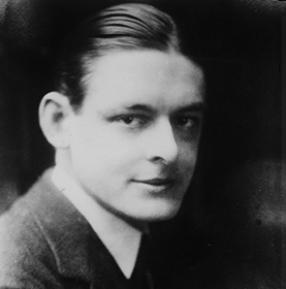
tseliot

BEYOND TENEBRAE: Christian Humanism IN THE TWILIGHT OF THE WEST.


John William Corrington delivered “The Academic Revolution,” which is part memoir, as a lecture at Centenary College in 1969. In this talk, Corrington seeks to develop what he calls his “ontologies,” which he adopted in part while he… Read More

John William Corrington on the Academic Revolution — The Literary Lawyer: A Forum for the Legal and Literary Communities

Science Fiction and Fantasy, once despised by the creators of popular entertainment as well as literary scholars, have not only risen in the eyes of serious students of literature but among the general public. What accounts for this… Read More

The Pioneers of Pulp — M.C. Tuggle, Writer